Now that the holidays are over, I have time to get back to some more fabric dyeing. I have a bed runner that I want to make that will have appliqued flowers, which I plan to use only hand-dyed fabrics for. So, I need to get more fabric pieces made. To create some variety in the fabrics, I will be using several dye resist techniques. In addition to dextrins (see October 30, 2015 for details), there are a variety of other techniques to use for dye resists. One that I wanted to try (because it was readily available and rather inexpensive was oatmeal resists.
I started by washing my combed cotton fabric in Blue Dawn (works the same as Synthrapol, is cheaper, and doesn’t require ordering – you can buy it at any grocery store) to remove any sizing. The fabric was soaked in a solution of Soda Ash and allowed to hang dry. Once dry, the fabric was securely stretched on a hard surface, which was covered with a thin piece of plastic. Small binder clips worked well to secure the fabric to an old floor linoleum tile.
I tried out three different approaches for the oatmeal resist.
1. Slow Cook Oatmeal – 1/4 cup oats mixed with 1/3 cup water and microwaved on High for two minutes. Cooled to room temperature. The oatmeal mixture was spread over fabric using a 4″ plastic putty knife. You can get a set of three putty knives (2″, 4″ and 6″) at Home Depot for less than $3. Allow to dry completely (approximately 24 hours).
 |
| Slow Cooked Oatmeal |
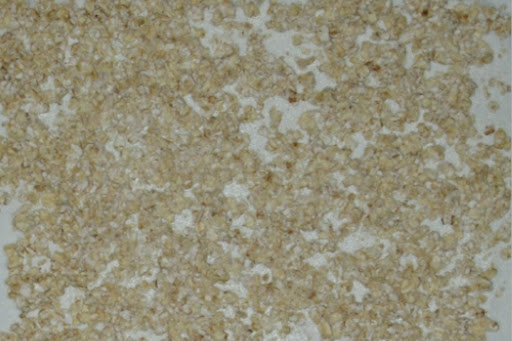
2. Quick Oats – 1/4 cup oats mixed with 1/3 cup boiling water. Cool to room temperature and spread over fabric similar to the technique described for slow cook oatmeal. Dry completely. Note – this mixture was extremely sticky and hard to spread. So, that prompted me to try a different approach to using the Quick Oats.
 |
| Quick Oats |
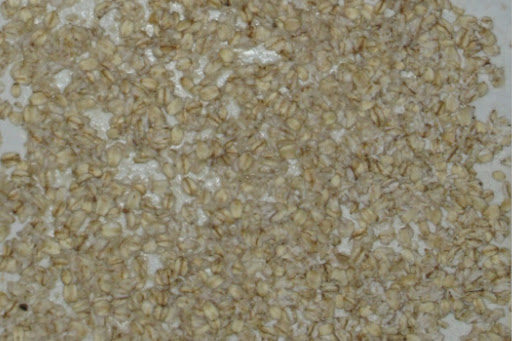
3. Sprayed Oats – the stretched fabric was sprayed with warm water to saturate the fabric. Quick Oats were sprinkled over the surface and then sprayed again with hot water to saturate the oats. So secure the oats to the fabric, a paper towel was placed over the oats and the surface was rolled flat with a rolling pin. Remove and discard the paper towel and allow the fabric to dry completely.
|
| Quick Oats – Sprayed |
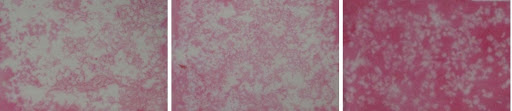
To dye the fabrics, I tried several approaches. First, I tried to brush on a mixture of thickened dye. Unfortunately, this approach caused the oatmeal to be pulled off of the fabric. Next I tried to brush on a dye solution (without thickener). This worked a bit better, but the dye needed to be tapped on the fabric rather than spreading with the foam brush to avoid moving the oatmeal Lastly, I put the dye solution (1 mg.ml, no thickener) in a small spray bottle and sprayed the dye onto the oatmeal coated fabric. This worked really well, but had the potential to be really messy. So, to keep the dye aerosol from making a mess of my laundry room, I put the fabric inside a plastic bag and sprayed the dye into the opening of the bag. This was actually a good approach since the fabric needed to “batch” for 24 hours and the plastic bag helped to keep the fabrics from drying out.
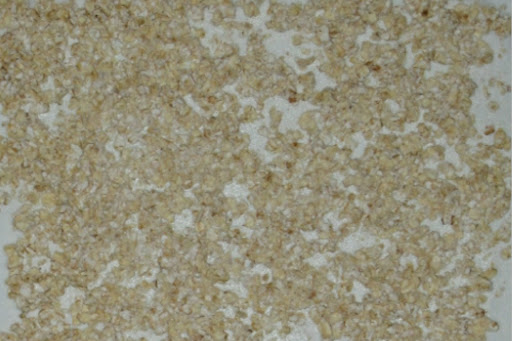 |
| Slow cooked oats Quick Oats Quick Oats – sprayed |
After 24 hours, to wash out the oatmeal and excess dye, I added about a cup of hot water to each plastic bag and allowed them to soak for 30 minutes. Since the oatmeal was really sticky, it is somewhat frustrating to try to hand wash it off of the fabric. Instead, I found that if I removed the binder clips that were holding the fabric to the tile, I could then just pour the fabric and dye solution directly into the washing machine. The fabrics were washed with Blue Dawn and dried.
I really liked the results:
Additional samples:
Can’t wait to try some more fabric dyeing approaches!
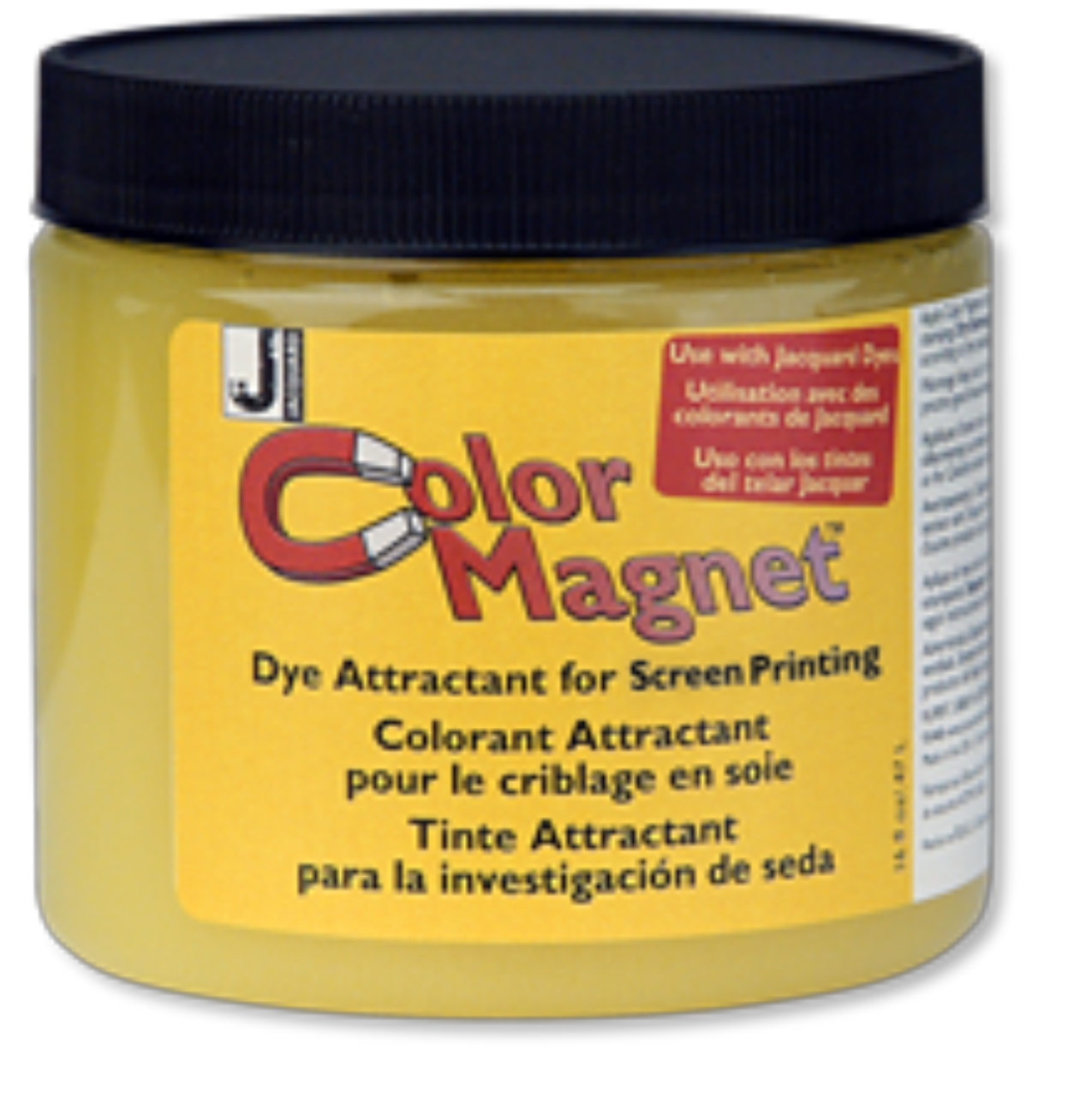
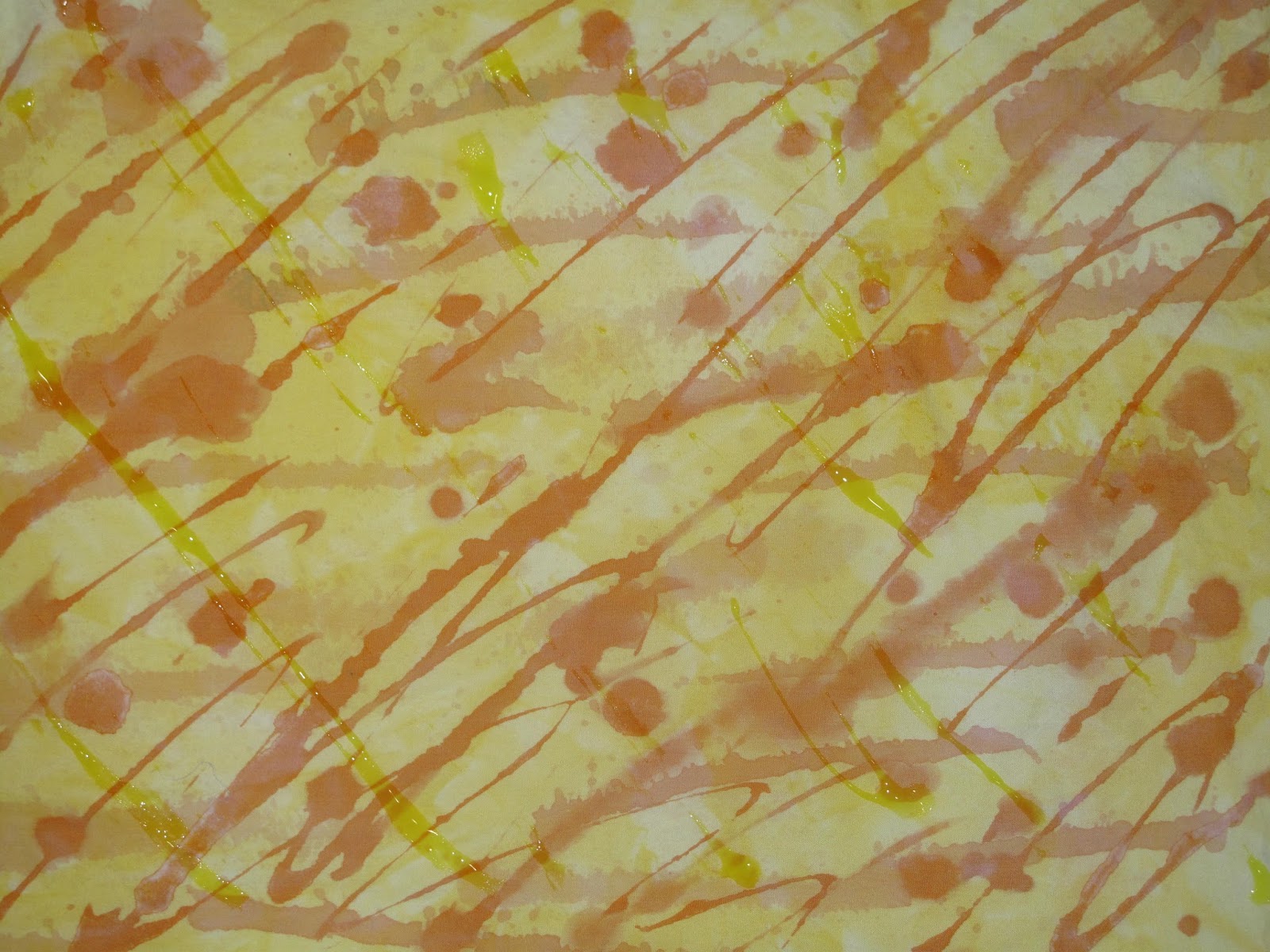
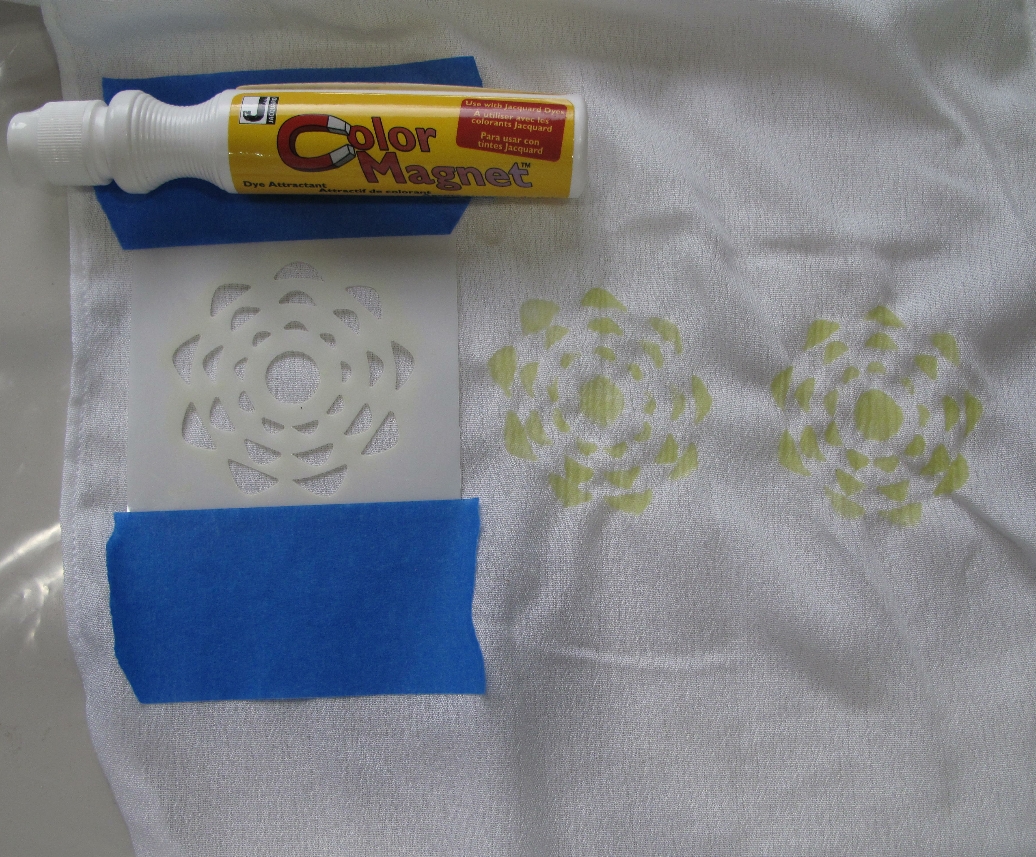
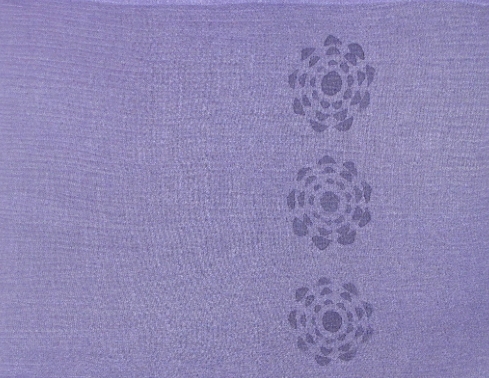
 Color magnet is a dye attractant that magically attracts more dye where it is applied, creating a unique, two-toned effect. The more dilute the dye, the greater the contrast of color. The color magnet has no binder, so it washes out completely after dyeing, leaving your fabric nicely colored but unchanged in how the fabric feels. The color magnet comes in two forms. A roller ball pen form that can be used for drawing or stenciling detail. And a one pound container that can be used for screen printing, painting or stenciling larger areas.


 Erickson's Heirlooms