Sleeping Family Quilts

Okay, these were really fun to make!

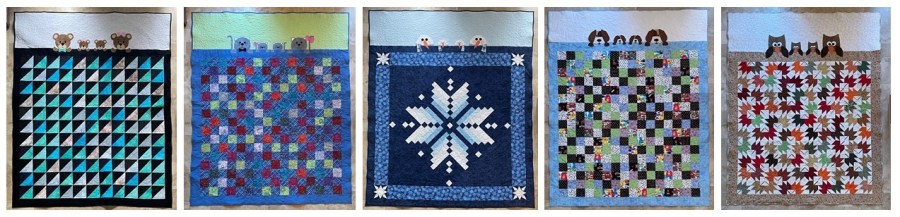
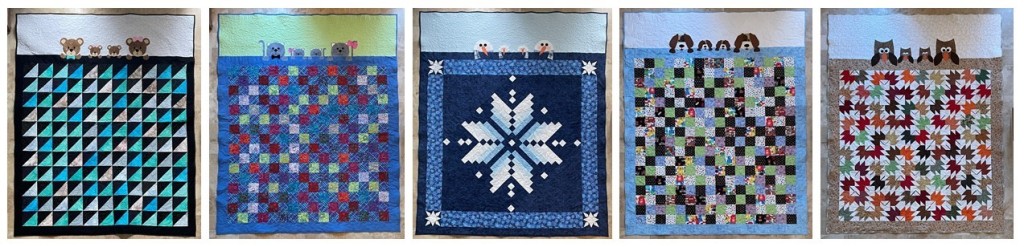
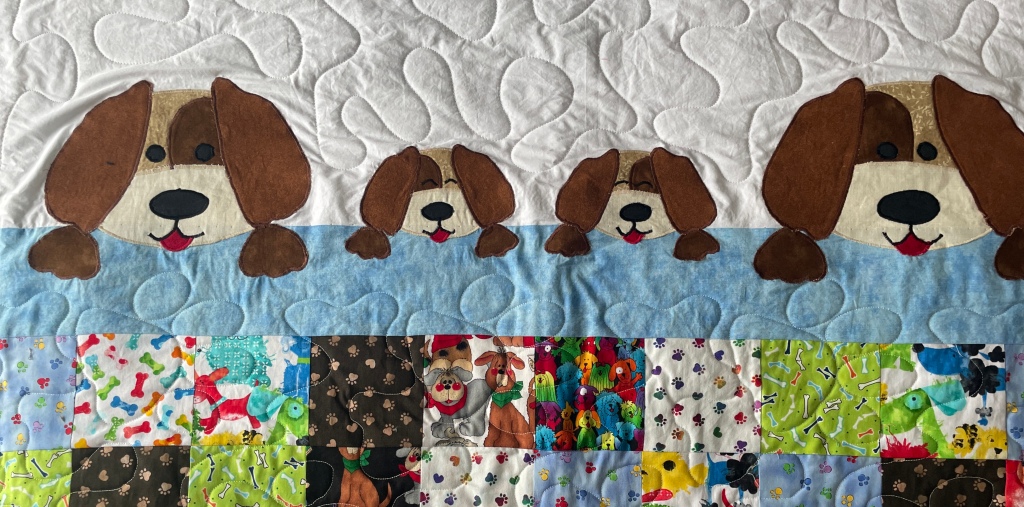
A while ago, I saw an image of a pillow that looked like a family of dogs sleeping under a quilt. Using this image as inspiration, I put together a couple quilt ideas.

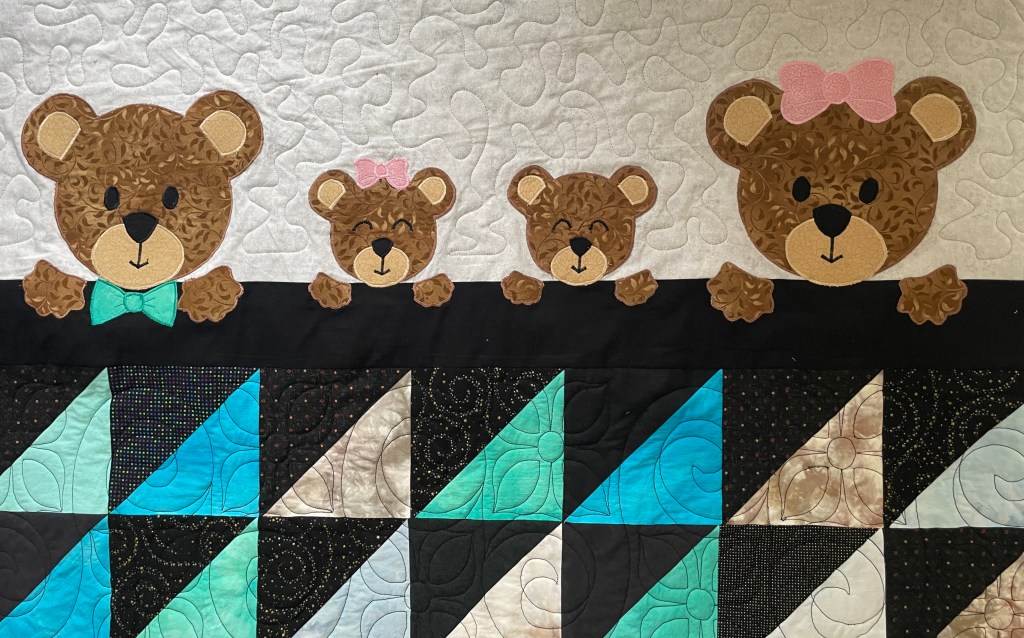
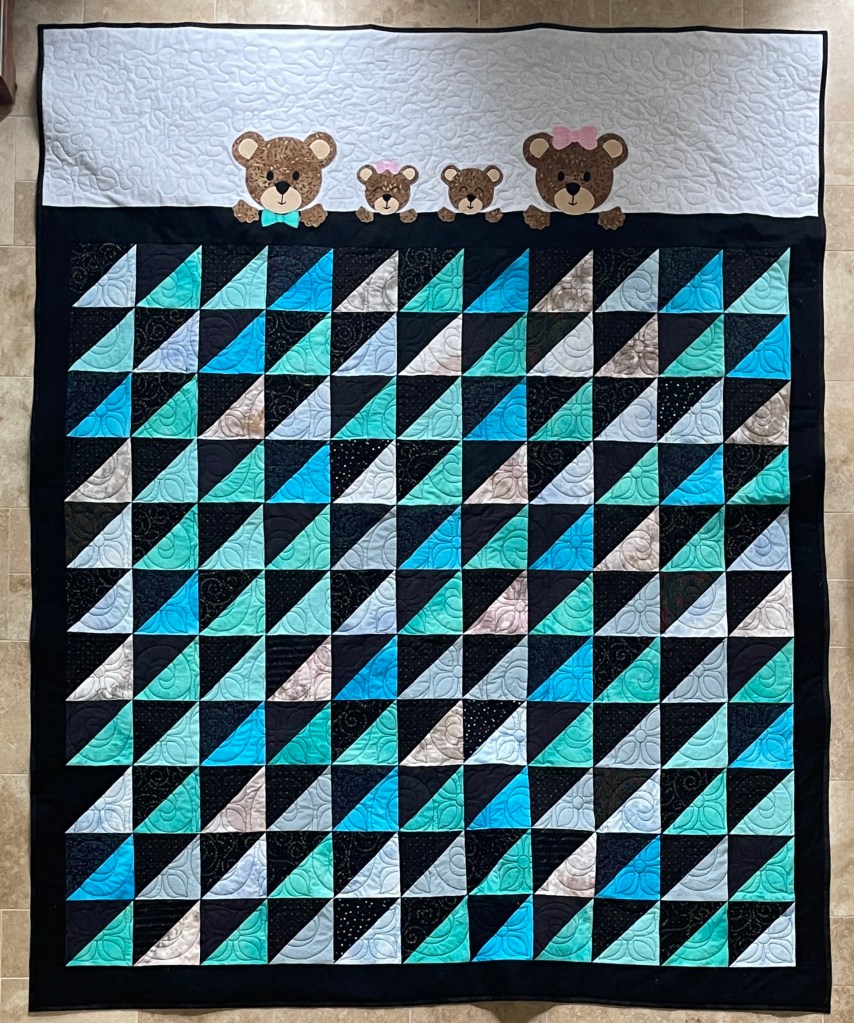
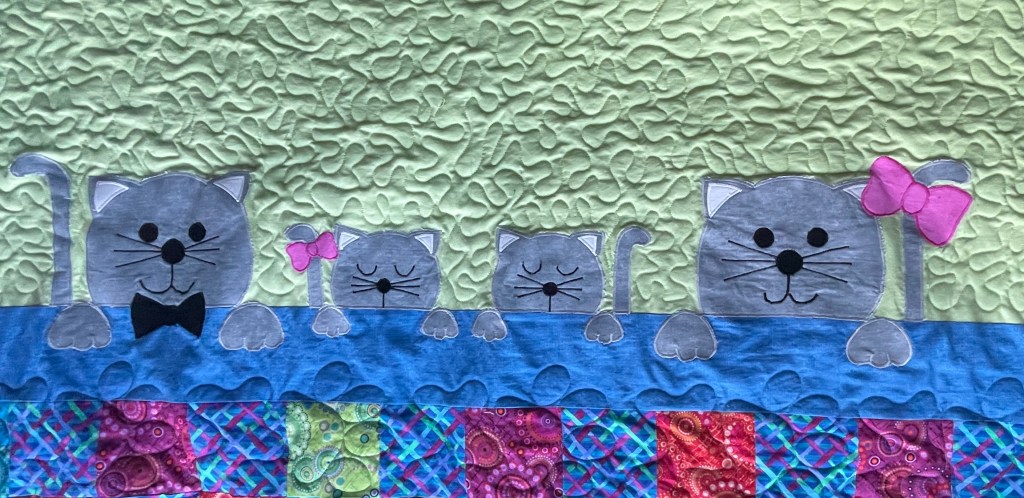
The main part of the quilt is a pieced design with a border to make 72″ square. The top part of the quilt is 16-18″ tall with a “family” appliqued on so that they look like they are sleeping under a quilt. For the applique pieces, I used clipart images found on-line. These images were drawn out onto fusible medium, ironed onto fabric and then stitched in place.

Dog Family

For this quilt, I used several pieces of scrap fabric that had dogs or dog-related themes (bones, etc), cut into 4″ squares randomly sewn together.

Teddy Bear Family

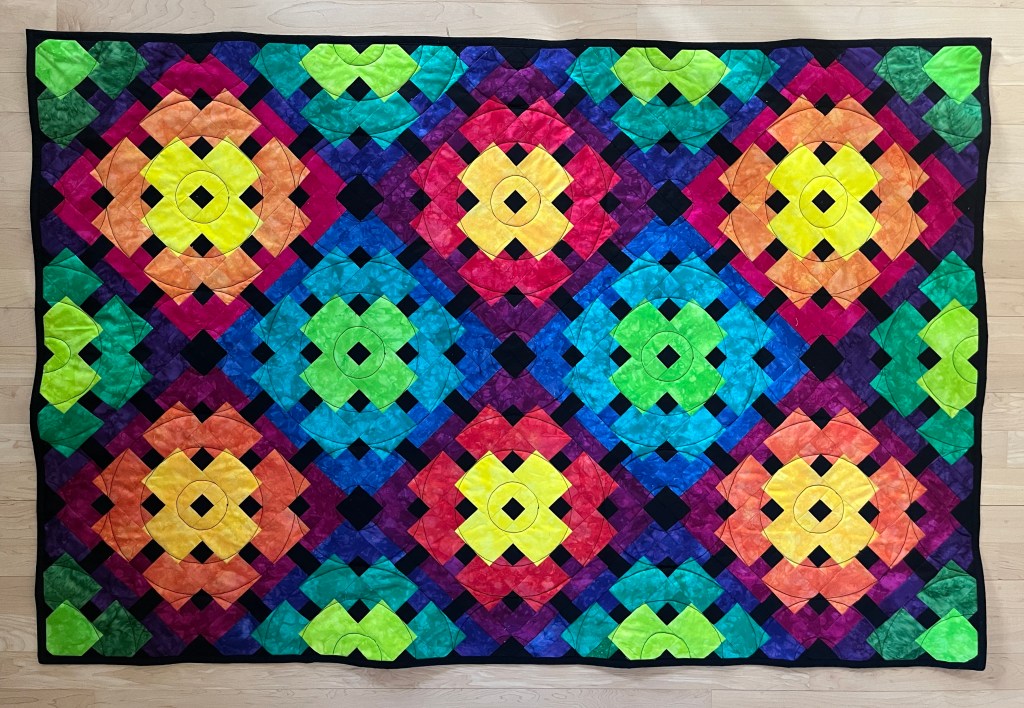
For this quilt, I used scraps of hand-dyed fabrics, paired with various black print fabric scraps. These 6″ Half Square Triangles randomly sewn together.

Cat Family

For this quilt, I used scrap fabric left over from making a bed runner for my bed (see Millefiori Garden), cut into 4″ squares randomly sewn together. Of these five quilts, this one is my favorite – I do like cats and the colors just pop!

Owl Family

When sorting through my fabric scraps, I had lots of fall colors in the mix. So, I thought a leaf block quilt would be nice. For the animal family, I had considered turkeys. However, I really dislike the ones that hang out in my yard and make a mess of my sidewalks and lawn. So, I settled on owls, and they turned out really cute.

Snowman Family

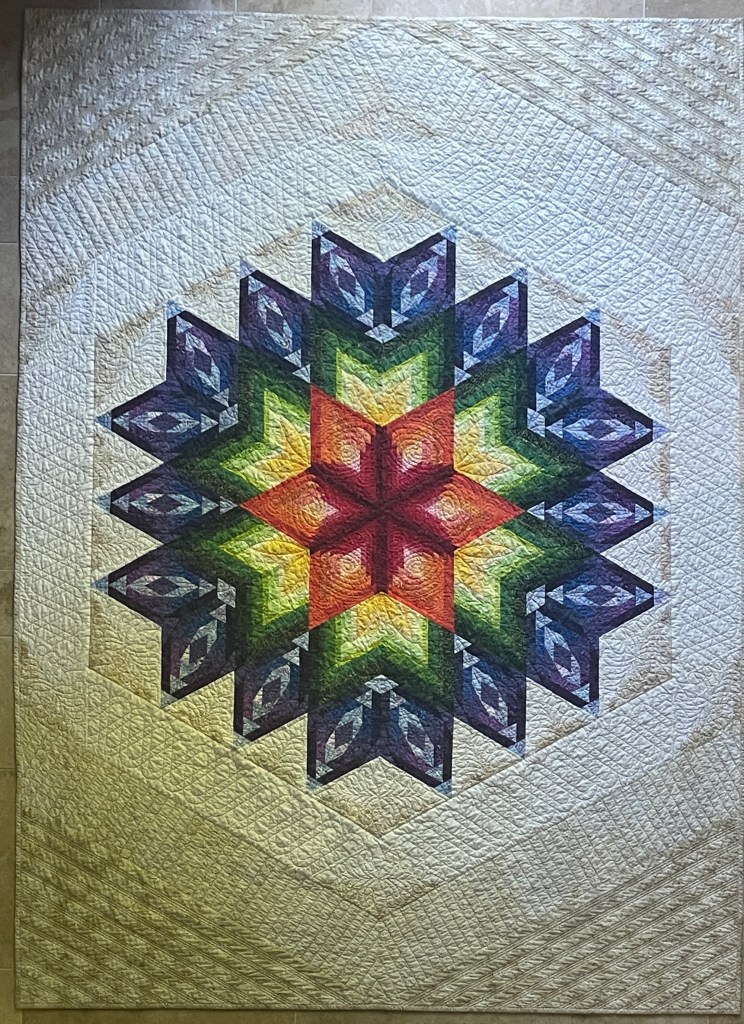
In my collection of quilt ideas, I had an image of a snowflake design that I had been wanting to make. But, I kept putting it off because I couldn’t settle on a way to make the design fit the rectangular shape of a twin sized quilt. The sleeping family quilt idea gave me an opportunity to make this quilt. Adding snow people sleeping makes this a really fun quilt as well.

These five quilts were really fun to make and will be donated to Sleep In Heavenly Peace. Hopefully a few kids will enjoy sleeping under these quilts

Scrap Quilts 2023

Most of my quilting friends know that I make quilts to give away to various charities. So, each year, I have friends that give me quilting fabric that they are not planning to use. Most of these are fabrics amount to less than a quarter yard, but occasionally there are larger pieces of fabric.

These fabrics are great for making scrap quilts. And, scrap quilts are a fun way to try new block ideas. So far this year, I have made nine scrap quilts. Each of these quilts will go to benefit young children, through an organization called Sleep in Heavenly Peace and to various people that I meet.

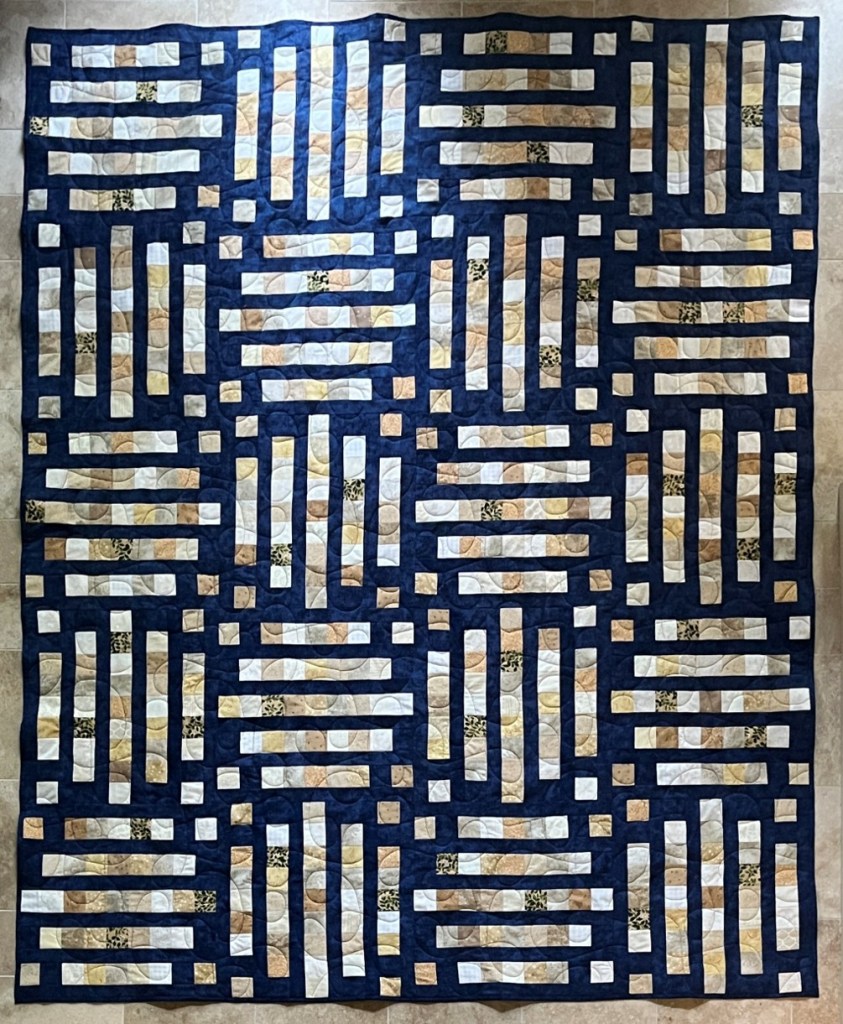
Weave – this quilt was made with thirty seven 3″ strips of fabric cut and sewn to appear like woven fabric on a black background.

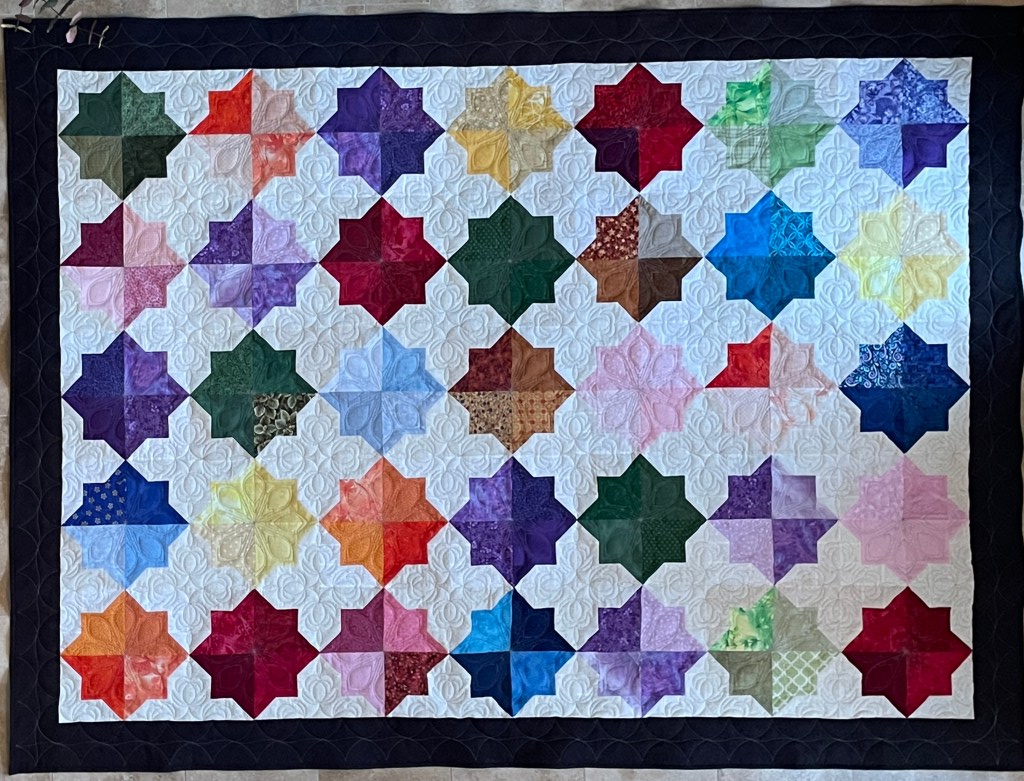
Modified Eight Point Star Block – there may be another name for this block, but I unsure.

Double Square Star – each block was made of four coordinated fabric colors sewn with a 4″ square and a 2″ half square triangle on a white background.

Spinning Friendship Star Block – I really like this quilt! Each block was make with a 4″ square and eight 2″ HSTs radiating around the center square.

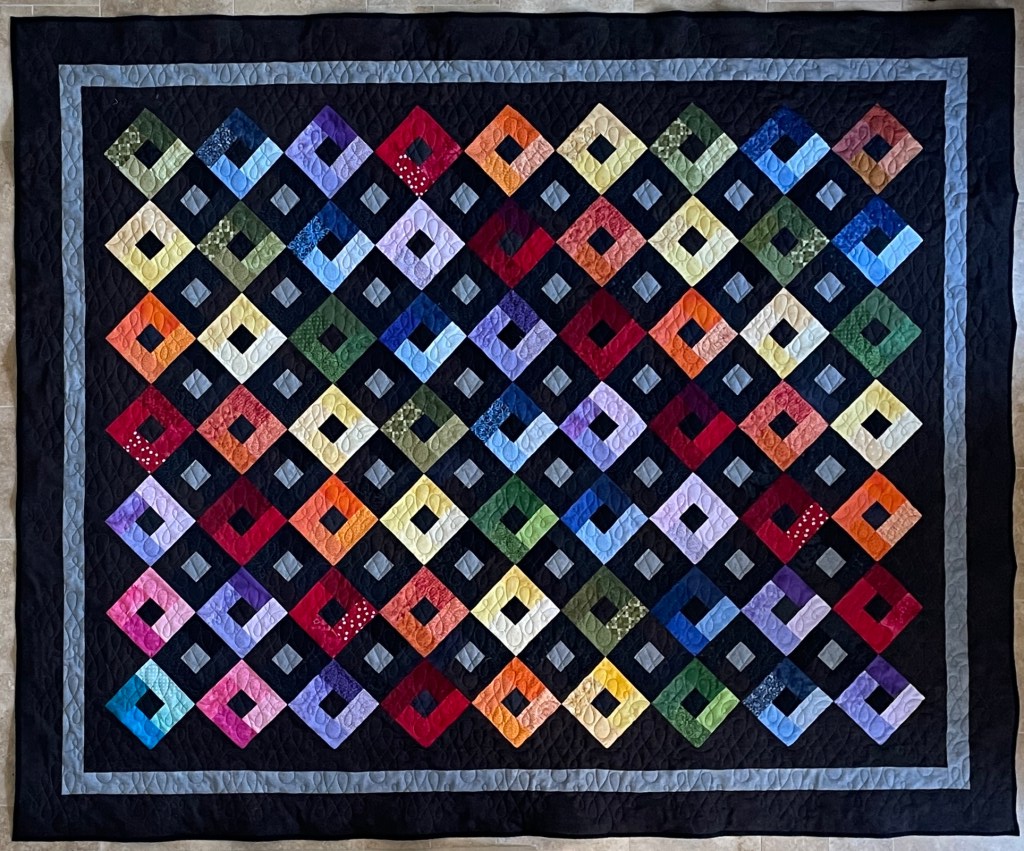
Bright Hopes Block – each block was made with four 2″ x 4″ rectangles. Another great way to use a lot of small scraps.

Chinese Lanterns – each quarter of the lanterns used 12″ x 2″ of fabric.

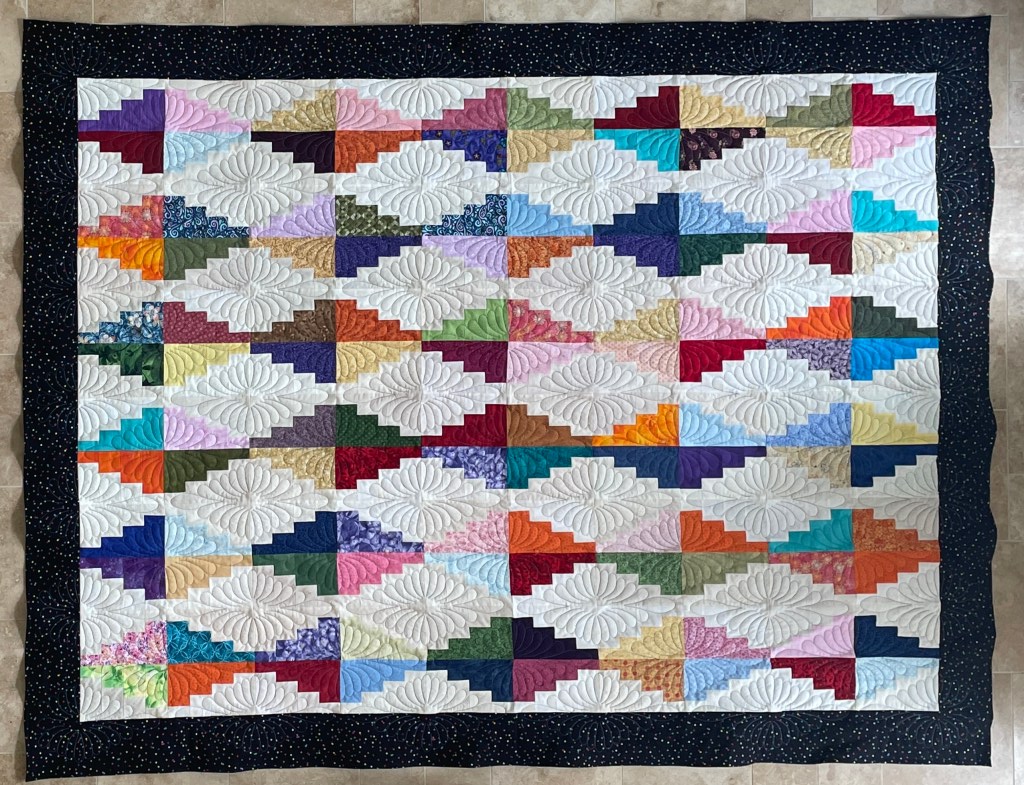
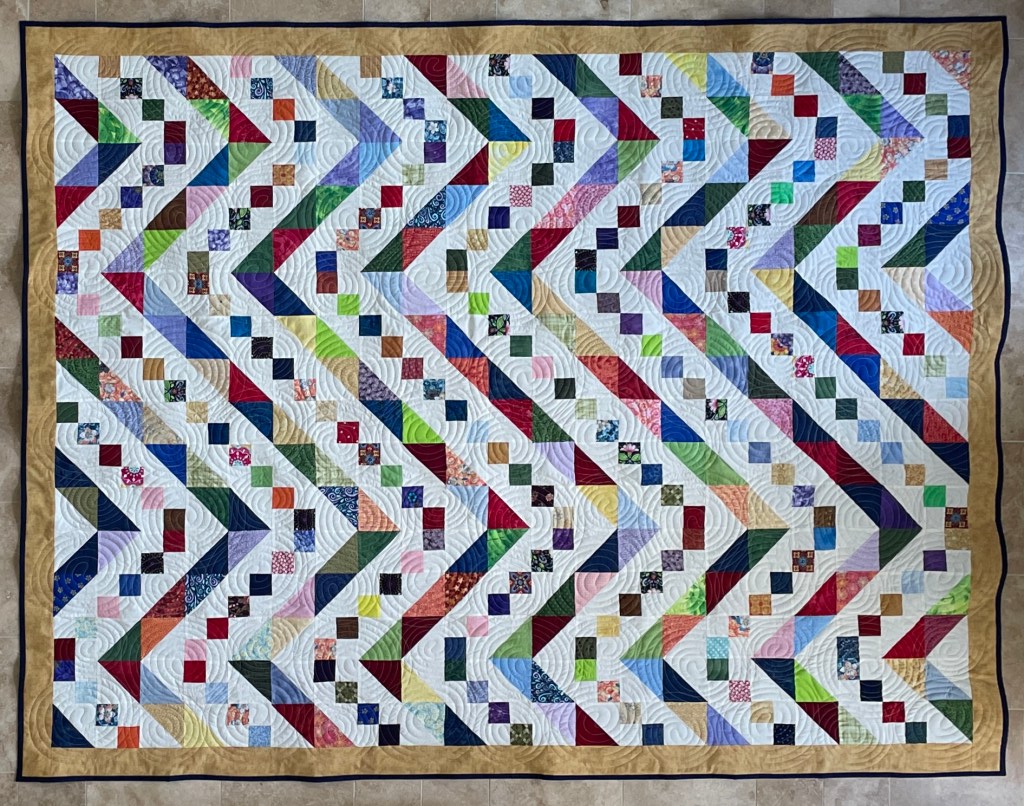
Zig Zag – this quilt was made with 2″ squares and 4″ half square triangles. It was a great way to use up small scraps!

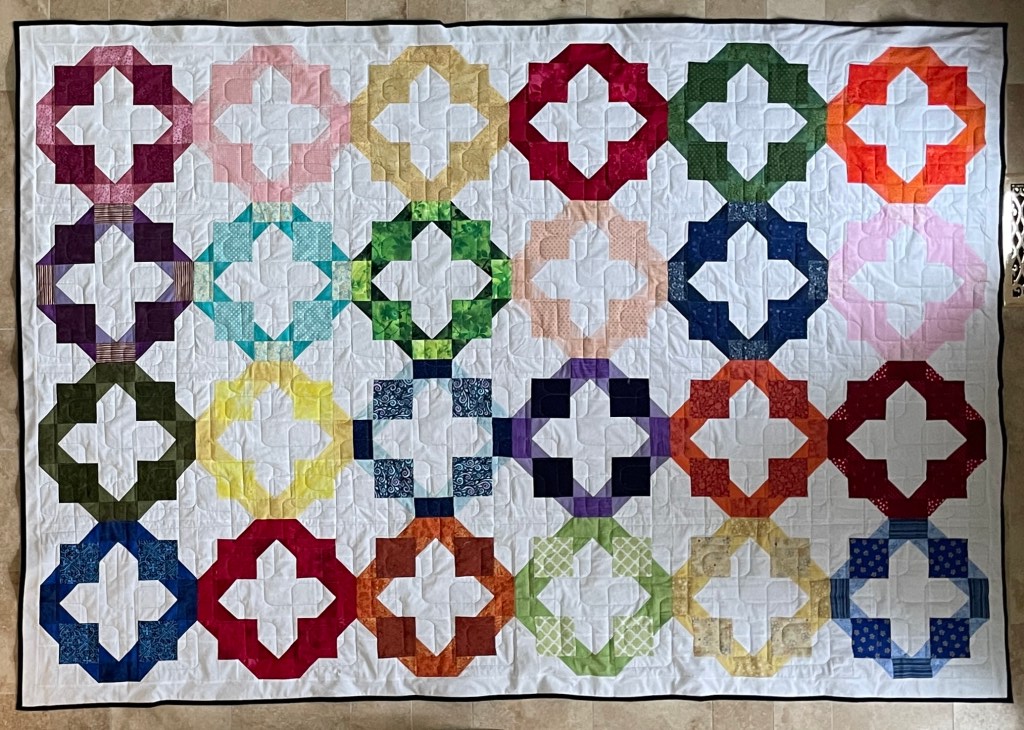
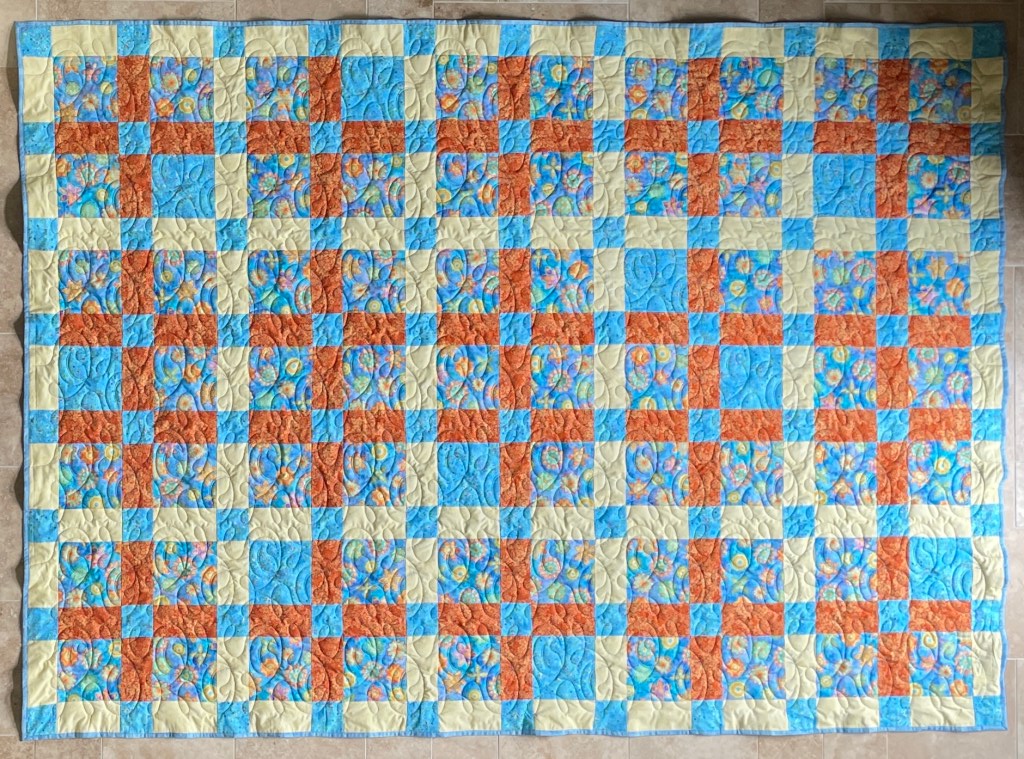
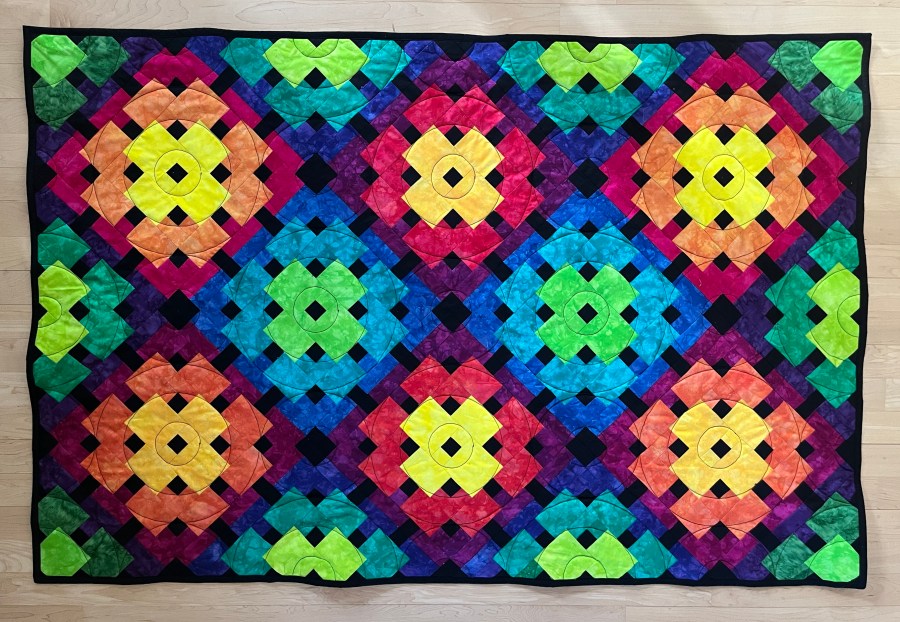
Crosses Block – for this quilt, I had larger pieces of fabric – two yards of print blue fabric, 2 yards of a matching yellow, and a yard and a half of orange fabric. To complete the quilt, I found a matching blue fabric.

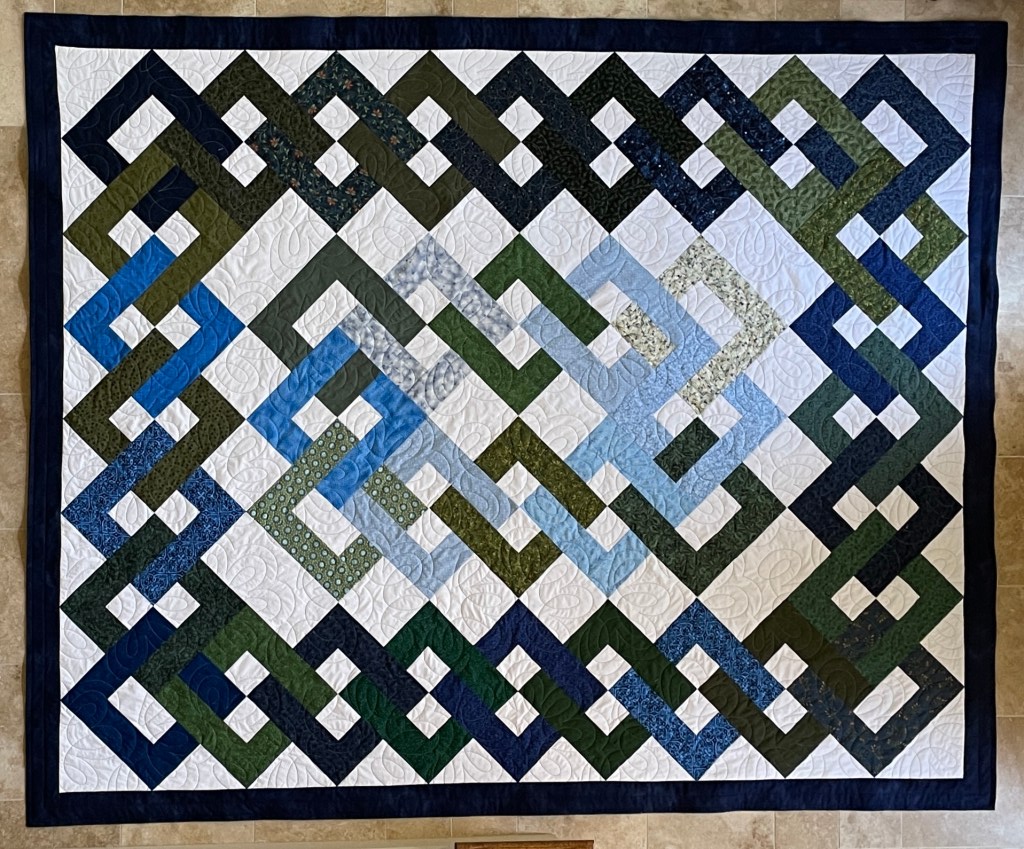
Links – this quilt used forty 3″ strips of fabric cut and sewn in a pattern of interlocking links on a white background.

Quick Quilts, Scrap quilts and a State Fair Ribbon.

Knowing that I love to quilt, various friends and family have gifted me with fabric for me to use. Usually this happens when they are moving to a new home, or downsizing in anticipation of a move. When I receive larger pieces of fabric, I wash each piece and add them to my fabric stash.

This summer, after moving my mother into assisted living, I returned with even more fabric. Running out of space to store my fabric, it was time to use up some of the fabric. Having seen some really simple quilt ideas, I decided to make some quick quilts. These will all be donated. And, by doing large quilt blocks, I could use up fabric rather quickly.

Using the Tri-Recs tool, I made a pair of matching quilts with large 6″ blocks and two different color schemes. These quilts used about a half yard of each color in the gradients.

The next two quilts were made with some larger pieces of fabric that I had been given. The pink quilt started with a floral fabric that was pink, purple and yellow. I had a large piece of yellow fabric, but no large pieces of pink or purple in my fabric stash. I did, however, have a piece of pink fabric that I had originally dyed to use as backing for a baby quilt. Since this matched the floral fabric, I decided to use that.

The teal and yellow floral in the second quilt was some that I have had in my stash for a while. While packing up my mom’s excess craft supplies to be donated, I noticed the teal polka dotted fabric and thought it would match nicely, so I added it to the box of things that I was taking home with me. It matched the floral fabric nicely.

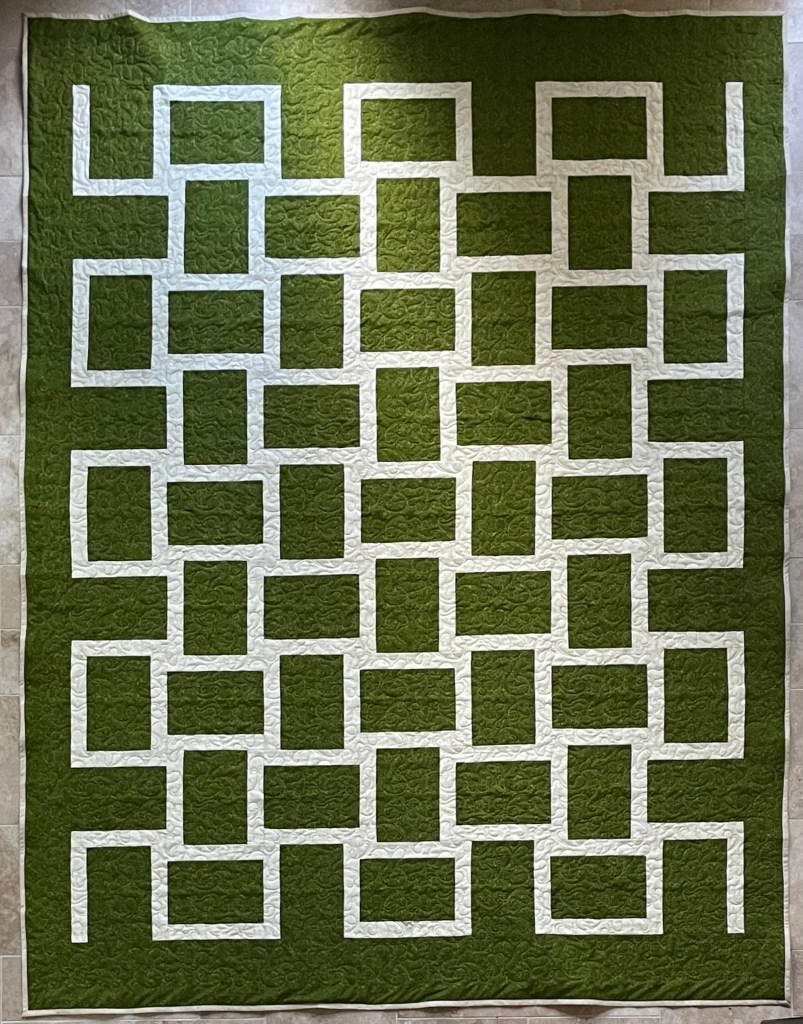
I’ve had this avocado green fabric for several years. Being an unusual color of green with a rather large print, I really was unsure how to use it. And, I had several yards of it. I chose a simple tumbling blocks pattern with a beige contrast fabric.

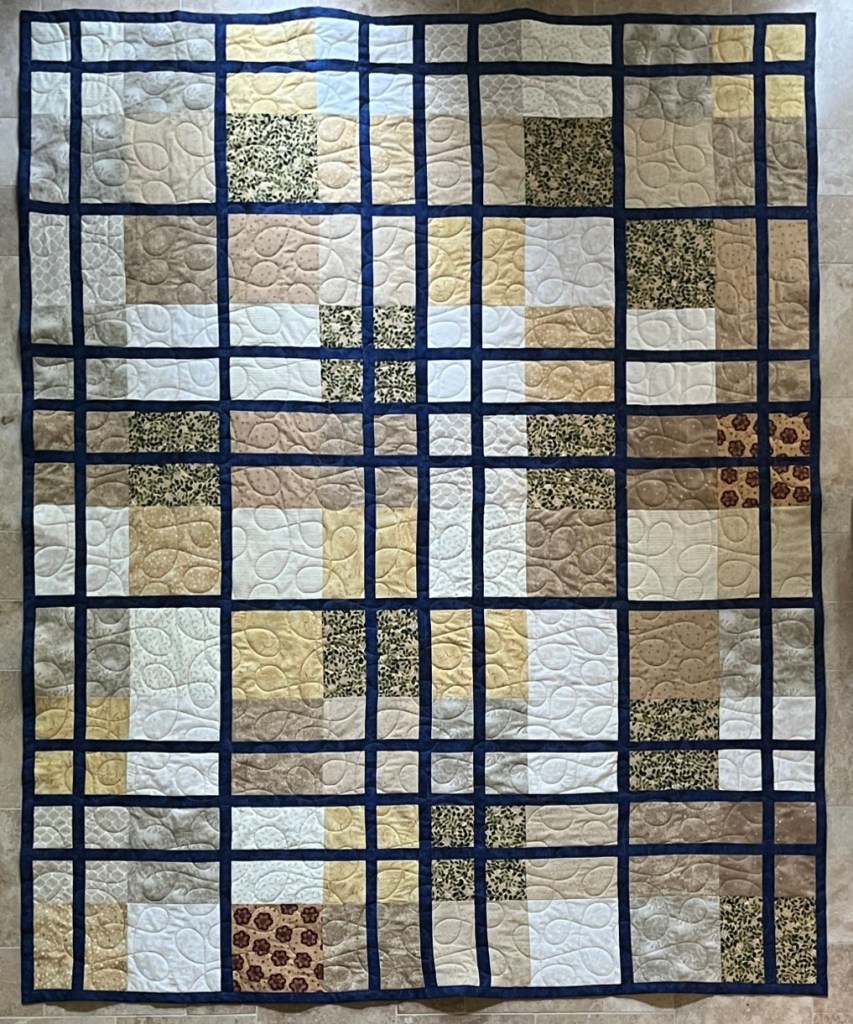
A split four patch design used up large pieces of three other fabrics that were in my stash.

My mother had a lot of scrap Christmas fabrics, which she would no longer be able to use, that I also took home with me. From these a made a Christmas Cats sofa quilt. I really like how this one turned out and may make a twin sized cats quilt out of some more of my larger scraps.

After completing these, and other quilts that I made this year, my scraps baskets and buckets were again over flowing. On my fabric shelves, I only store fabric that is larger than a quarter yard. Mid-sized pieces of fabric, larger than 6″ x 6″ but smaller than a quarter yard, are placed in either a plastic bucket. And, smaller pieces are placed in some decorative Longaberger baskets. Because these were over flowing, I sorted out the fabrics and made a few scrap quilts.

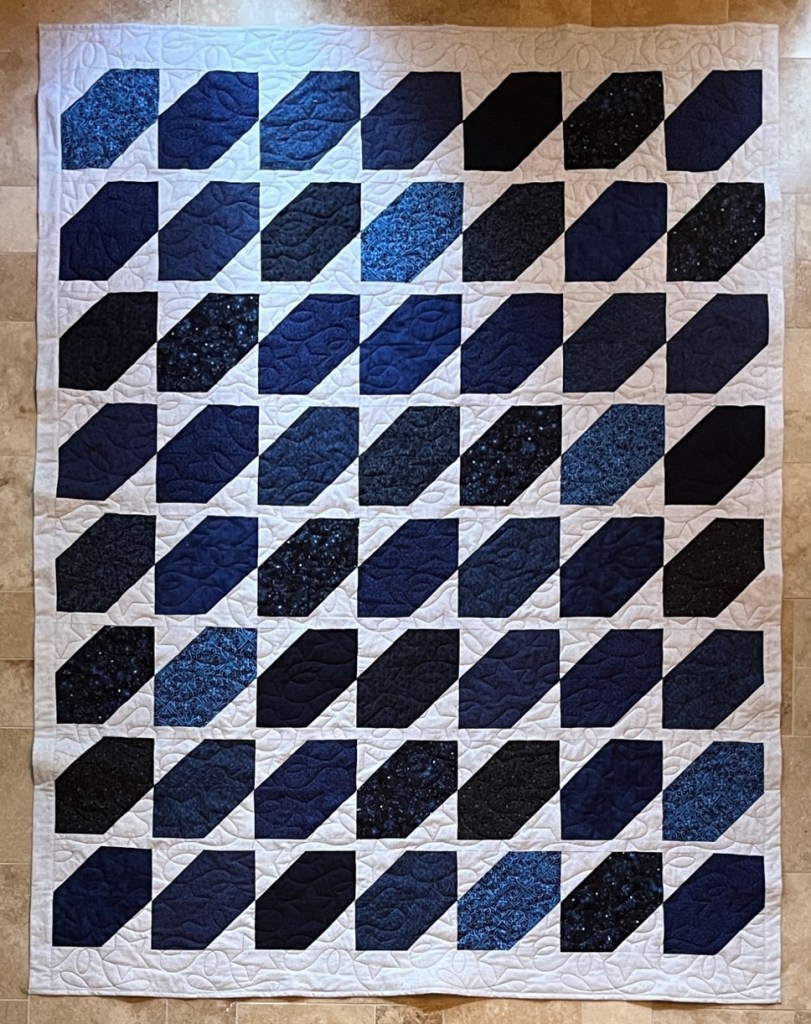
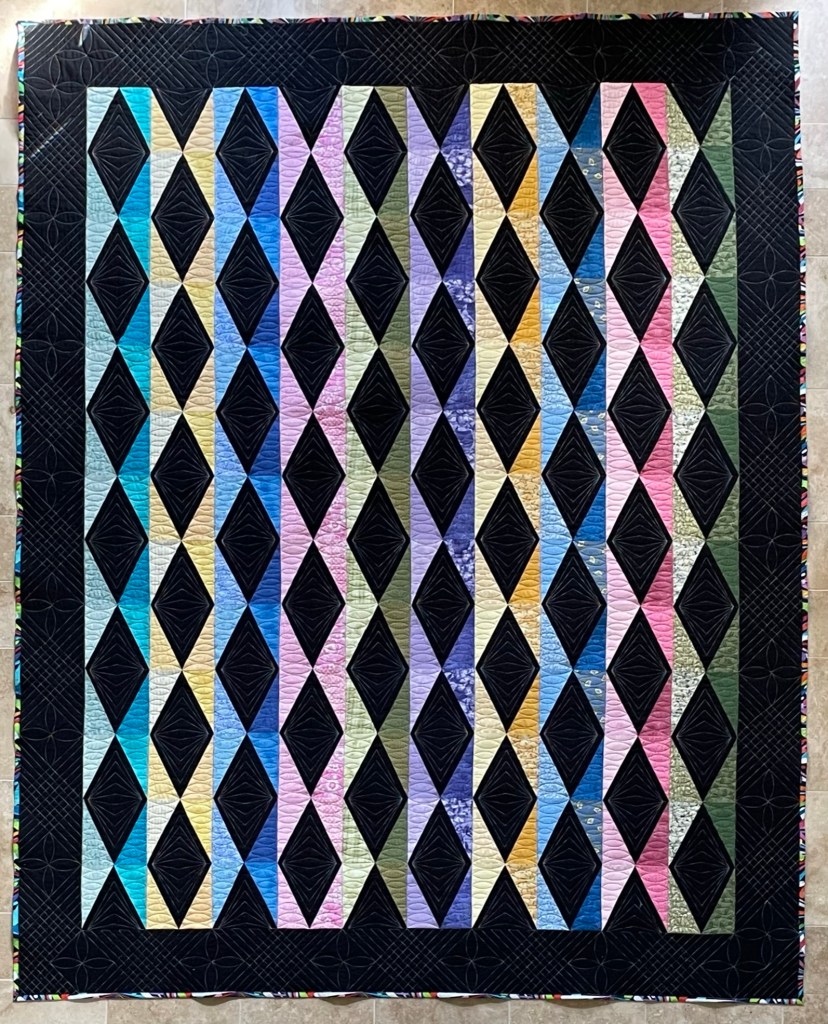
I started out making the black quilt. When cutting the colored fabric, I mistakenly cut too many pieces of each fabric. So, I realized that I would need to make a second quilt. For the second quilt, I decided to change it a bit. I used white as the background color, changed the order of the colors to highlight the zigzag effect of the pattern, and added another column to remove the need for a large border.

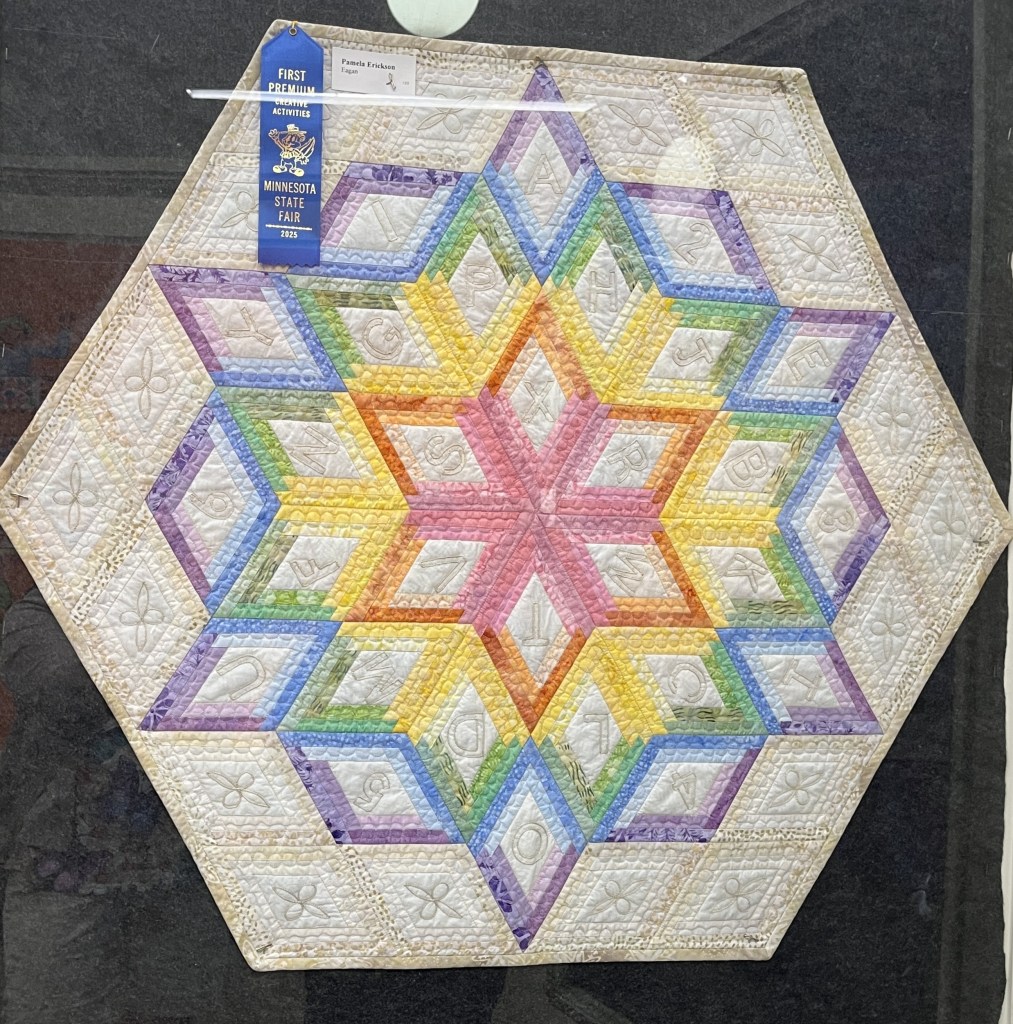
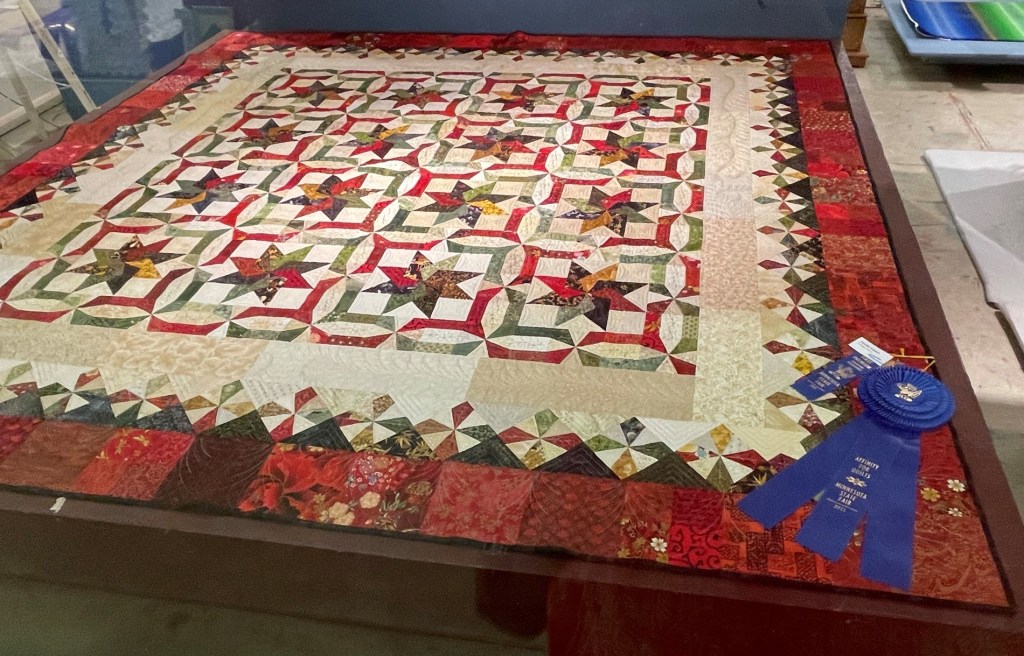
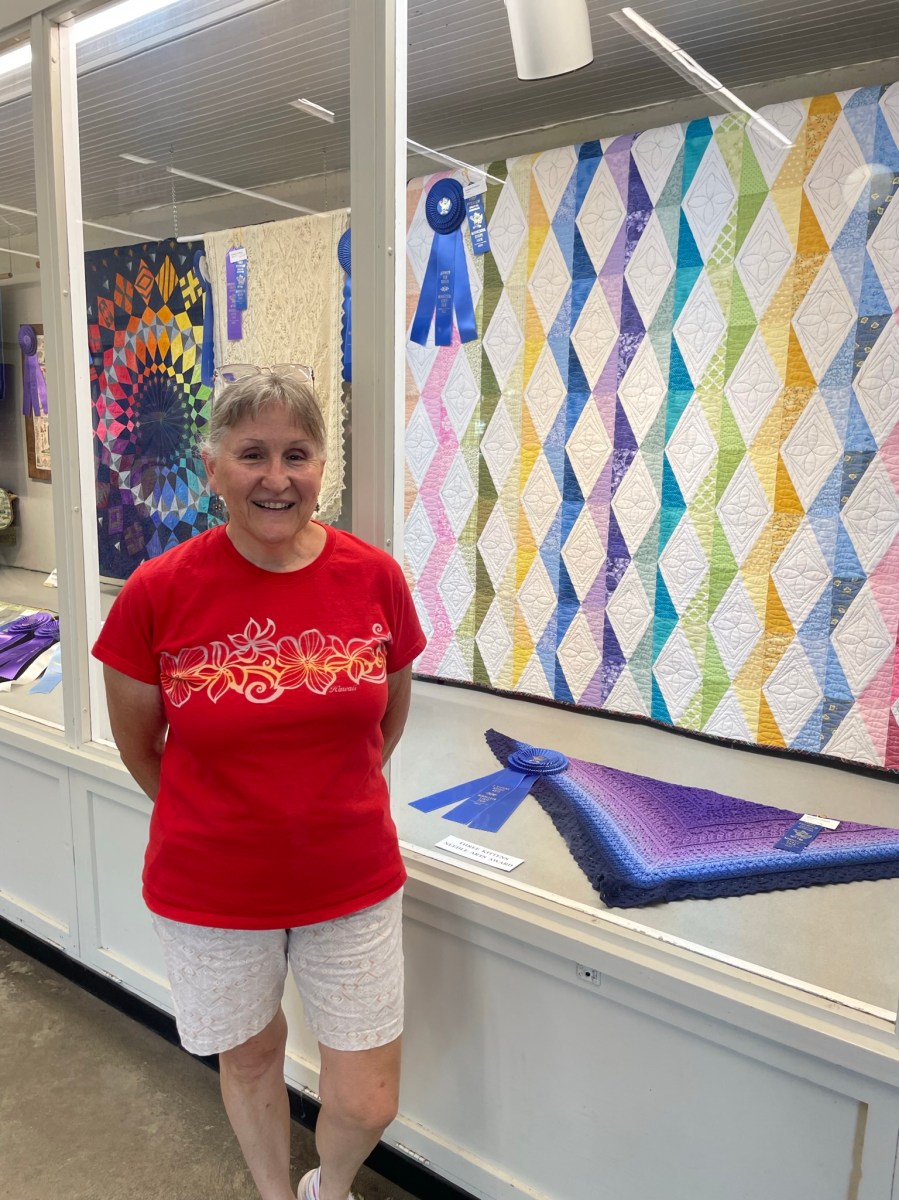
The white quilt came together nicely, so I entered it in the MN State Fair scrap quilt category, where it received a blue ribbon. I was surprised to see it prominently displayed at the fair. This quilt was donated to the MN Dental Foundation. At the One Smile Gala on Friday, the quilt was successfully bid on by a couple people and raised funds to support the dental outreach programs in the state. I hope the person who purchased the quilt enjoys owning it!

One of a Kind Quilts

Scrap quilts often bring to mind the image of a resourceful pioneer woman cutting up worn clothing to create bedcovers for her family. But the truth is that scrap quilting didn’t become as commonplace as we think until the Great Depression when hard-pressed seamstresses were forced to use every bit of fabric they had on hand. Along with feed sacks, these women also used bits of old clothing, worn-out bed linens, and anything else they could get their hands on. Thus, scrap quilting is probably one of the first examples of “upcycling”.

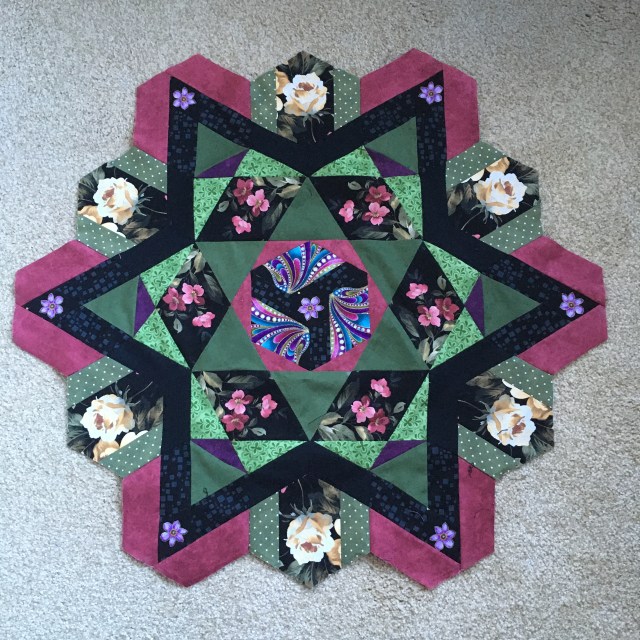
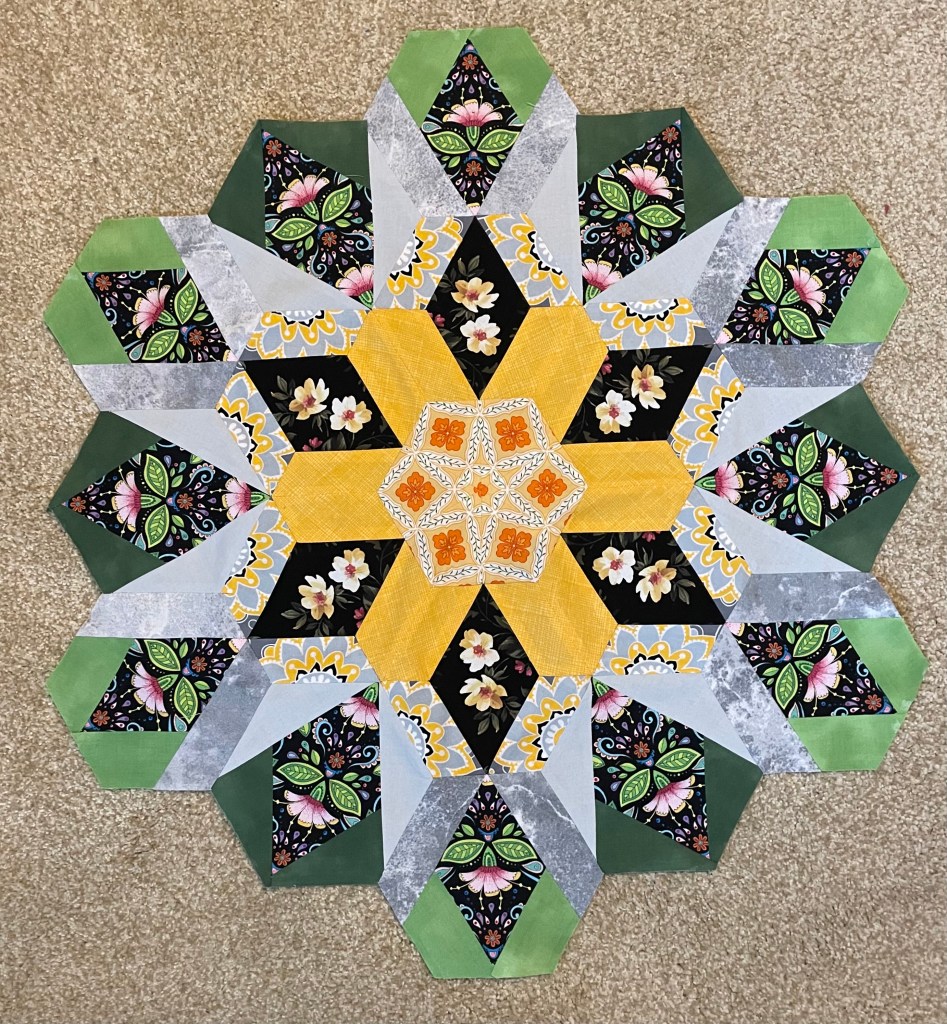
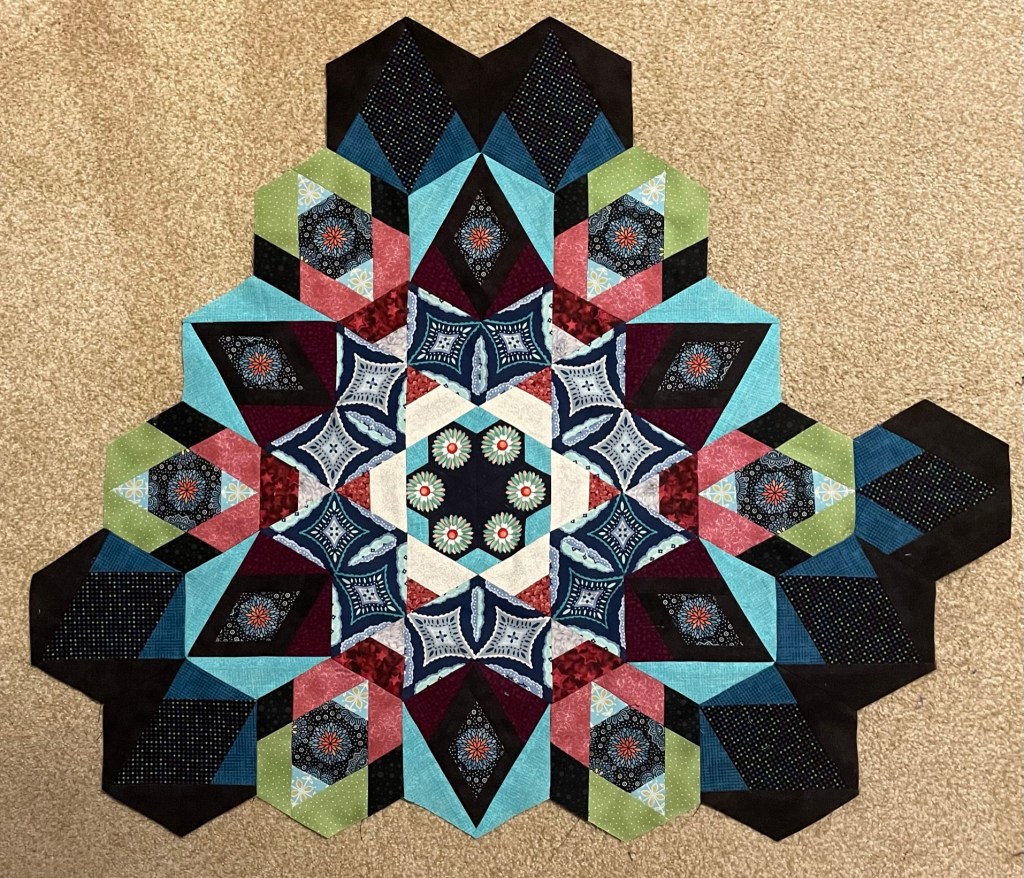
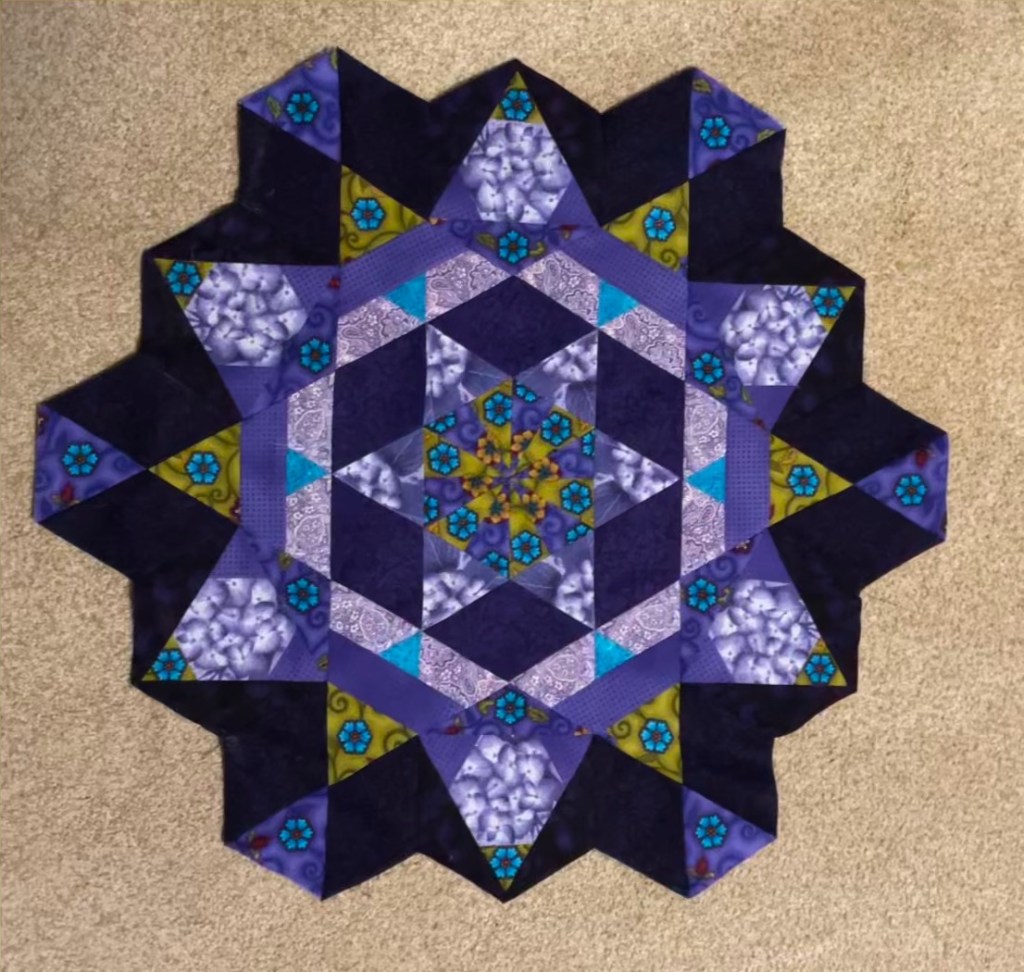
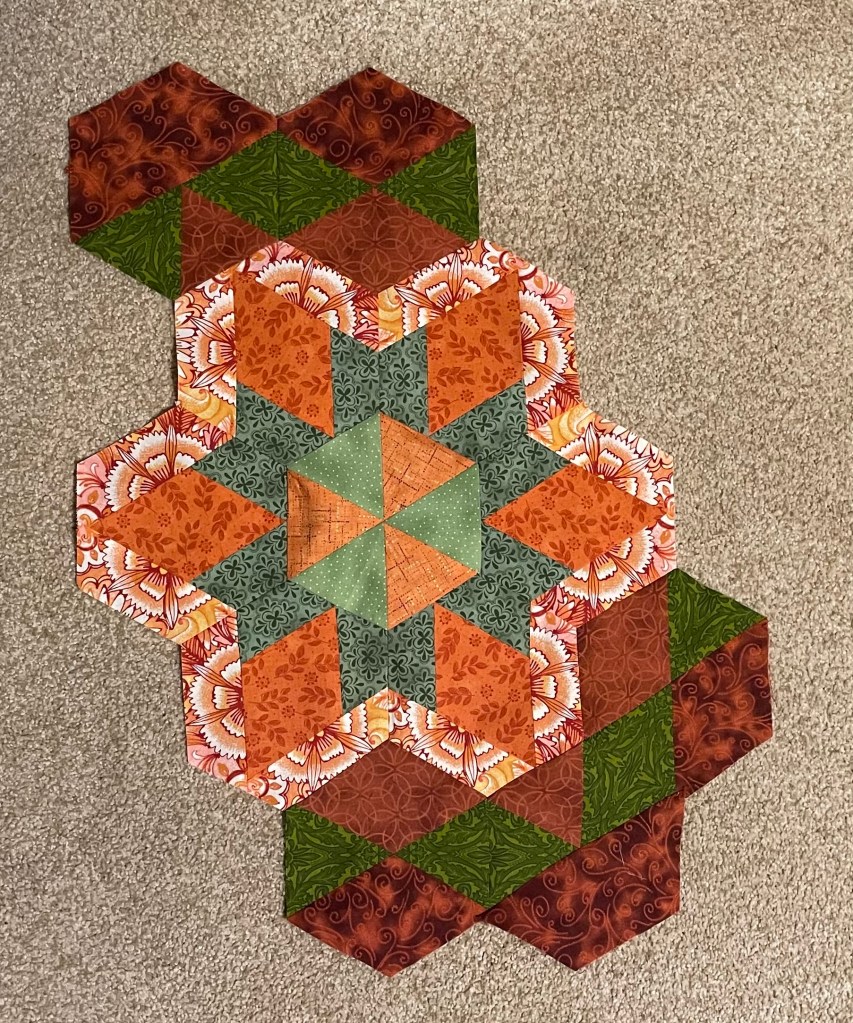
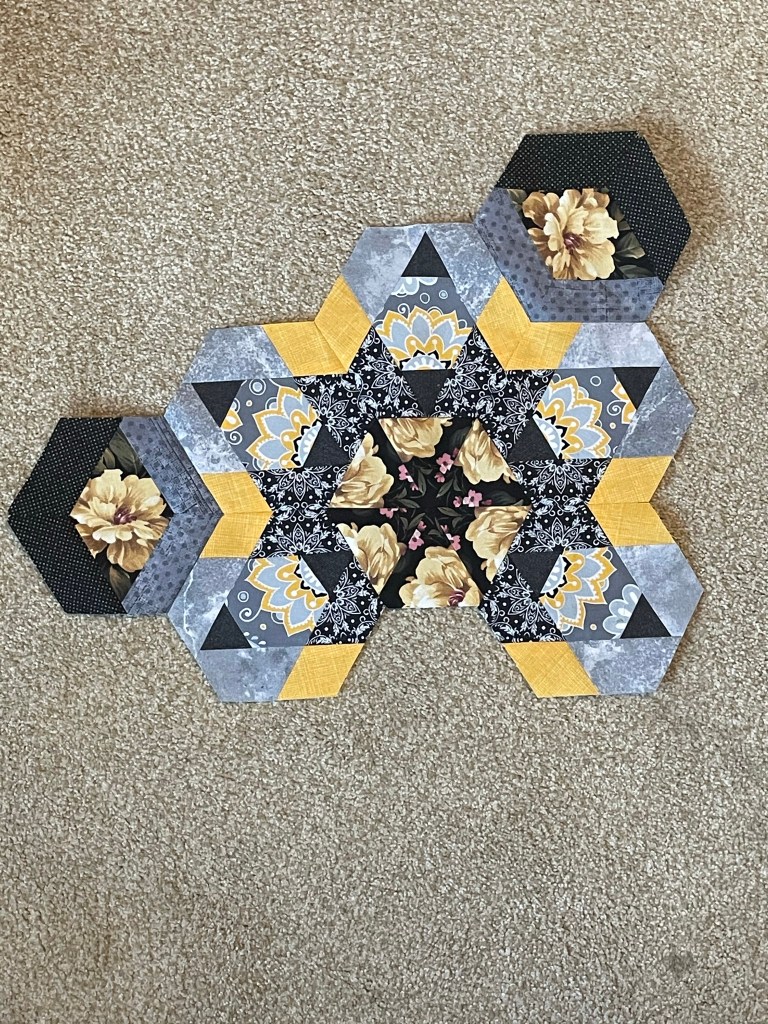
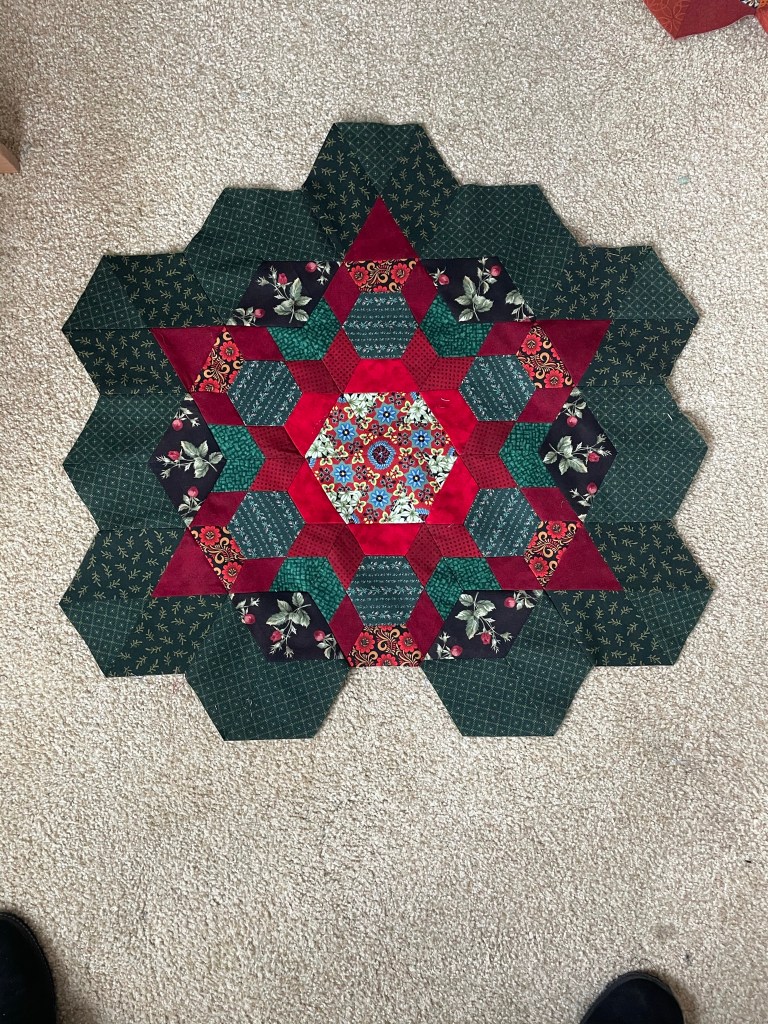
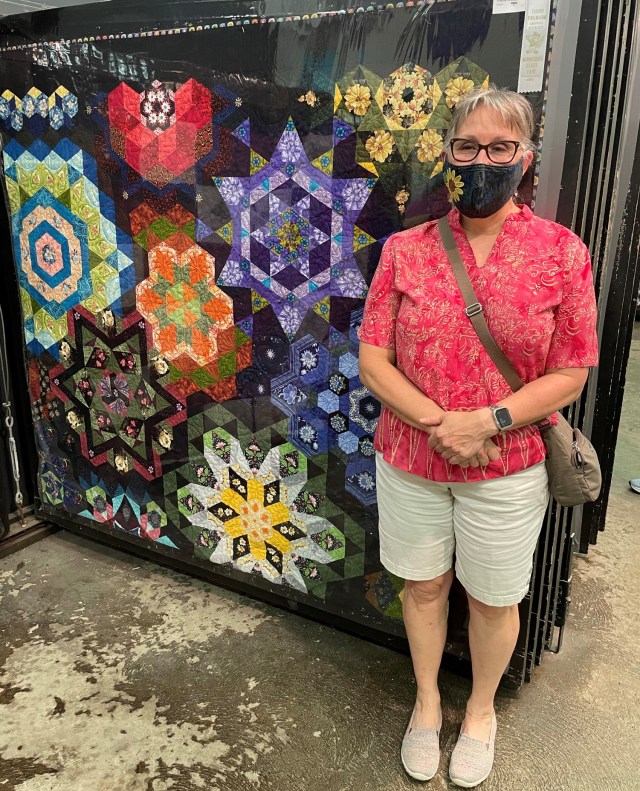
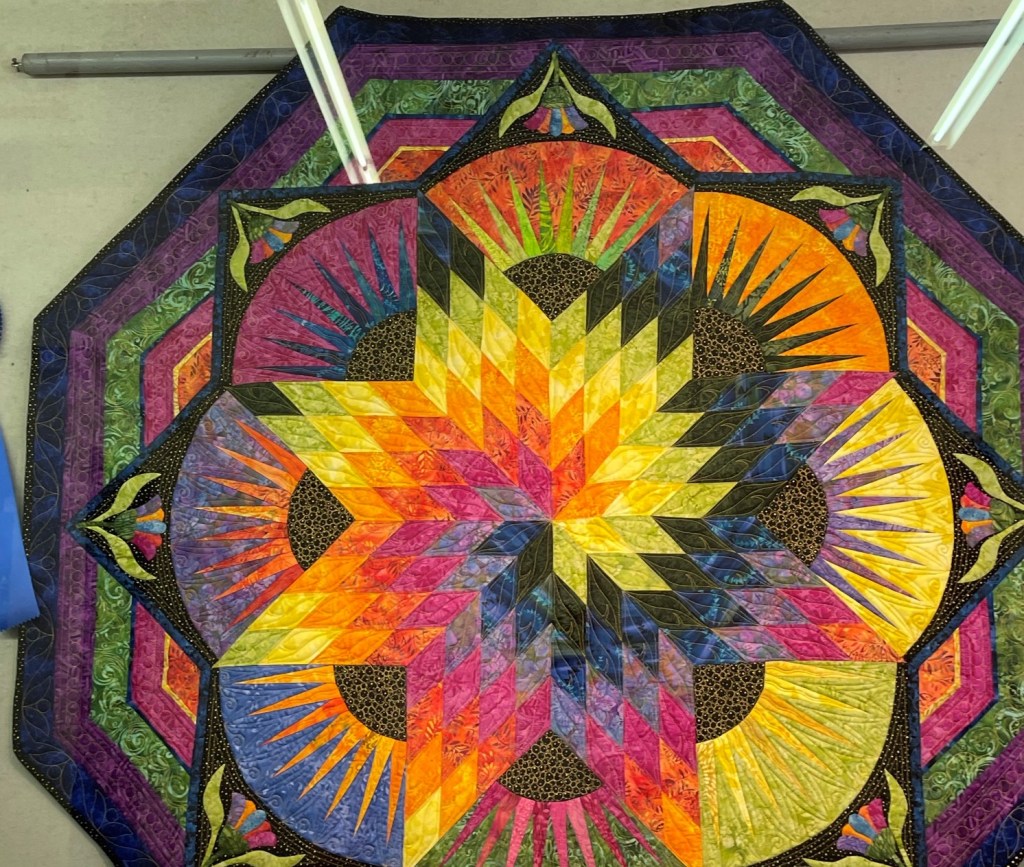
When I made my Kaleidoscope quilt earlier this year, I did a lot of “fussy cutting”. With fussy cutting, the fabric pieces are cut in such a way as to emphasize a particular pattern or design within the printed fabric. This was necessary to create the repeating design of each hexagon shape that this quilt included.

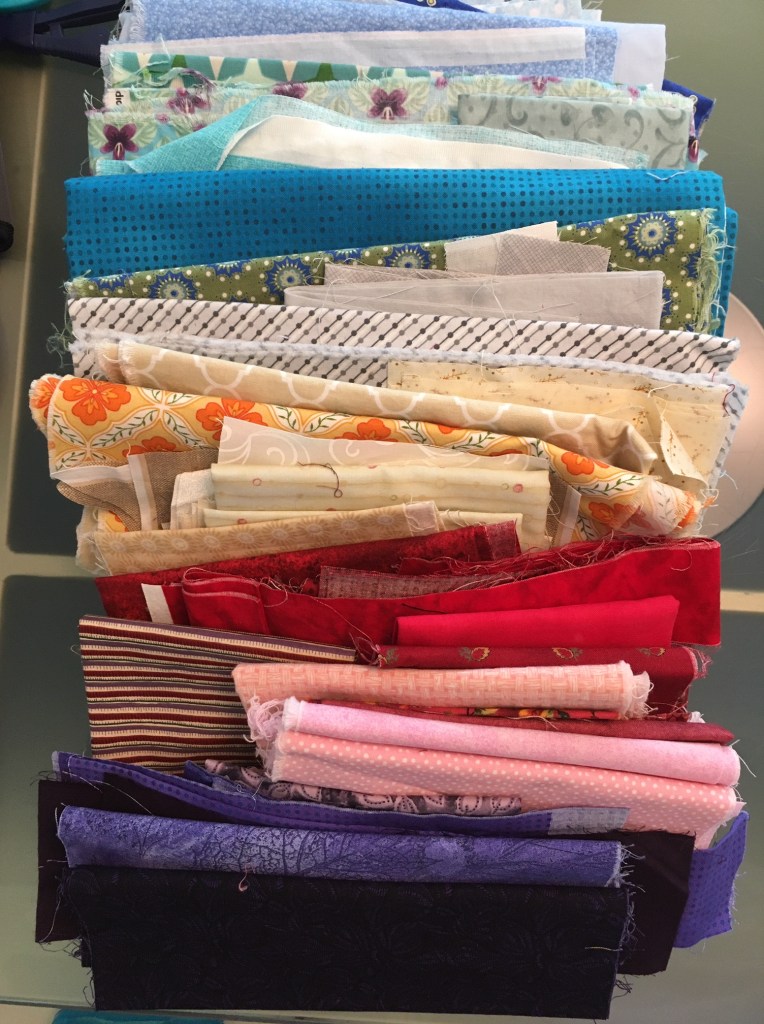
By doing this I ended up with a lot of leftover bits of fabrics. I hate to throw away any fabric – it costs money. So, these bits were added to the other scraps that were accumulating in my sewing room. When quilting, any piece bigger than 10″ x 10″ is sorted and stored on shelves according to the main color of the fabric. Anything smaller than 10″ x 10″ and bigger than 1″ x 1″ gets put into a wicker basket for future use.

Saving scraps allows me to to get the most out of my fabric purchases. And, when using these scraps, I get to make beautiful one-of-a-kind quilts. This summer, my basket of scraps was over flowing. It was time to do something with these bits and pieced.

When first looking at the basket, it was a bit daunting as to where to start. First, I sorted the fabrics into two piles, batik scraps and printed cotton. Then I sorted each of these fabric piles by color and size of the design on the fabric.

Once sorted, I needed to pick a couple quilt designs to use. Having dozens of quilt designs on my computer that I had created in Electric Quilts, I selected several that would work well for scrap quilts.

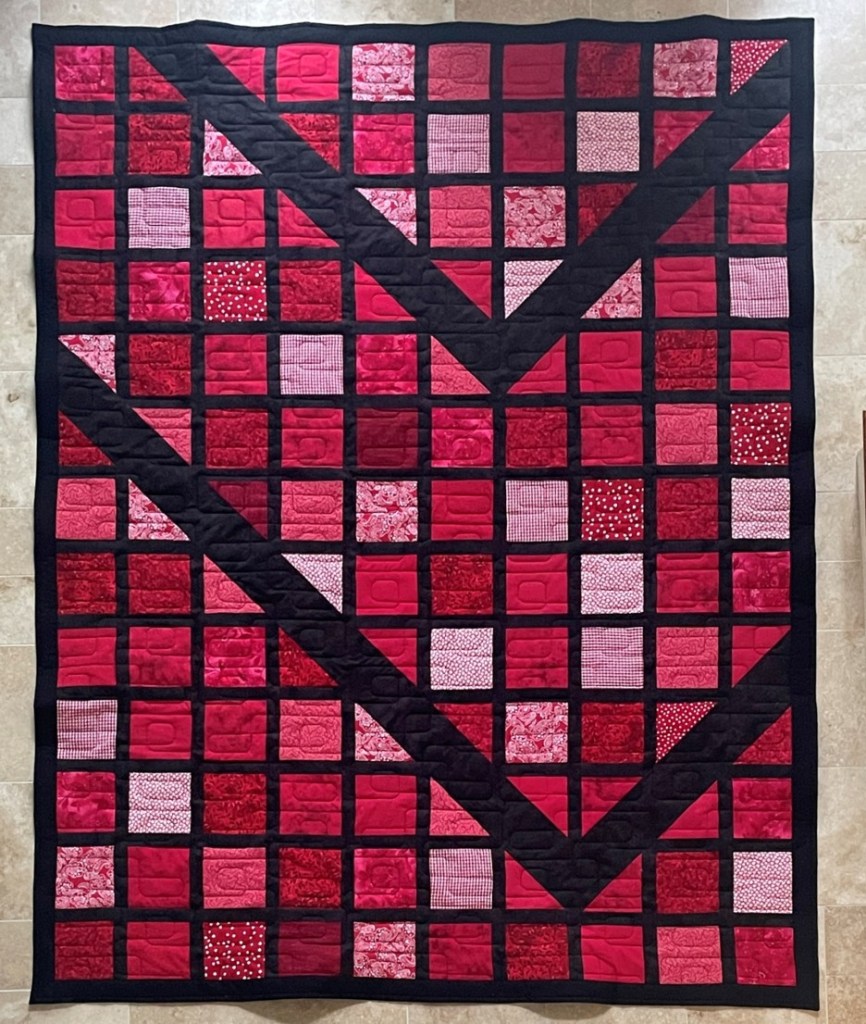
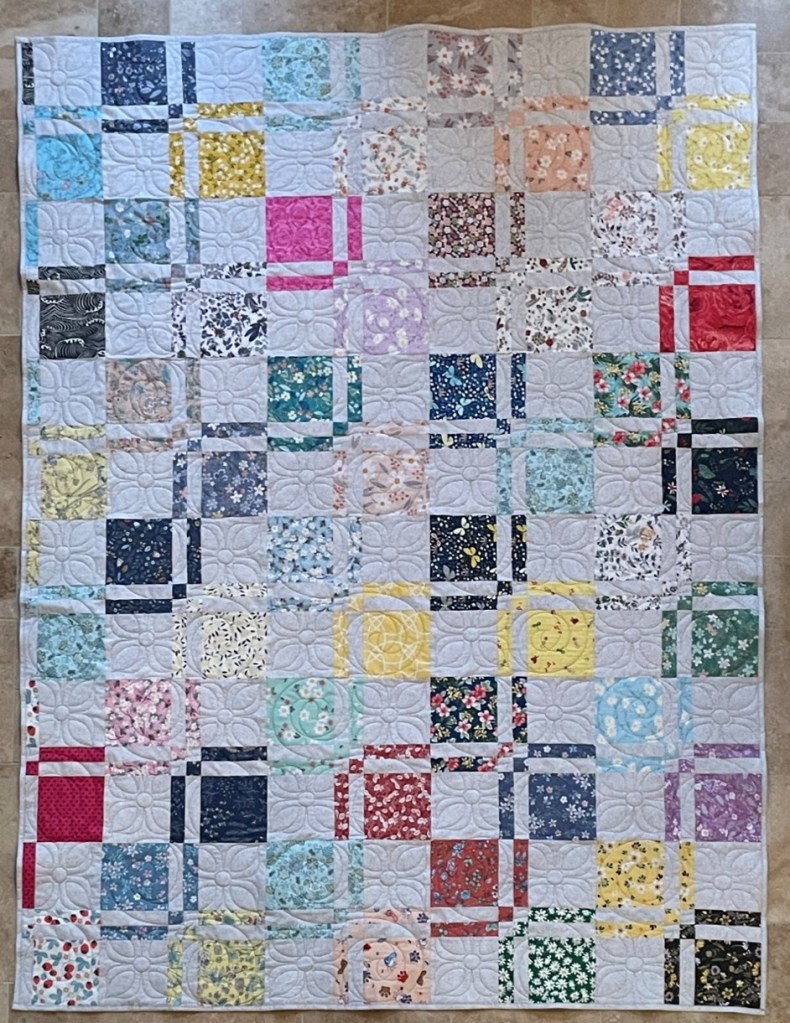
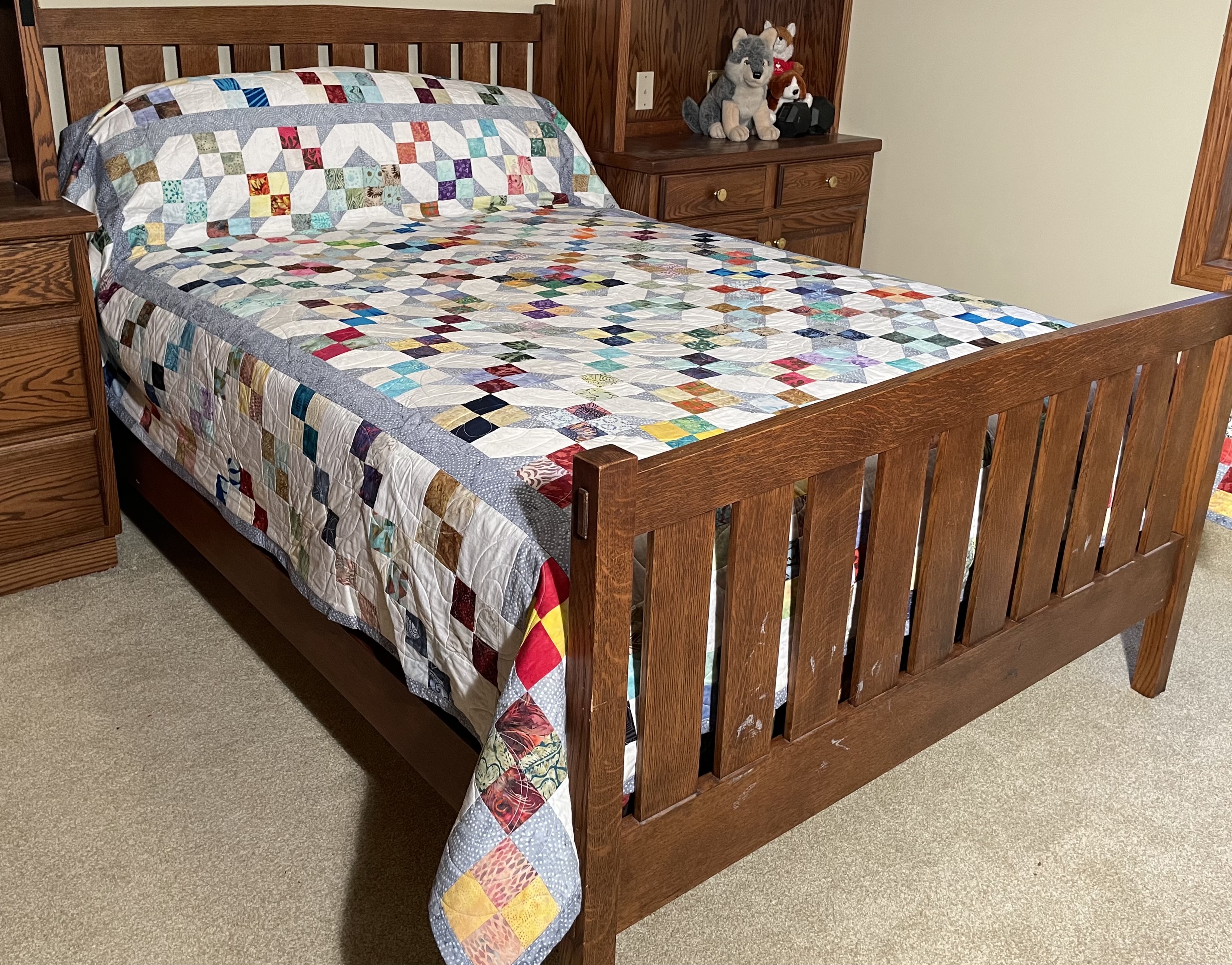
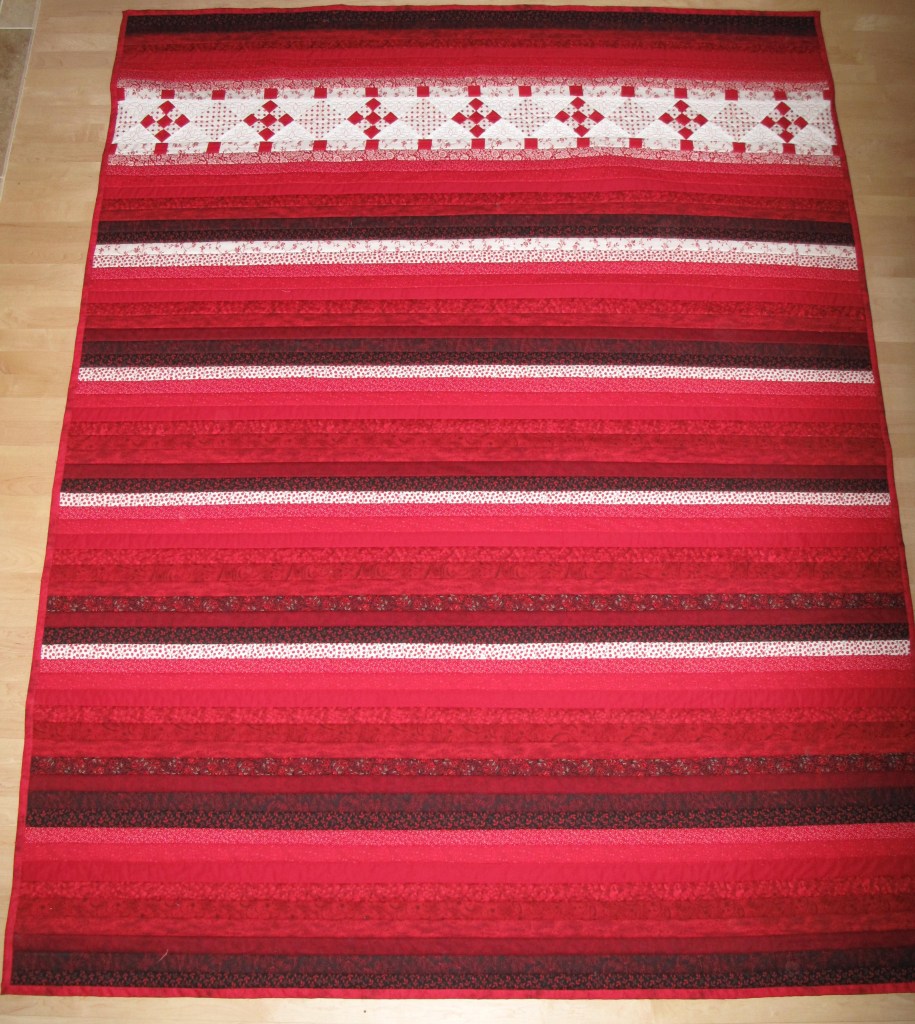
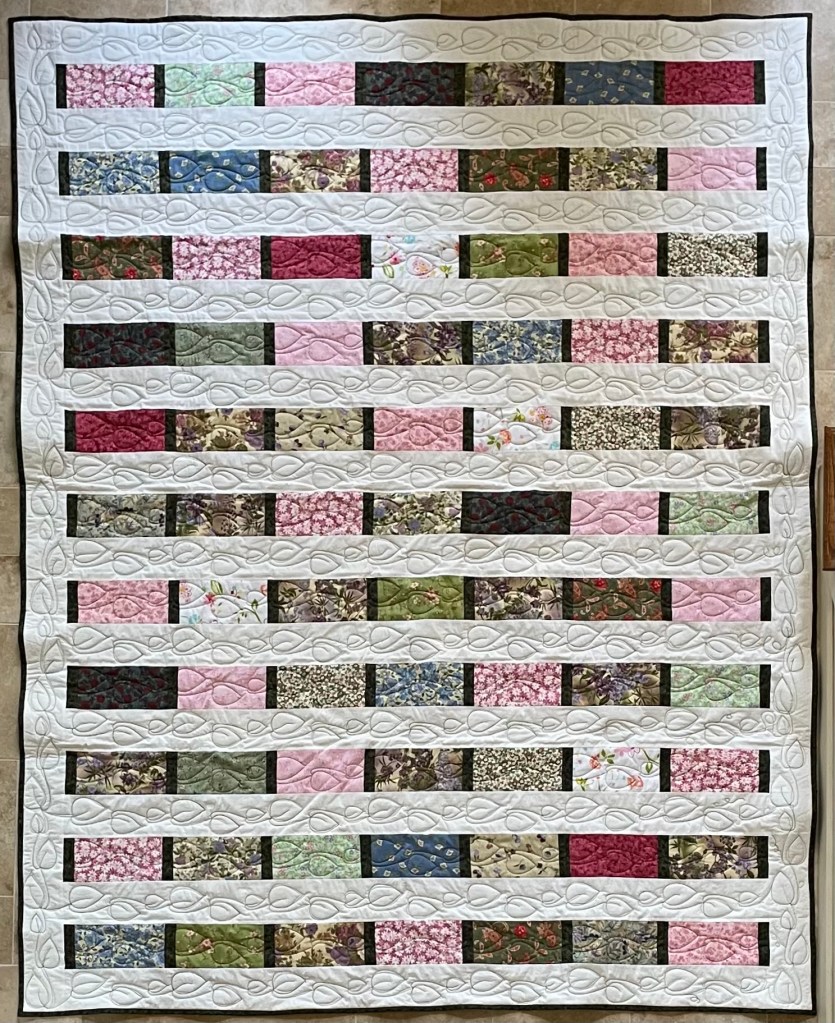
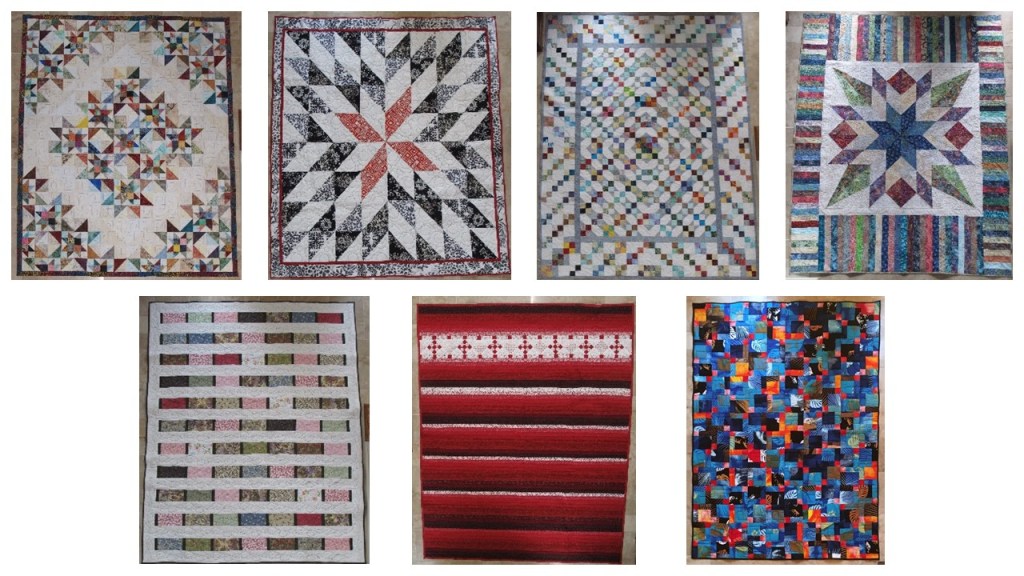
To avoid having a design that appeared cluttered, I used a few design guidelines. In some quilts, I focused on a specific color to tie the fabrics together. In another quilt, I used the negative space to offset the chaos of the scrap pieces. And, in still other quilts, I used a design that called for larger pieces of fabric. These quilt designs were used for prints that were large to make the quilt seen less busy overall and thus allow for the prints to be highlighted rather than being lost in a bunch of small pieces. And, sometimes you just gotta have fun and forget any design rules.

Quilt with specific Color – Grey

Quilt with specific Color – Red

Quilt using Negative Space

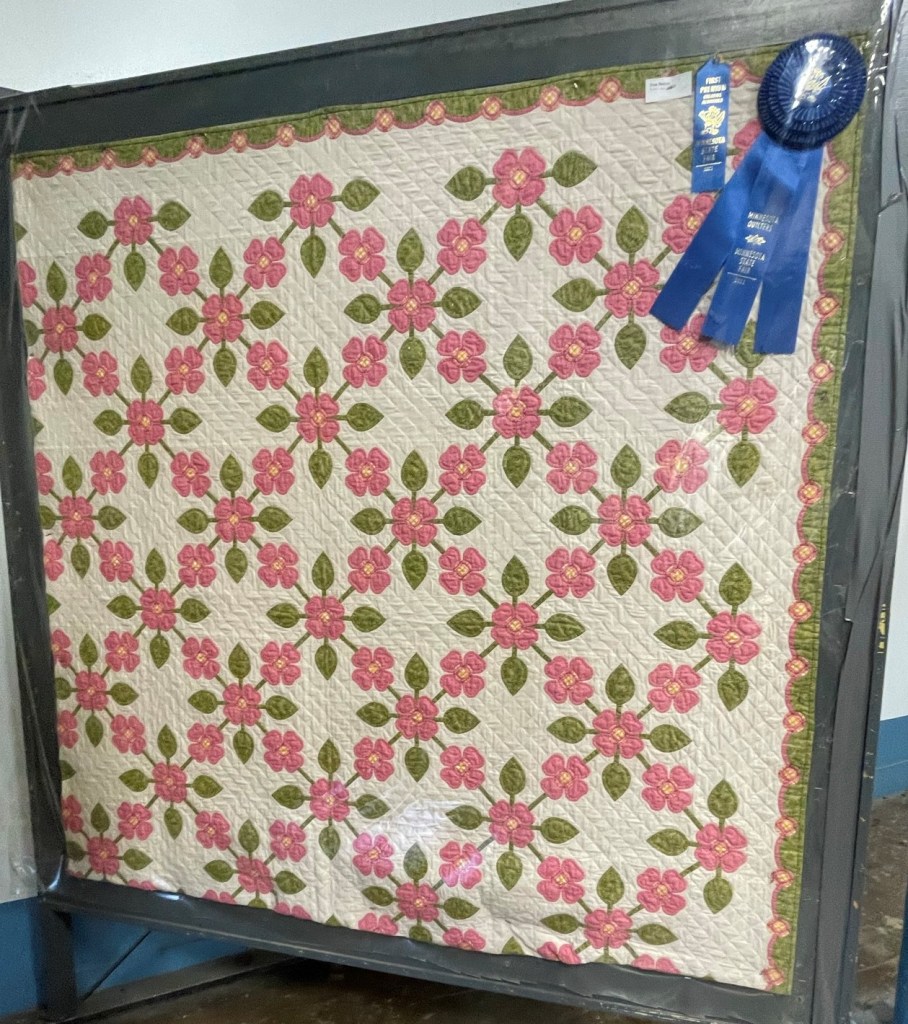
Quilt using Large Prints – Florals

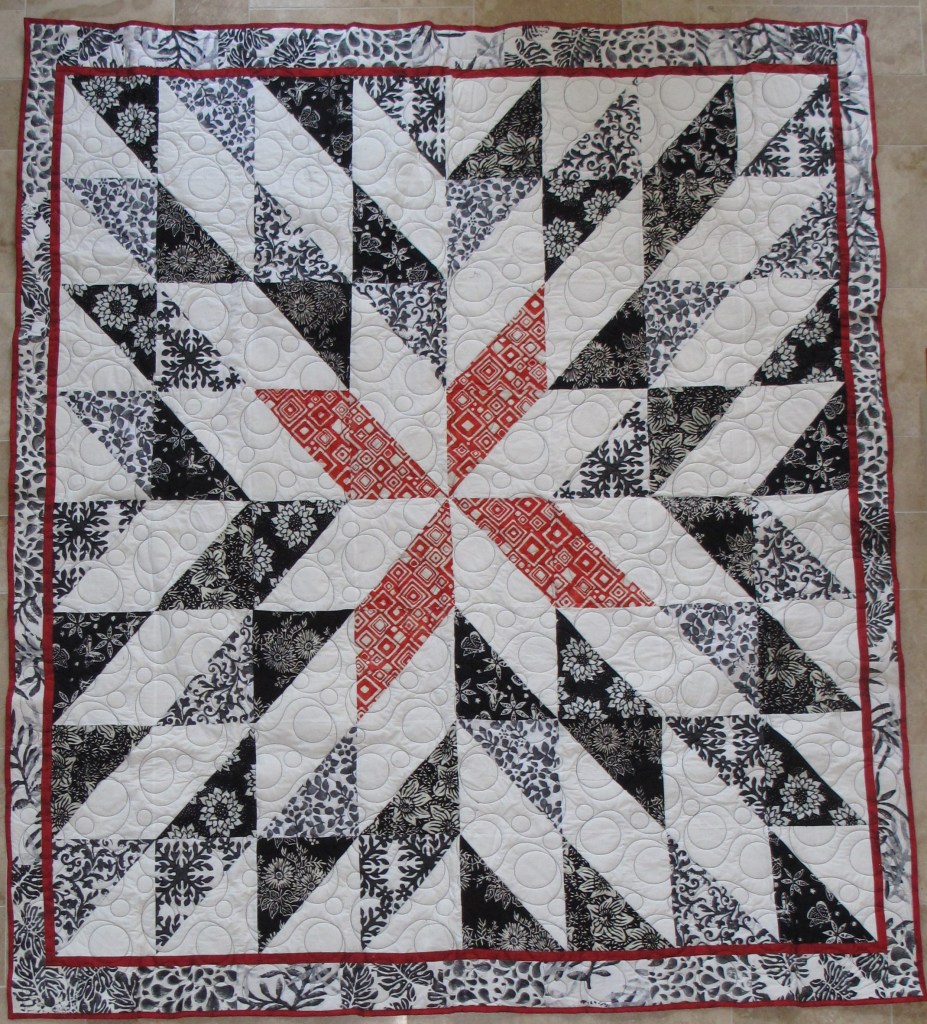
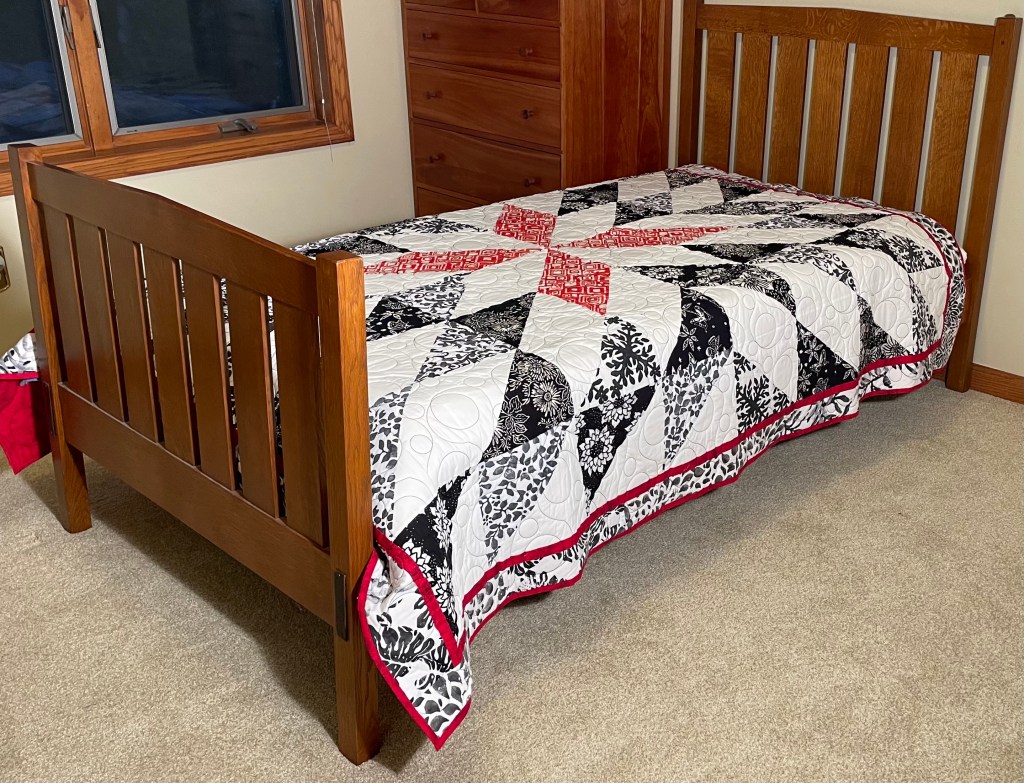
Quilt using Large Prints – Black/ White and Red

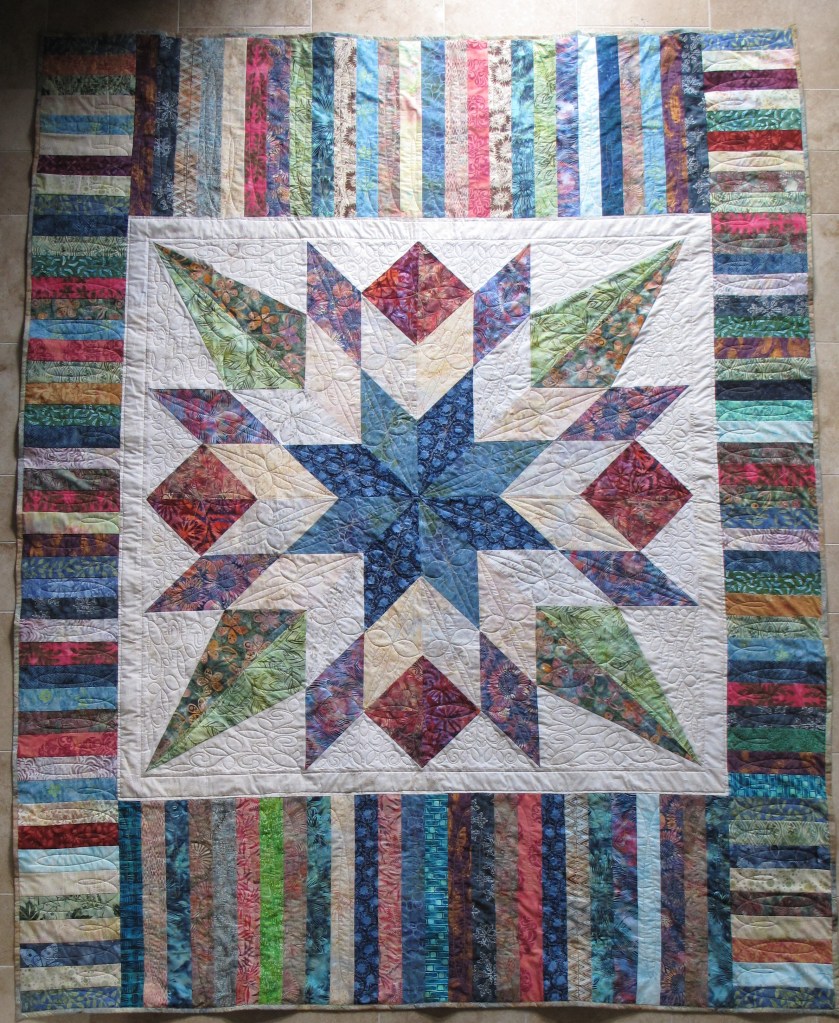
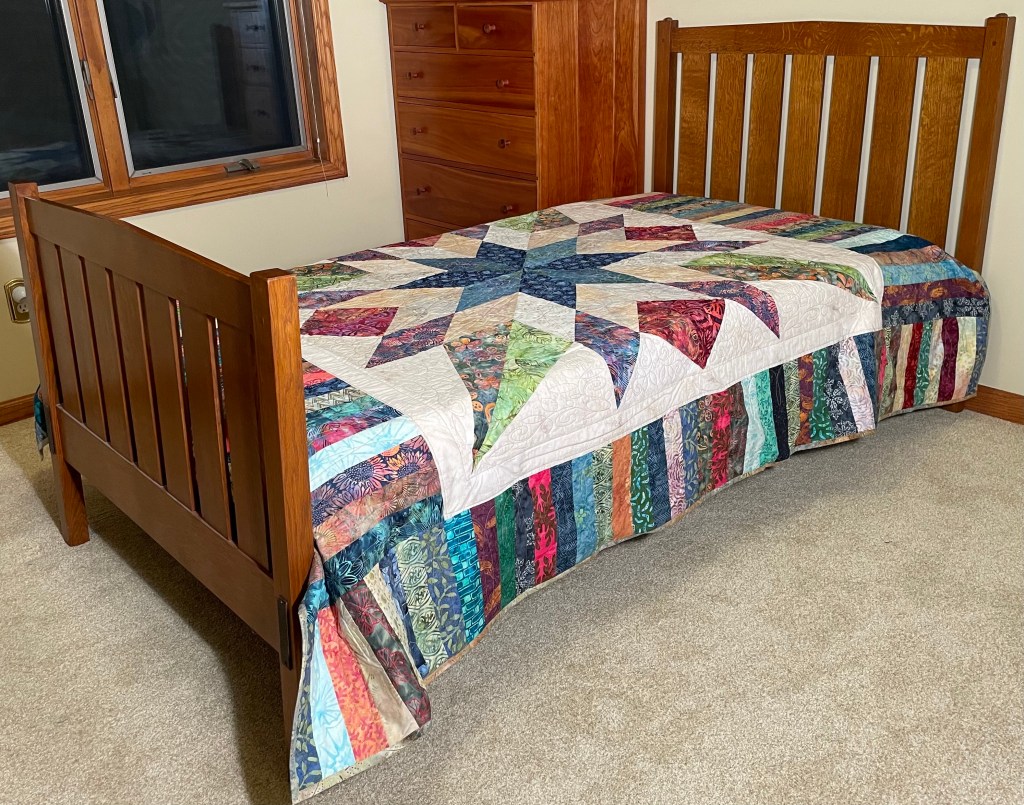
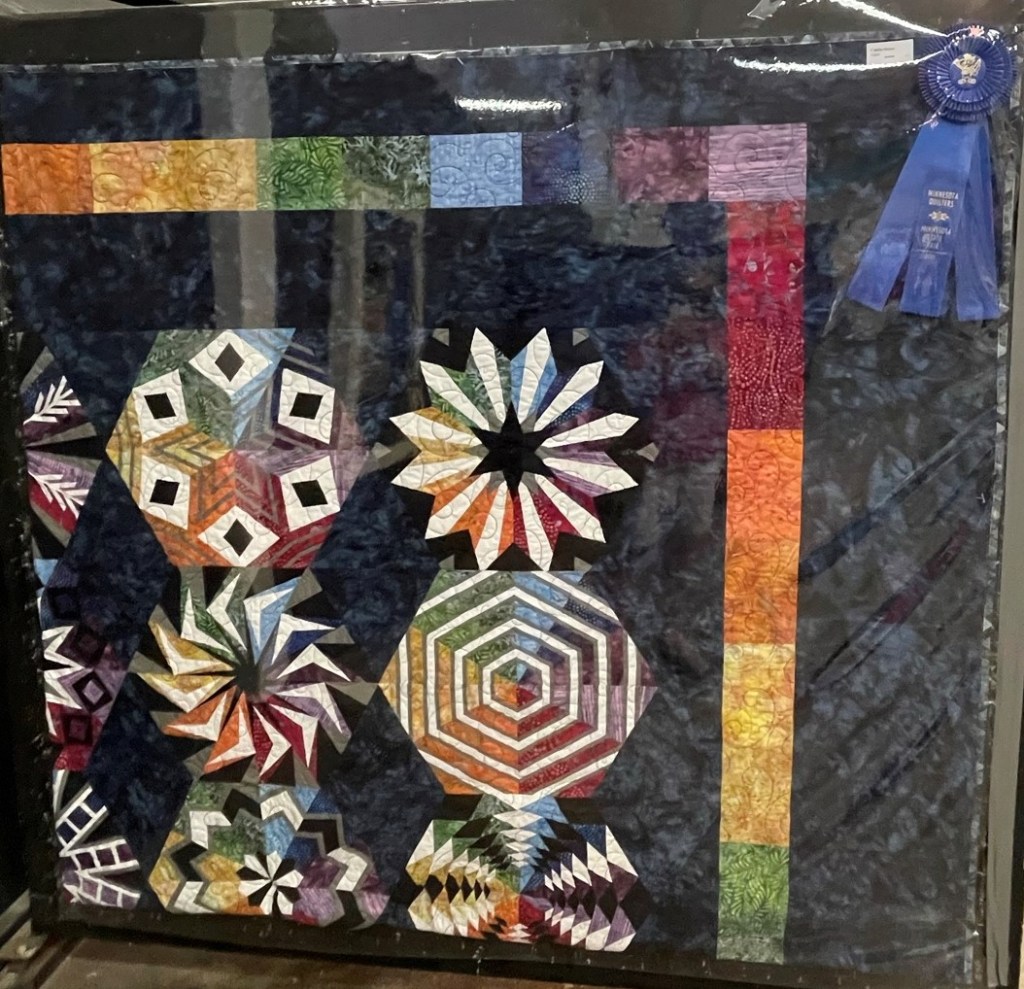
Quilt using Large Prints – Batiks

Quilt with No Rules

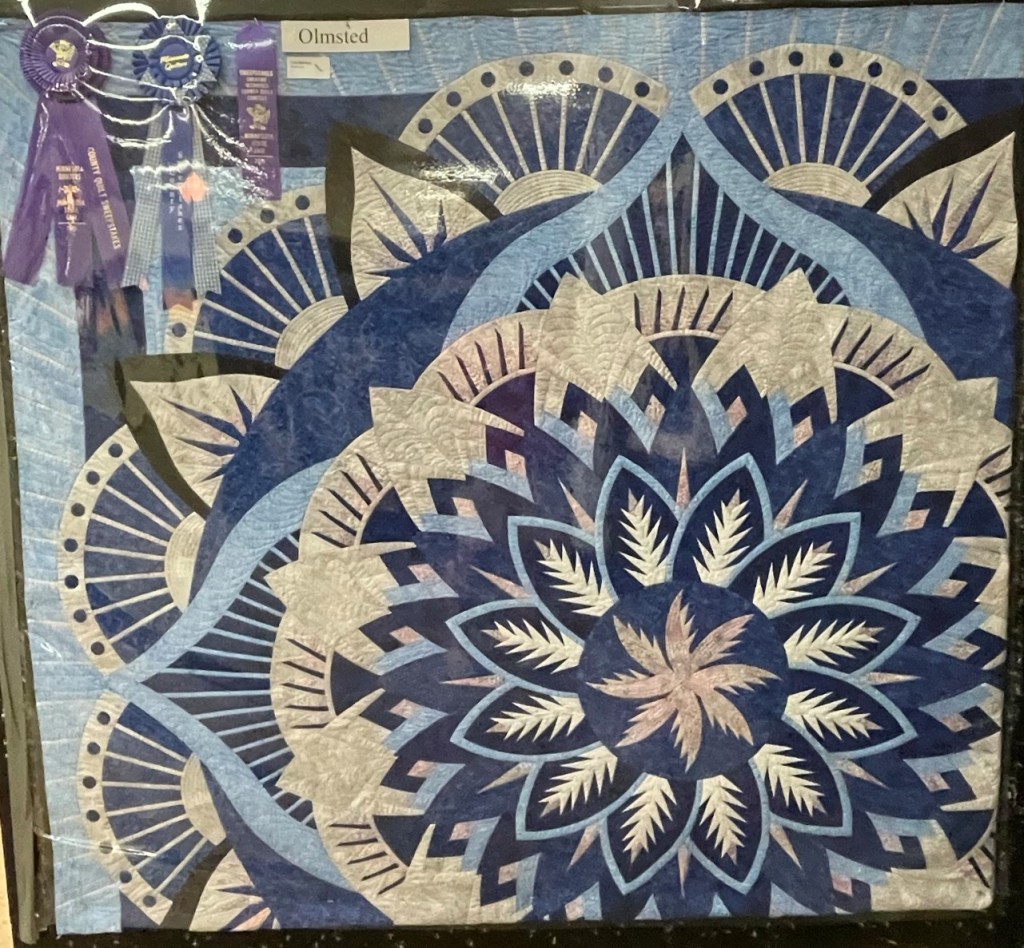
Kaleidoscope Quilt

Yesterday, I was able to pick up my quilts from the MN State Fair. One of those quilts was a kaleidoscope quilt that I have alluded to in a couple previous postings. Today, I thought I would give some more details of the construction of this quilt.

I started this quilt while on a vacation last November. I packed up a box of fabric scraps in a variety of colors and heading to South Carolina. When not enjoying the lovely beaches, I planned to spend time cutting and sewing.

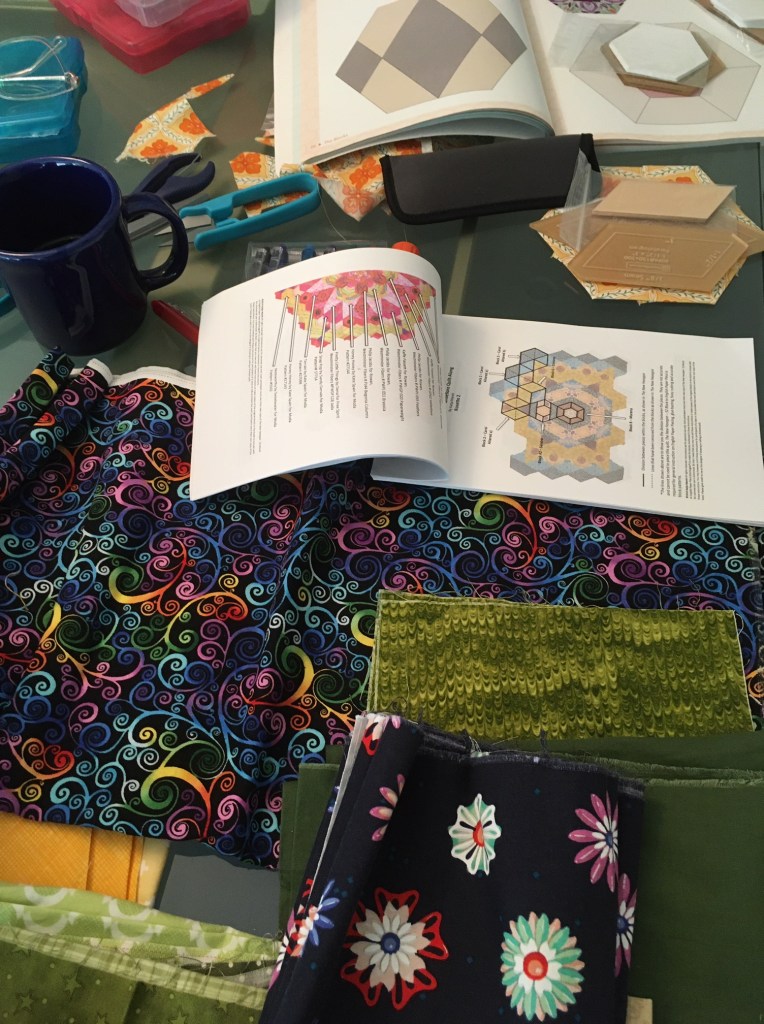
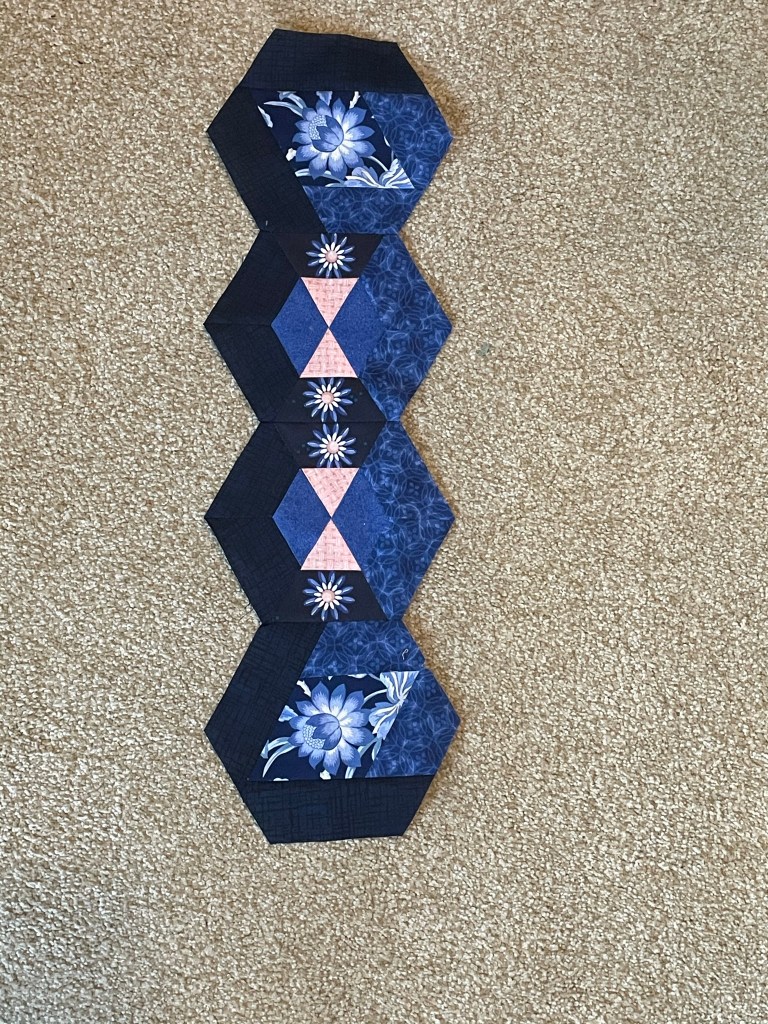
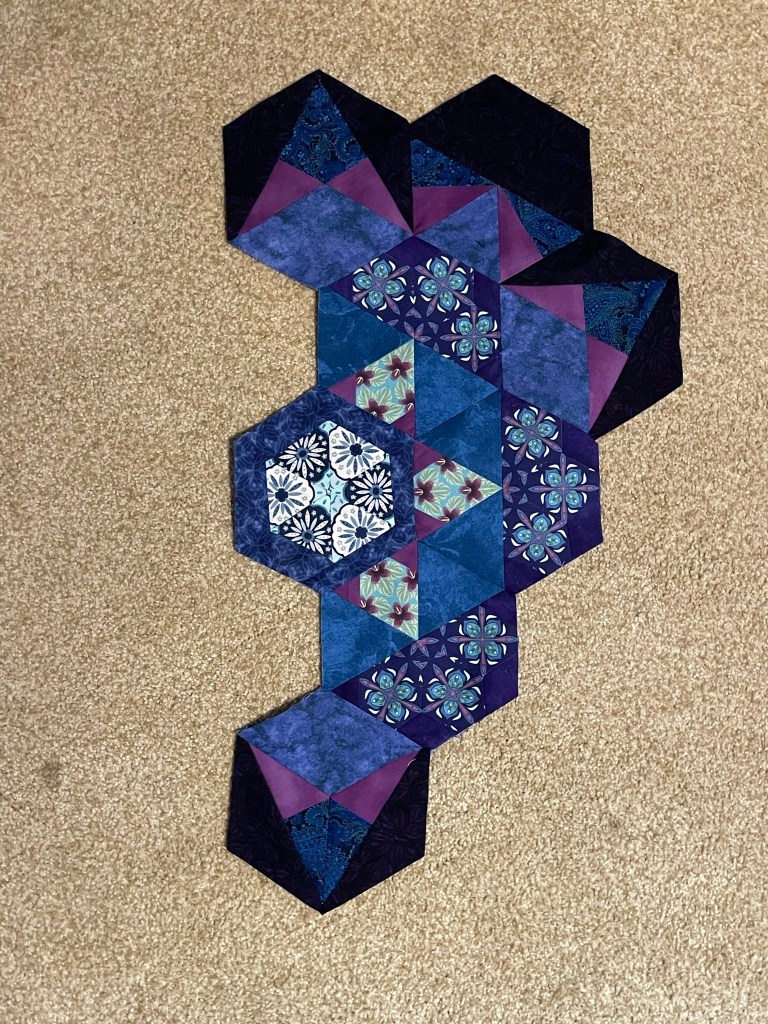
Originally, I planned to hand piece the quilt using English Paper Piecing as described in the book “The New Hexagon”. Using a graphics program, I printed some sheets of paper with the number of hexagons that I intended to use to make the quilt the size that I wanted. Next, I sketched out the location of medallions that I thought would look nice and decided on the color placement. However, like most projects, I did change the color locations as I worked on the quilt.

The first medallion that I worked on was the one I intended for the center of the quilt. After a lot of “fussy cutting” to make create the symmetry of the hexagons, I started hand stitching.

Three days later, after sewing the seams of this section by hand, I was concerned that my stitched seams may not hold up to normal usage on a bed. So, I stopped stitching and focused on more fussy cutting. When I returned home, I reinforced my hand sewn seams by sewing them on my domestic sewing machine. For the rest of the quilt, the seams were sewn by machine. Being hexagons, this was not a simple task – way too many Y seams!!

But, it was fun to watch the different sections come together.

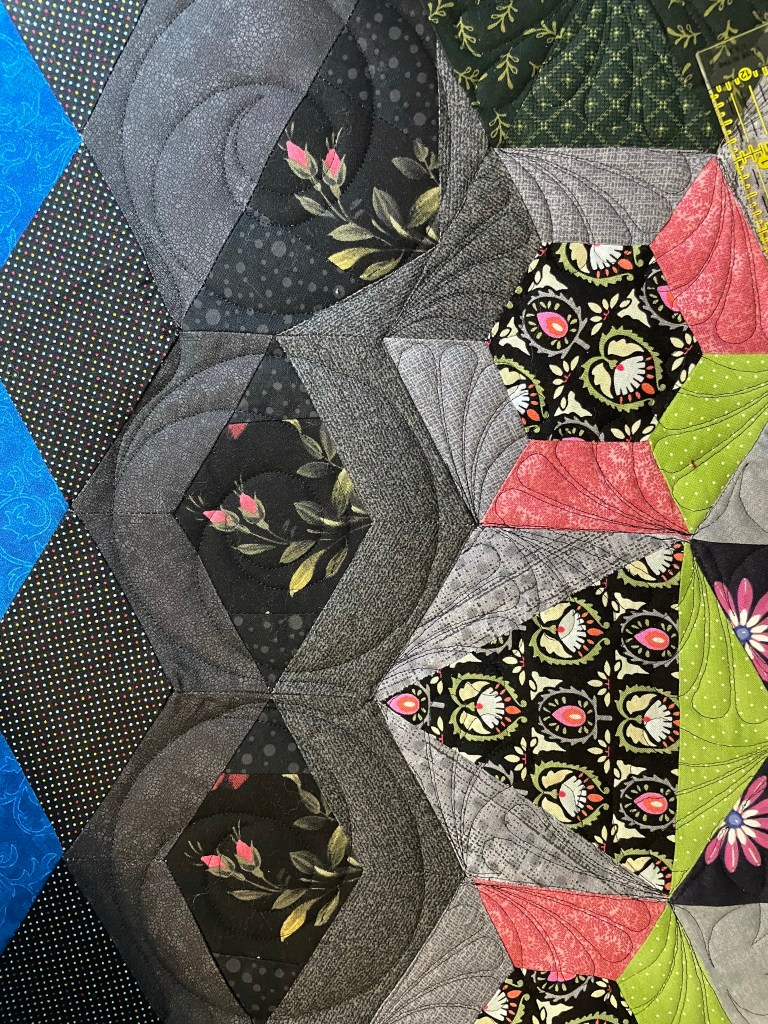
After all the sections were pieced, they were then sewn together into the final design and black hexagons were sewn on the edge to create a black border. The pieced quilt top was quilted on my long-arm machine. Each of the medallions were quilted the same with designs selected for each row of hexagons for the medallions.

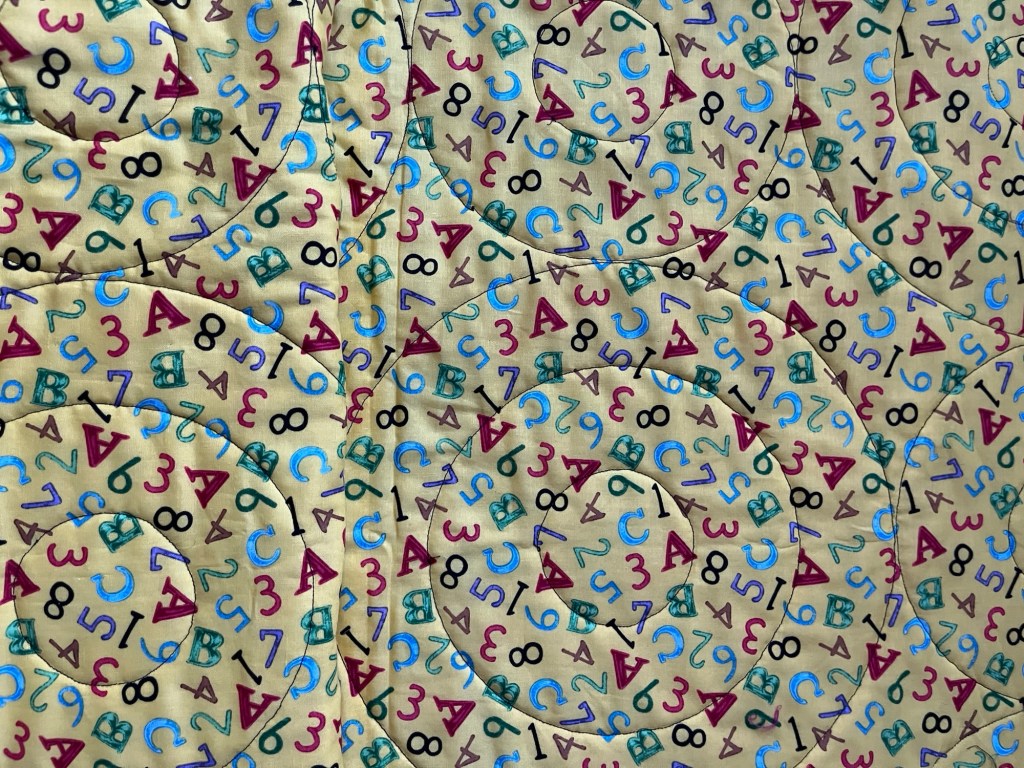
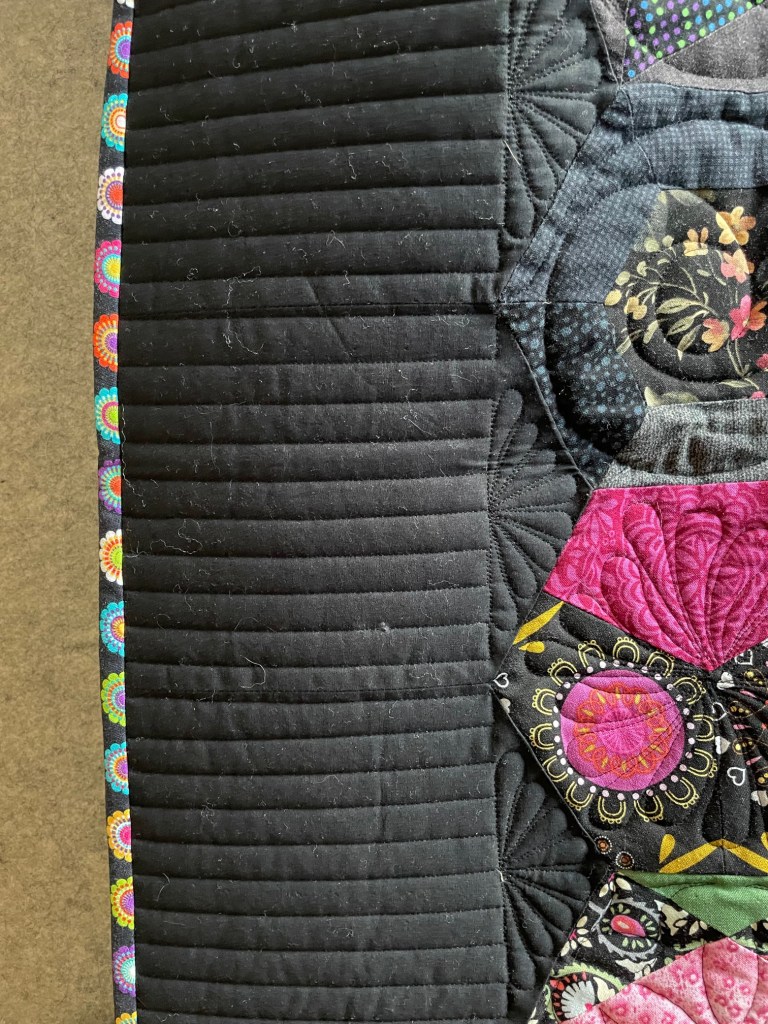
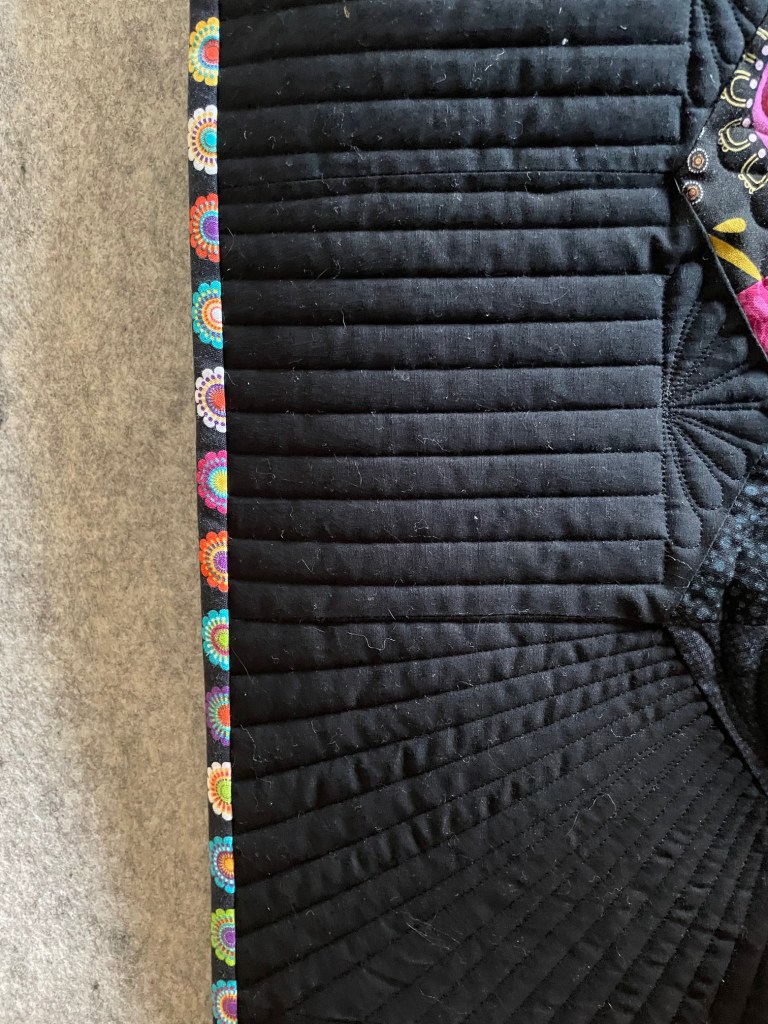
For the backing fabric, I found this really fun fabric.

And, for the binding, I was really excited to find some fun fabric that when folded matched the quilt really well.

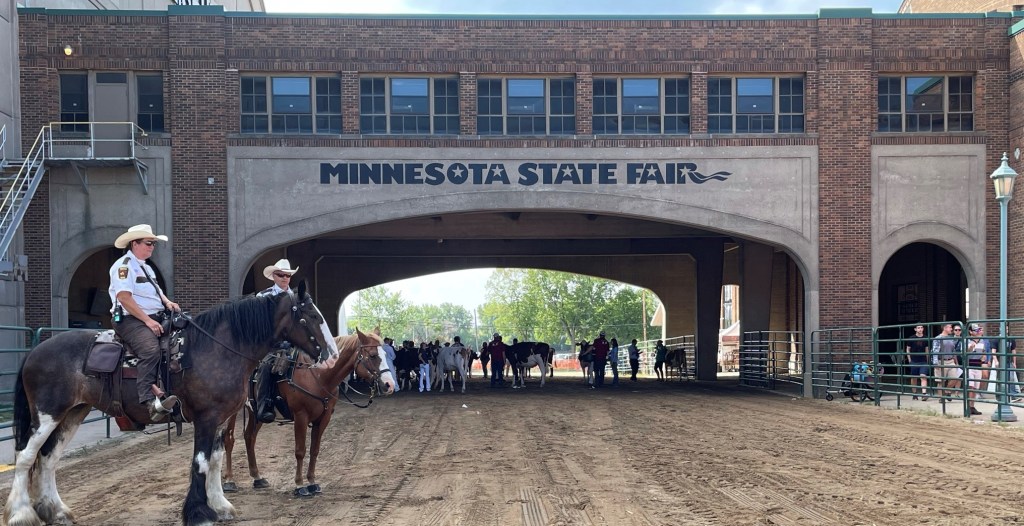
The Great Minnesota Get “Back” Together

Each year, I enjoy going the the Minnesota State Fair, viewing the artistry of the creative activities entries, as well as entering a couple quilts in the competition. In 2020, I was disappointed when the fair was cancelled.

This year, I had originally thought that I would not be able to enter any quilts in the competition. Having a trip to Colorado scheduled during the drop off days for the creative activities, I was at first unsure how I would be able to enter. About a week prior to our trip, I learned that I could drop off entries at the fair office during early drop off days before leaving on our trip.

After entering, I was still hesitant to attend the fair due to the increase in Covid cases. However, with the attendance numbers on previous days being down, I decided to go this morning. Being there from 8 to 11am, the number of people that were there was pretty small. The weather was cool and it was an enjoyable morning.

Things that I did not do:

  • Utilize a Park & Ride bus – to avoid the crowds of people on the buses, I left home early morning and was able to find parking in a lots across the street from one of the fair entrances.
  • Eat Fair Food – I usually avoid the fair food, so this was nothing new for me.
  • Ride any amusement in the Mighty Midway
  • Do any shopping in the Market areas.

Things that I did do:

  • Wore a mask and avoided crowds
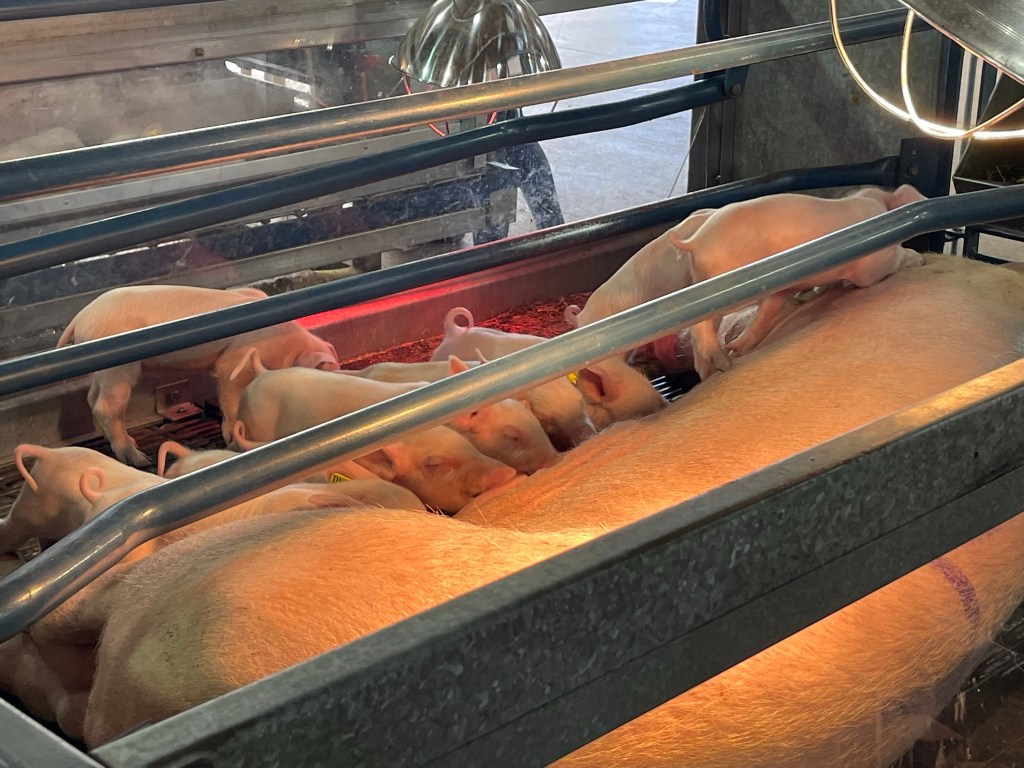
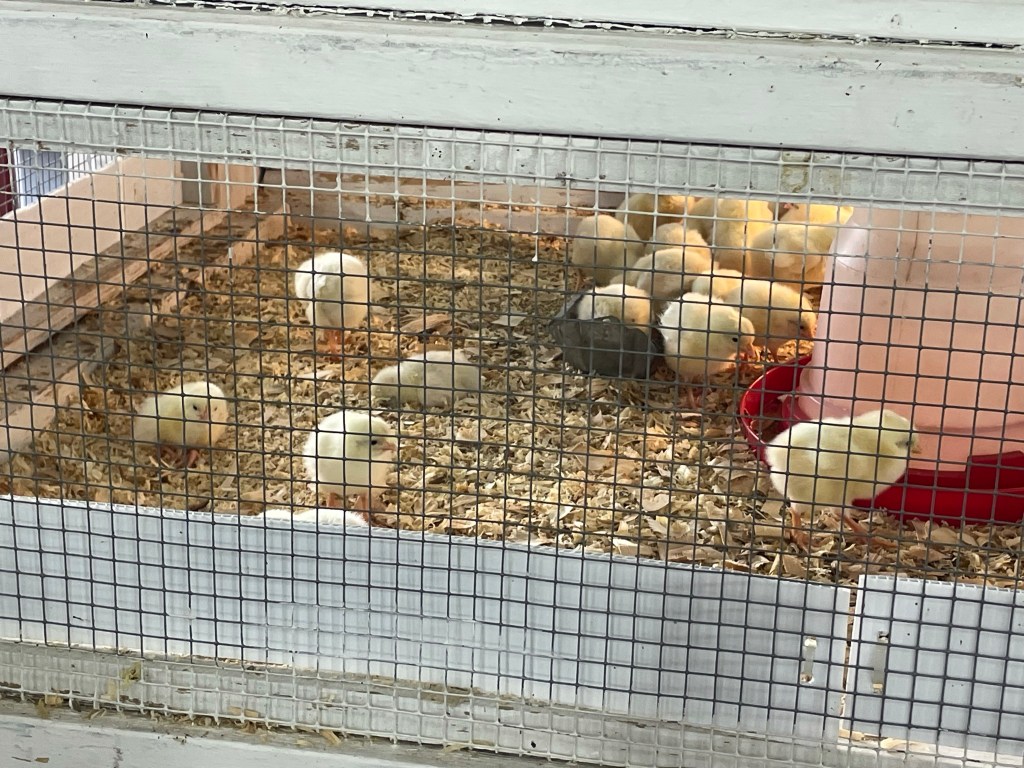
  • Arriving early, I walked through several of the animal and 4H exhibits prior to the other buildings opening
  • Enjoyed the artistry in the Creative Activities building, including quilting, weaving, crochet and woodworking
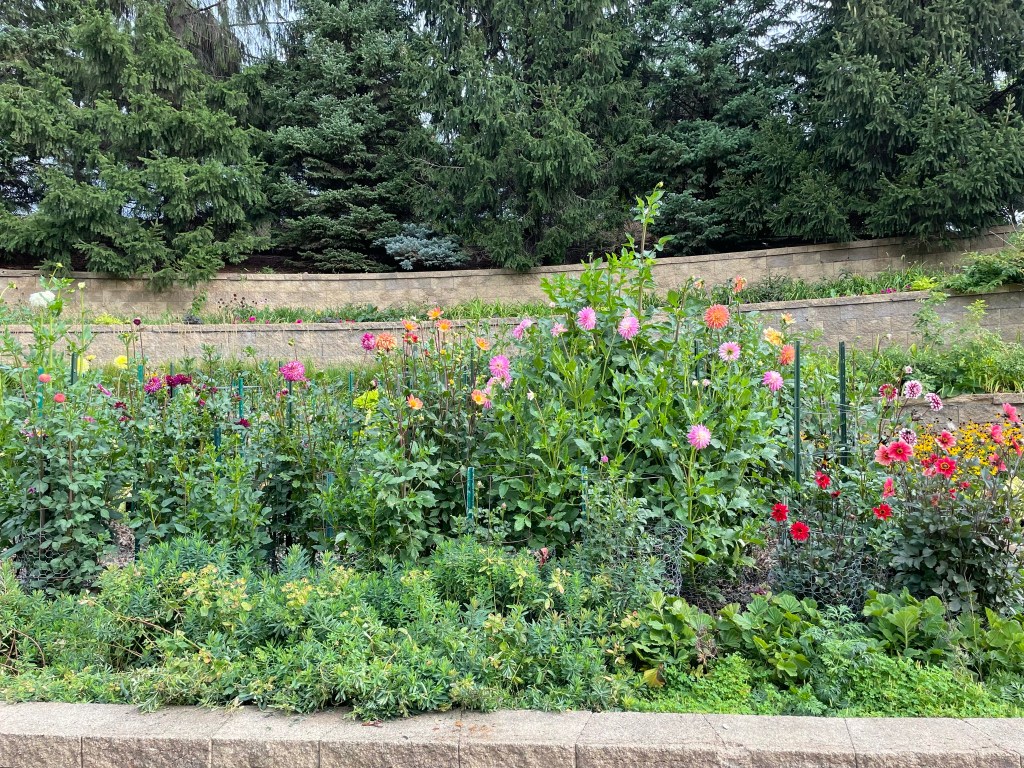
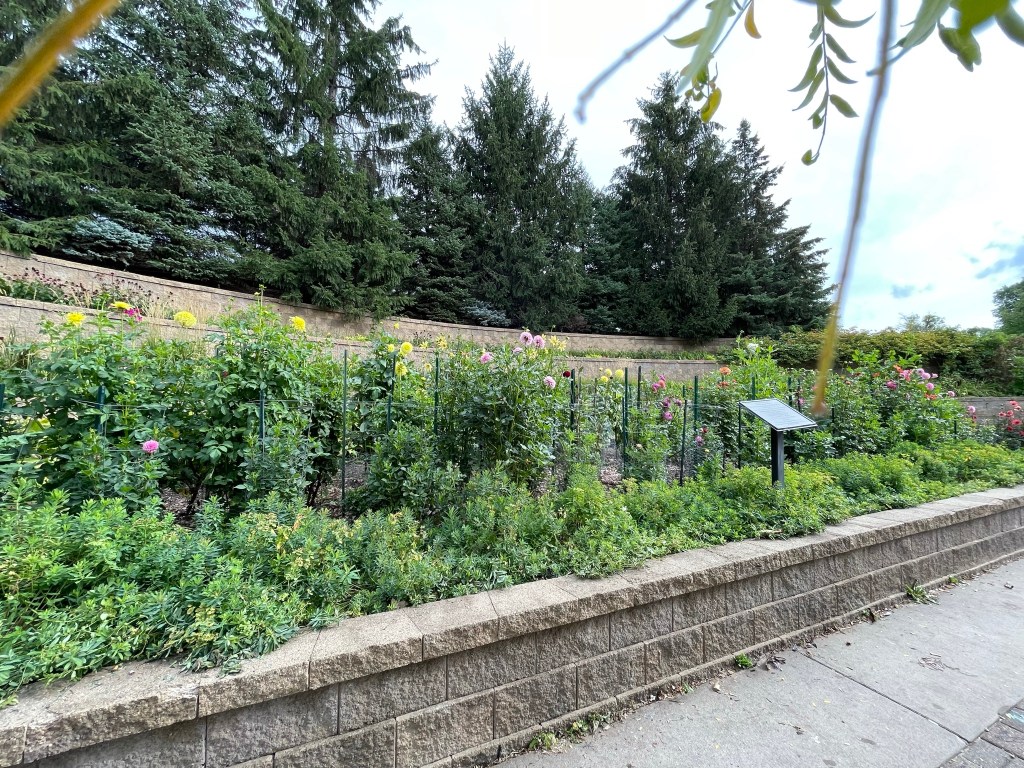
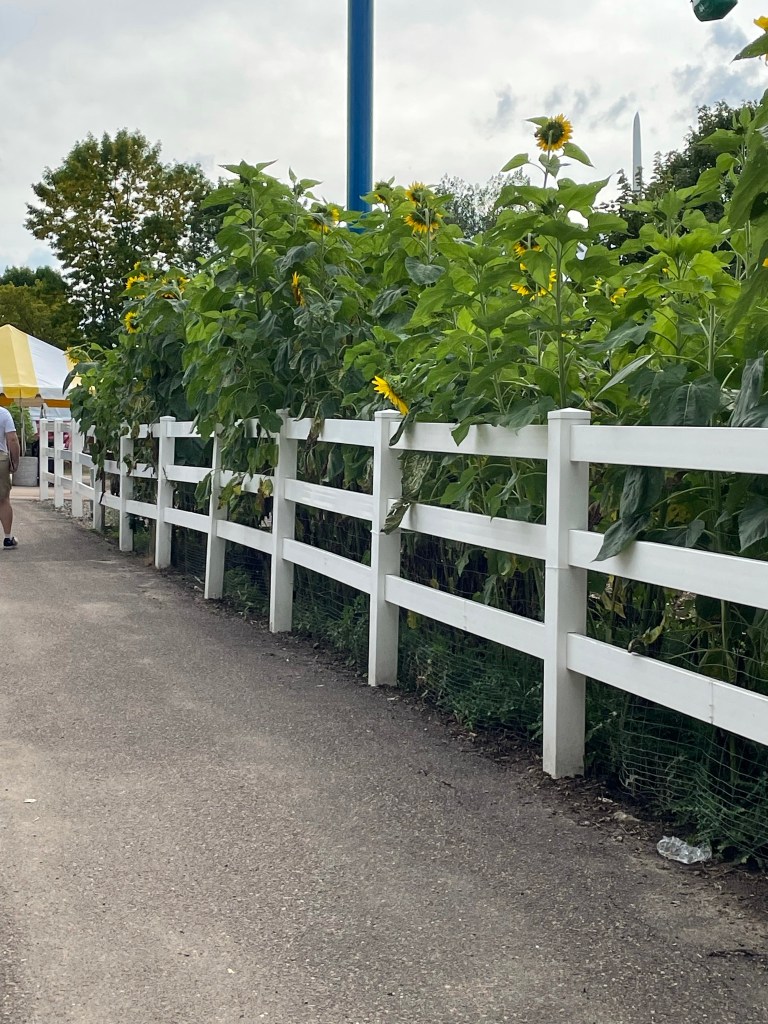
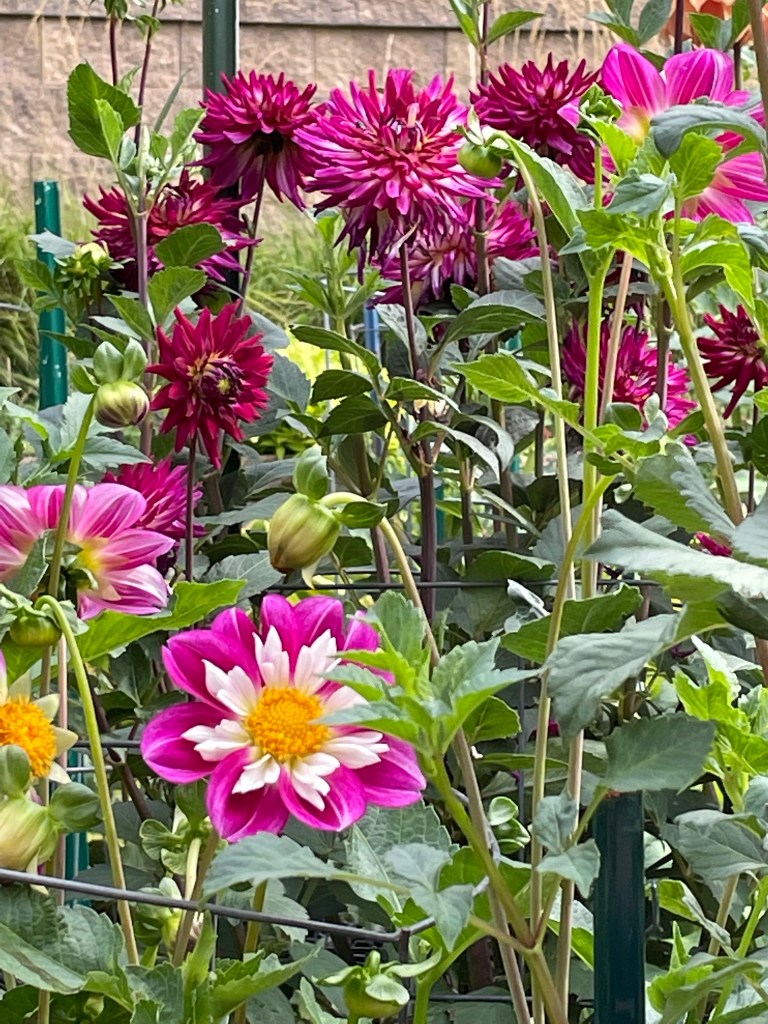
  • Enjoyed the flora of the fair, a much overlooked aspect of the fairgrounds

Animals:

Creative Activities – My entries:

My hexagon quilt received a third place ribbon. The quality of the entries this year was amazing. So, I am pleased with a third place finish.
My miniature doll quilt, made with hand dyed fabrics received a second place ribbon. This was a huge surprise to me. I only entered this quilt as a whim at the last minute, the quilt was never intended to be entered into a competition.
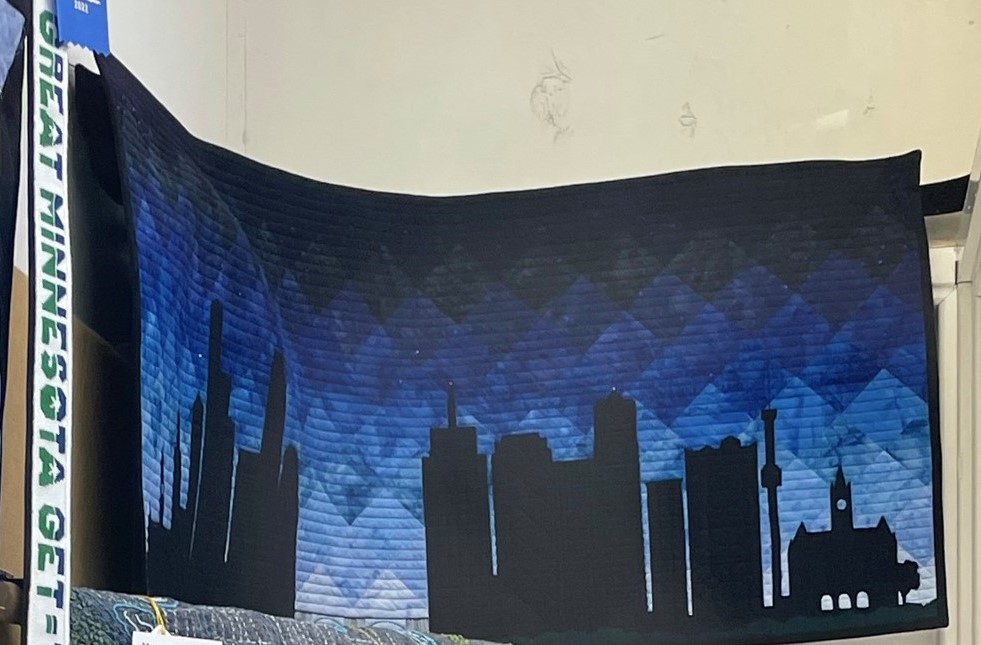
The Twin Cities Skyline wall quilt that I made for a friend did not place. However, it is displayed in a very prominent location at the entrance to the Creative Activities Building. I will be interested to read the comments from the judge when I pick it up next week.

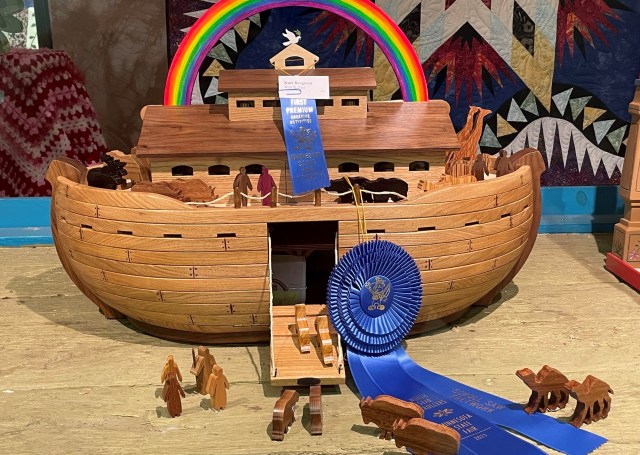
Creative Activities – Noah’s Ark: My absolute favorite of all of the creative activities entries that I saw today!

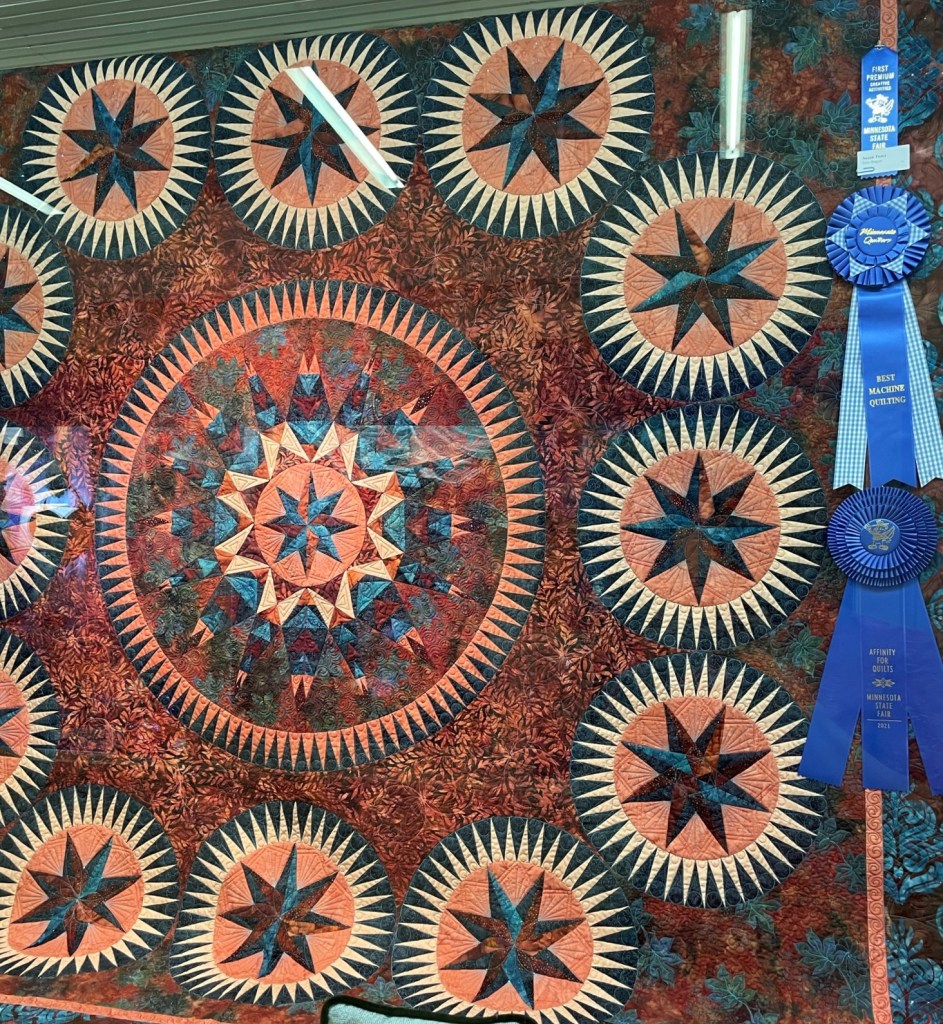
Creative Activities – Other Quilting:

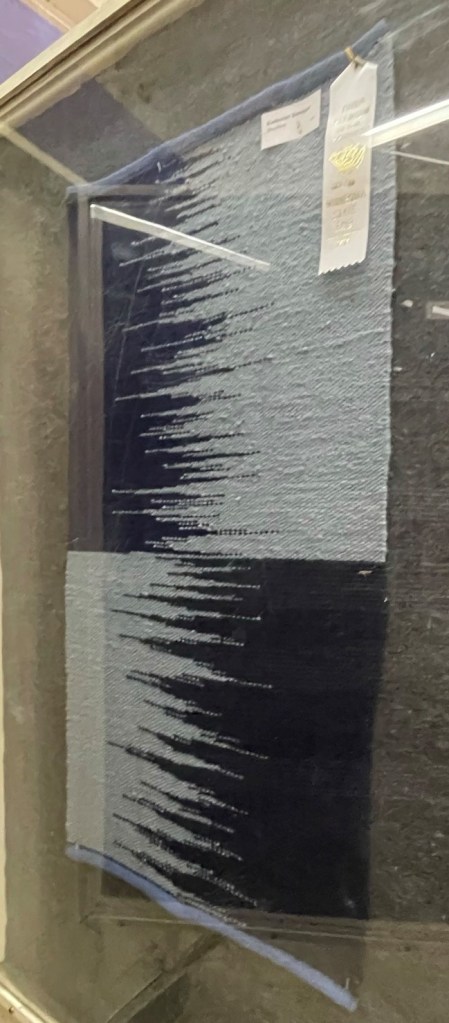
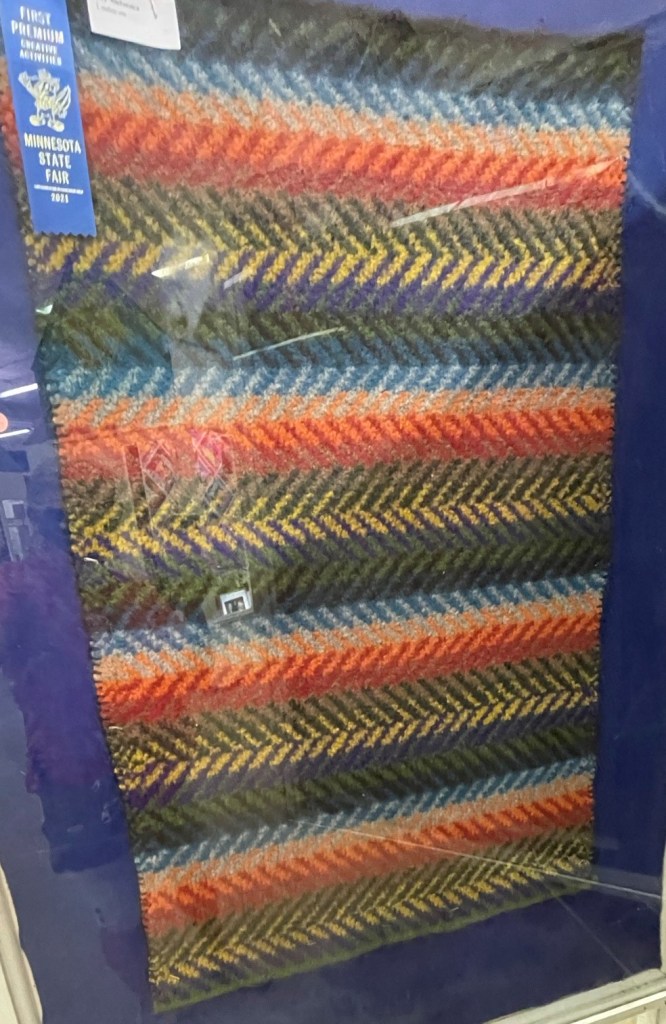
Creative Activities – Weaving:

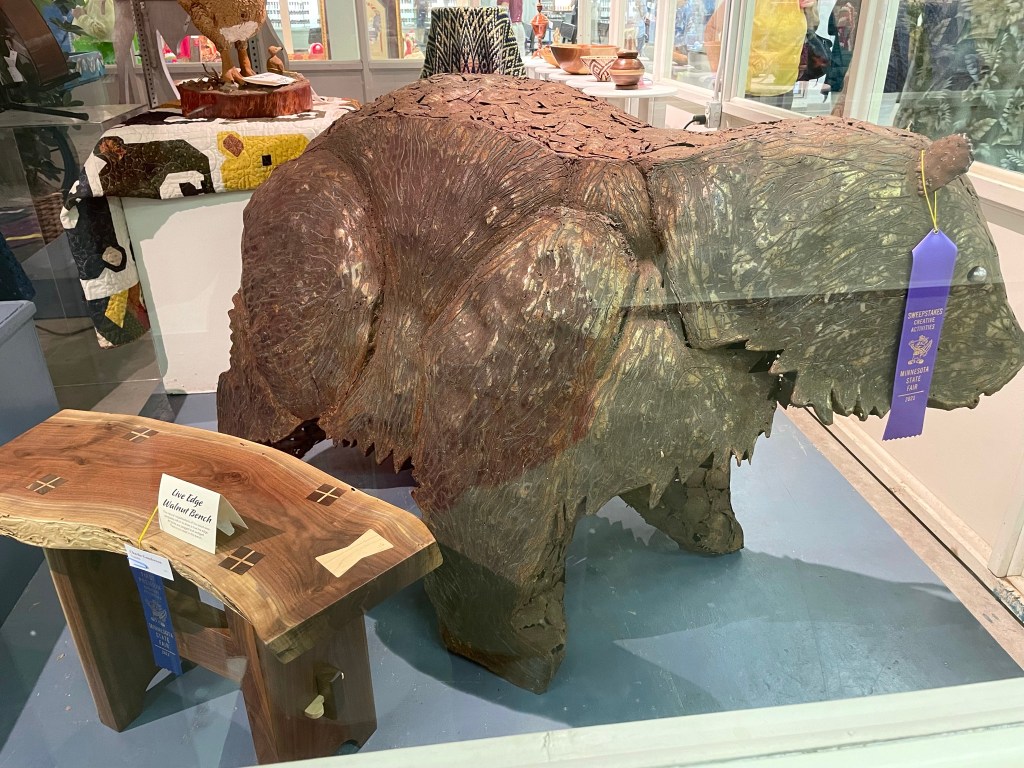
Creative Activities – Others:

Butter Sculptures of the Fair Princesses:

Flora of the State Fair:

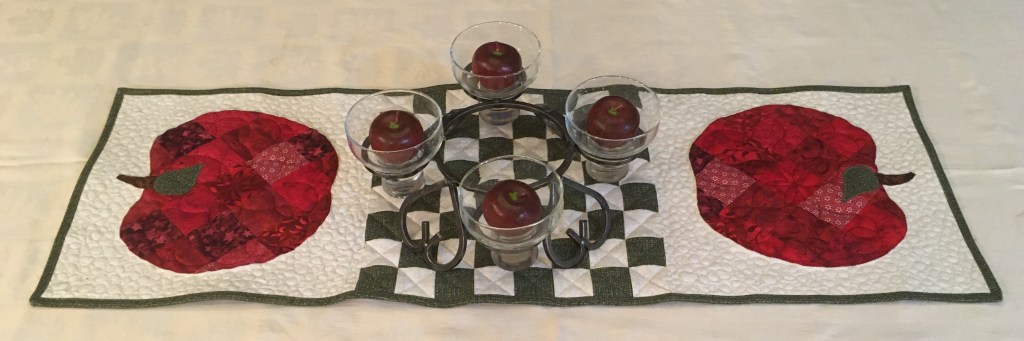
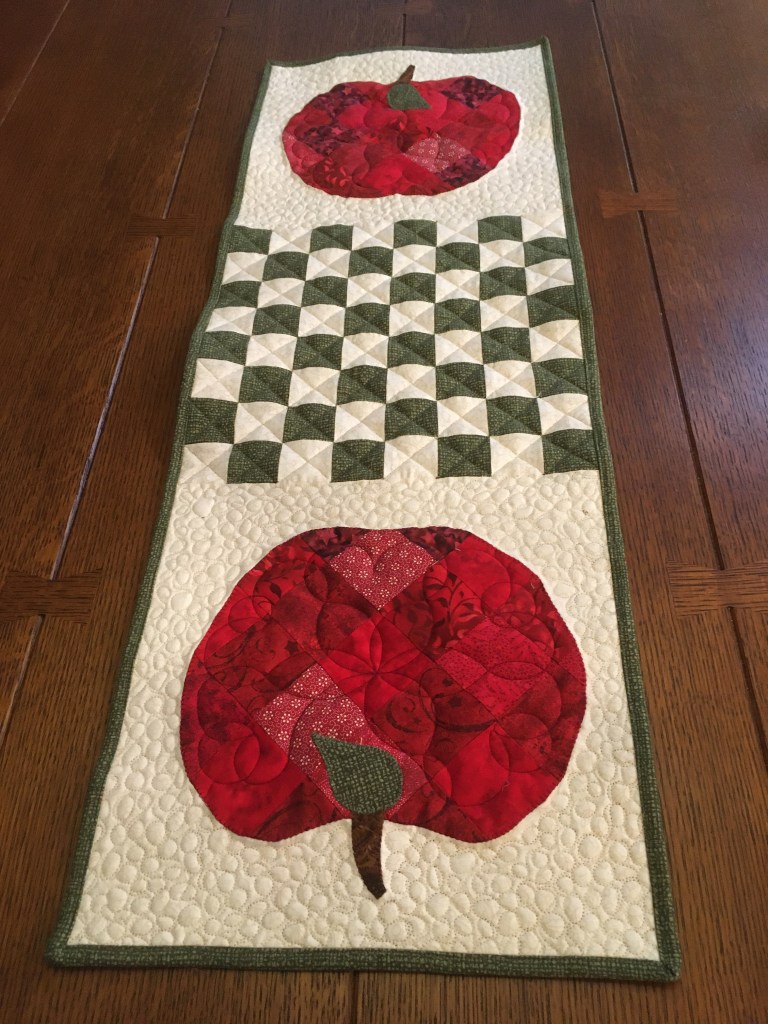
Apple Table Runner (& Checkerboard)

With fall weather settling, a week ago, I decided to make a new table runner for my kitchen. This runner was made with apples to depict the bounty of the fall harvest. The runner turned out really nice.

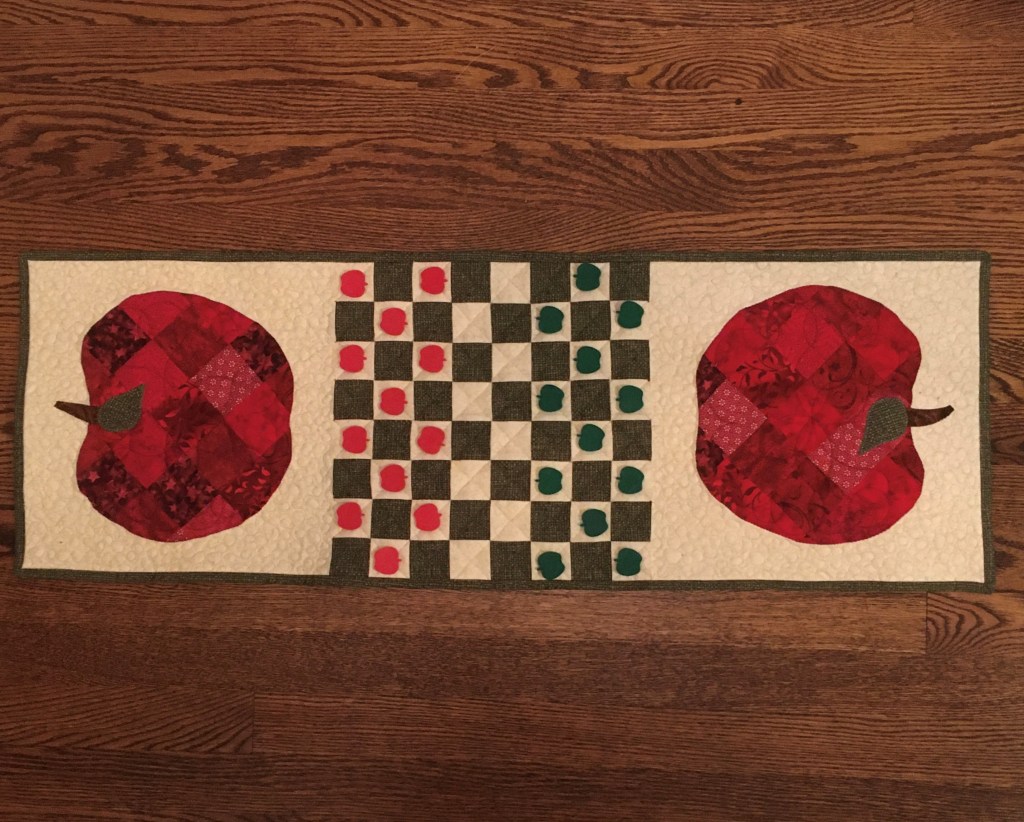
After it was done, I realized that the center section could be used as a checkerboard. All I needed was some checkers.

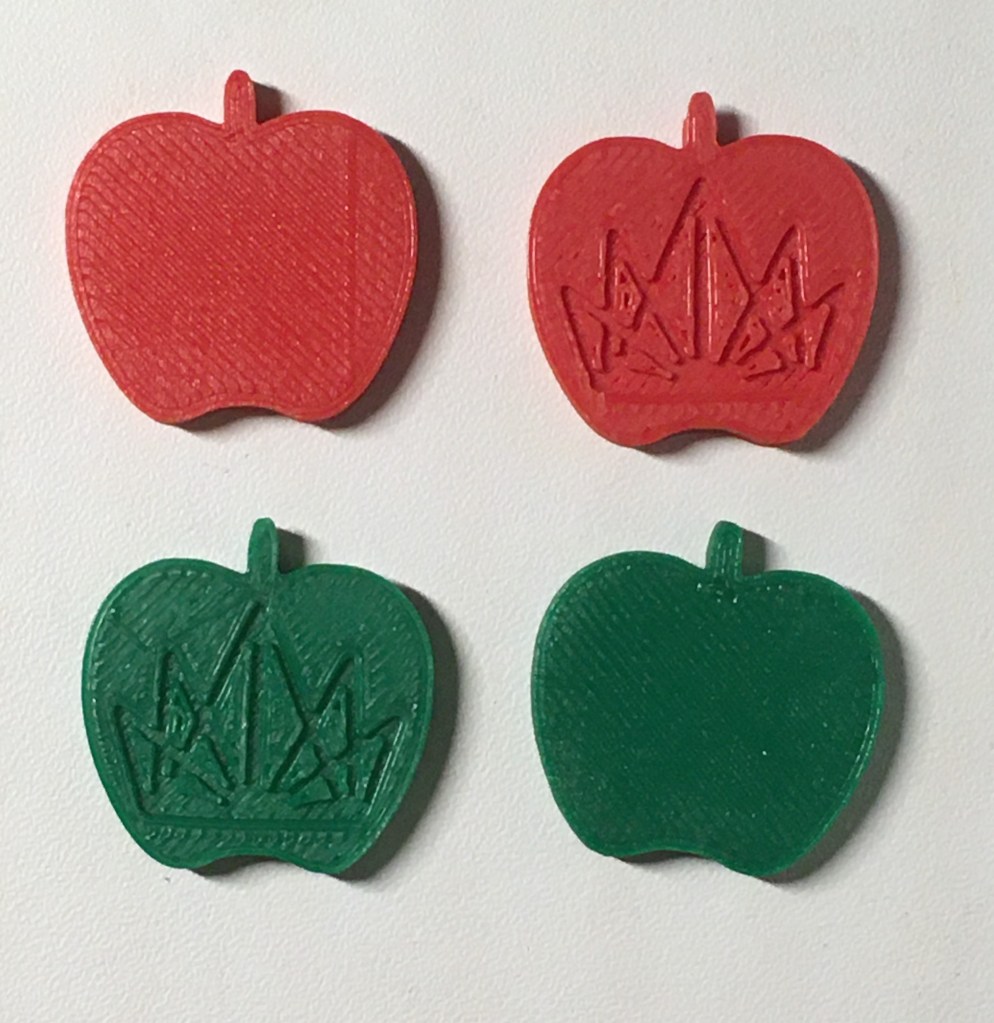
Originally I thought about purchasing some apple shaped wooden pieces that could be painted. However, when I looked at the options available at the local craft stores, I thought I would need to do some carving of a crown on one side. This, to me, seemed like a lot of work. Then I thought about engraving a crown. This also seemed like a lot of work.

One day, while I was at work, I had a great idea – I could print checkers on my 3D printer. Using Tinkercad, I designed some apples that could be printed. I did try to make the checkers interlock so that they could be stacked for designating a King. This, however, did not turn out well. So, I went back to Tinkercad and designed an indent on one side of the checker that showed a crown. Problem solved.

Having extra fabric, I decided to make a second table runner/checkerboard. This one, I have posted on Etsy. Hopefully someone will like this item.

Sleep in Heavenly Peace

As most of my friends and family know, I like to try new ideas for quilts.  Many of these are made and then given away to charities.  Last winter I learned that the charity I had been donating to changed their donation policy.  In order to donate an item, I needed to donate one for ever person living at their housing location. That meant I needed to make 24 quilts before I could donate them.  That would be a difficult task for me to accomplish.

Fortunately, last December while watching the evening news, I  saw a news article about an organization that made beds for children who do not have a bed and are usually sleeping on the floor.  When I learned I needed to find a new place to donate quilts to, this organization came to mind.

SHPSleep in Heavenly Peace (shpbeds.org) is a national organization “dedicated to building, assembling and delivering top-notch bunk beds to children and families in need”.  I went on-line to learn more about the organization.  What I learned was when the beds are delivered, the children are also given a mattress, pillow and bedding (including a comforter or quilt).

This, I thought might be a good place to make quilts for.  And, since the beds are for children, I could make all kinds of fun kids quilts! After contacting them, I started setting aside quilts to drop off.  A few days ago, I delivered the twelve quilts that I have made this year.  Hopefully there will be a dozen kids who enjoy these quilts.
Many of the quilts I have already written about in previous blog posts.  But, here are a few photos of the ones I have not already posted about.

A flannel quilt (front and back):

Another flannel quilt (front and back):

An airplane quilt:Twin

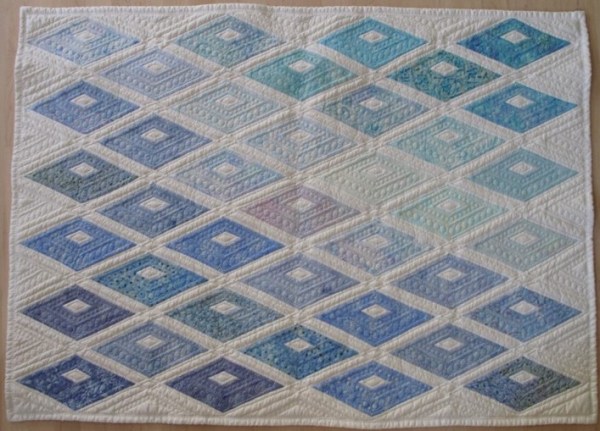
Diamonds:Blue Baby Quilt

Patriotic Bargello:Attachment-185880

If any of my friends have quilt tops that they would like to donate, I will gladly quilt them on my long-arm machine and donate them to SHP for you.  Just contact me.

Quilt from old Denim Jeans

Over the summer, we replaced the carpeting in our home.  The original carpet was over 30 years old.  And, while it had held up well, it was time for an update.

I realized, when preparing for the installers, that replacing carpeting is nearly as bad as moving to a new home.  Everything needed to removed from the floors.  This included all of the furniture in the rooms, as well as things on or near the floor in the closets. Logistically it was a bit overwhelming at times. However, now that the new carpet is installed, it is nice to have updated the look of the house.

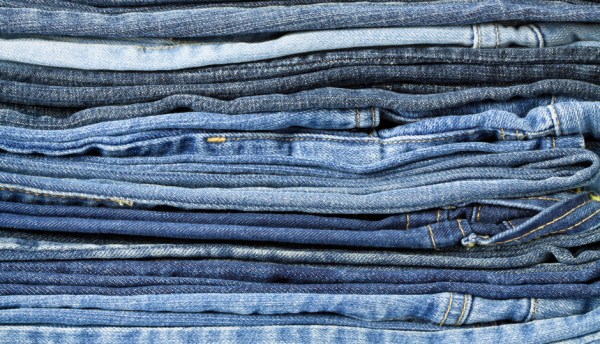
Piles-of-jeansIn the process of moving things, my husband had a pile of jeans to donate.  Rather than taking them to Goodwill, I decided to make a denim quilt instead.  This was something I had thought about doing for the past couple of years.  And, now that I had some worn, but not holey, denim to work with I decided to give it a try.

To make the quilt, I settled on a quilt-as-you-go technique.  My concern was that quilting such a heavy project would throw the timing of my long-arm machine off. So, this technique would completely avoid using my quilting machine

To make the quilt, I cut out 9″ denim circles.  Out of each pair of jeans, I was able to cut 12 circles. Needing 154 circles, I used 13 pair of jeans. Next, I drew a 6″ square on the back of each piece of denim to help with lining up and sewing the pieces together.  

After each row of 14 circles were sewn together, I added a six inch squares of quilt batting and flannel to the back side of the denim (the side that would have been inside the pair of jeans).
This was a great way to use up a lot of scrap pieces of batting.  However, in retrospect, the quilt was really heavy and the batting was probably not necessary.

IMG_3186


After pinning the flannel and batting in place, I used a zig-zag stitch to sew down the raw edges of two sides of the denim.  A total of eleven rows were sewn.

IMG_3190


Before sewing the rows together, I used a zig-zag stitch to sew down the raw edge of one side of two separate rows.  These would become left and right side of the quilt.

IMG_3192

Next, I sewed the rows together, zig-zagging the raw edges of each circle after they were sewn.

What  I didn’t realize is how heavy the quilt would get by the time I was halfway done sewing it together!  The next denim quilt I make will definitely be done using a different method.

I will be donating this quilt to a charity (Sleep in Heavenly Peace).  It should provide a unique quilt for a young boy or girl to stay really warm this winter.

Dyed Fabric Strip Quilt

IMG_3010

One of my original posts on this blog was about fabric dyeing (Sept 22, 2015).   At that time, I mentioned that I had watched a Craftsy class about dyeing fabric.  Before jumping in and buying numerous colors of dye and supplies, I decided to try a sample kit.
The purchased a gradation dyeing kit which was a smart decision.  This kit gave me the opportunity to try my hand at mixing dyes to get different colors, as well as working with low volumes and how to best handle the fabrics.
The first color kit I purchased was “STONES & SHELLS”. Stones&Shells
Colors included were: Camel 5181, Old Rose 5220 & Stormy Grey 6160
Following the directions, I created thirty fat eights in a gradation of earth tones.  While the samples were fun to make, I had no idea what to use them for.  So,  these pieces of fabric have been sitting on my shelf waiting for some inspiration.  Earlier this year when I was doing some strip quilting, I decided that a strip quilt might be a good use of these fabric as well.
To add some pops of color, I dyed three fat quarters of cotton fabric using a variety of techniques – marbling, sun dyeing and batch dyeing.  For the sides and the backing, I dyed a three yard piece of 108″ wide cotton with a evergreen dye.
The gradation fabrics were cut into 2.5″ x 20″ strips.  These were then sorted by color and then   The green pops of color were cut into 2 1/2″ x 5 1/2″ pieces.  The strips were then sewn together with dark green on each side.  After sorting the gradation fabrics, I split them into three groups and pieced starting with the first color of each group.  This allowed for the fabrics to be distinct rather than blending from one gradient to the next.
The quilt top was then put together using my long-arm machine just like a did with the black strip quilt earlier this year (May 8, 2019).
Another fun quilt to donate.  And, more fabric used from my stash!