Oceans of Glass (and some fabric)

I really enjoy my many hobbies. However, to keep making new items, I need to have a reason to do so. With most of crafts, I have found organizations to donate items to. This allows me to keep trying new techniques and ideas. The quilts I make are donated to Sleep in Heavenly Peace. The hats and scarves are donated to Hats and Mittens MN. Some of my glass art has been donated to charity auctions.

Unfortunately, I have not identified an organization that I can regularly donate glass art to.

This spring, while wanting a reason to work in my glass studio, I walked around my house looking for places that could use some new art. One of the areas I identified was our upstairs bathroom. About 15 years ago, I remodeled this bathroom and decorated with inexpensive coastal themed wall art. Since the pictures were starting to fade, it was time to redecorate again.

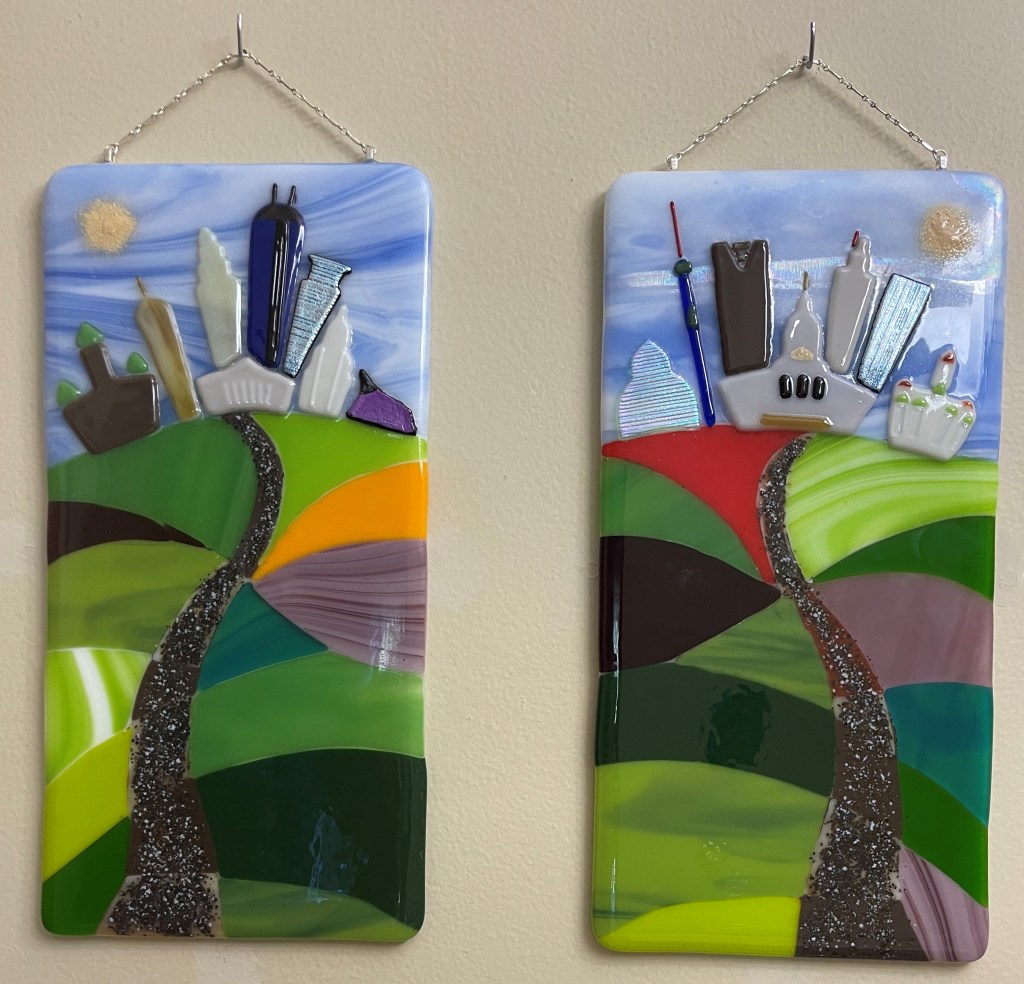
Keeping with the coastal theme, I made a couple underwater scenes for the tub room.

The background was made by contour fusing turquoise/clear steaky glass for the water and beige glass with medium frit of various shades of brown for the bottom of the under water scene.

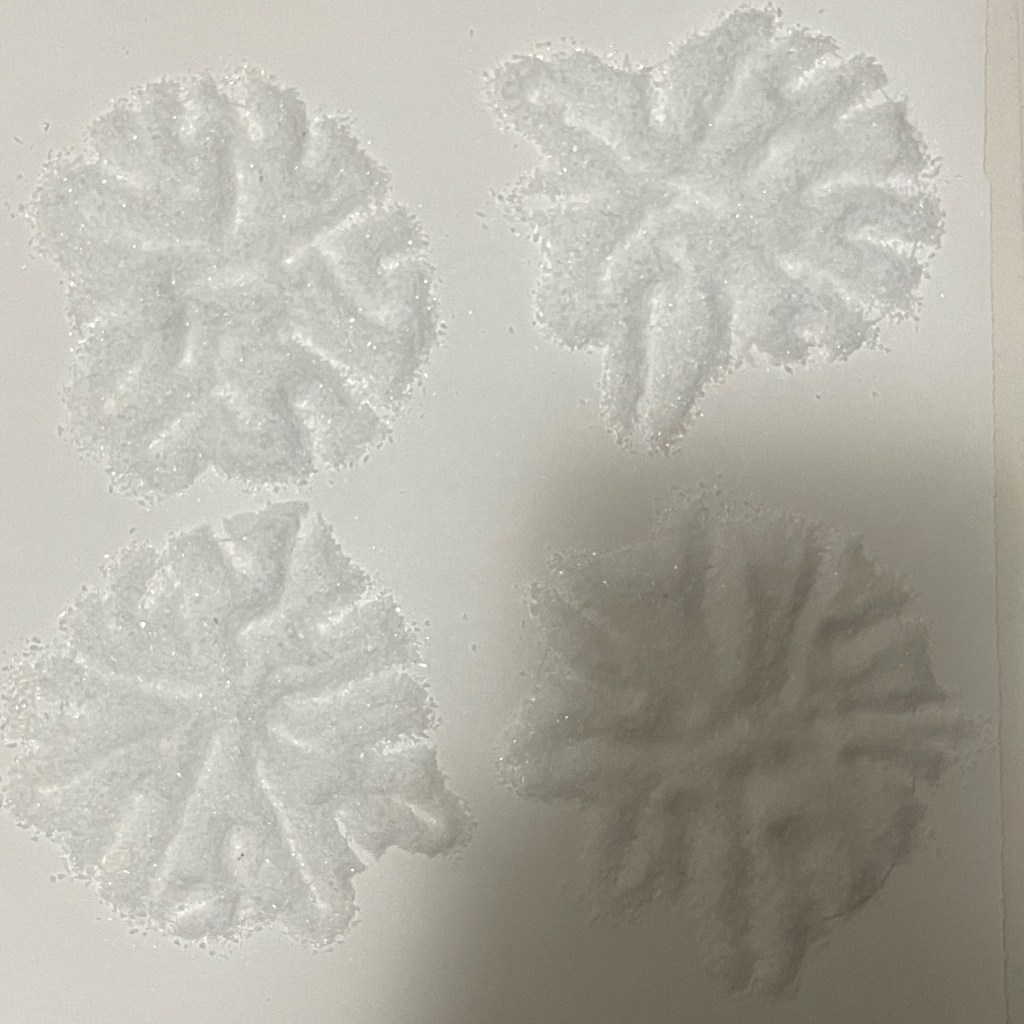
I made coral with strips of beige glass and with fine frit shaped and then coated with frit powder.

Various types of sea life murrini and vitregraph stringers were added to create bottom of the sea the scene.

A second scene was made to create the top of the sea. White and blue frit was used to designate the top of the ocean. Clear and blue dichroic frit was formed into the body of a large jellyfish and clear dichroic stringers were shaped and placed for the tentacles. More murrini fish were added. Each of these pieces were contour fused and mounted in white frames.

To update the art to the sink room, I incorporated a couple of my hobbies – glass and quilting.

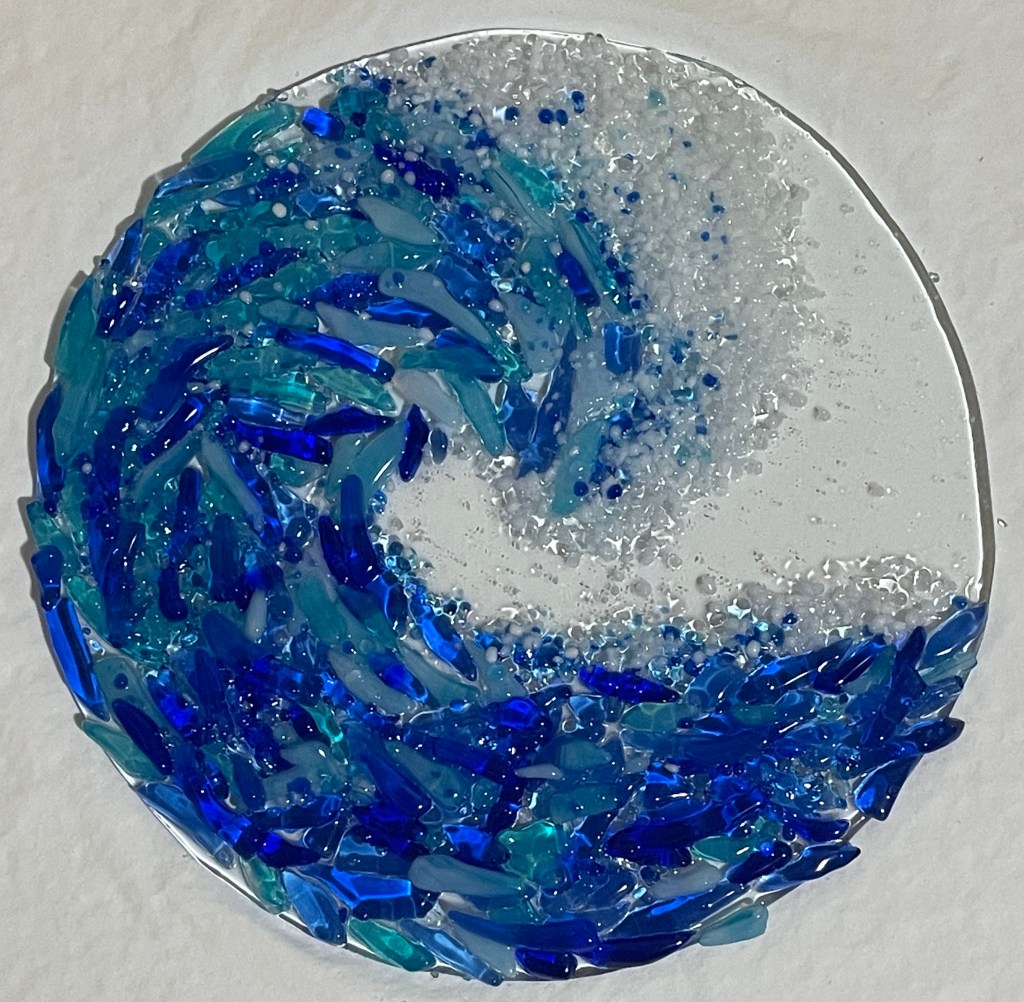
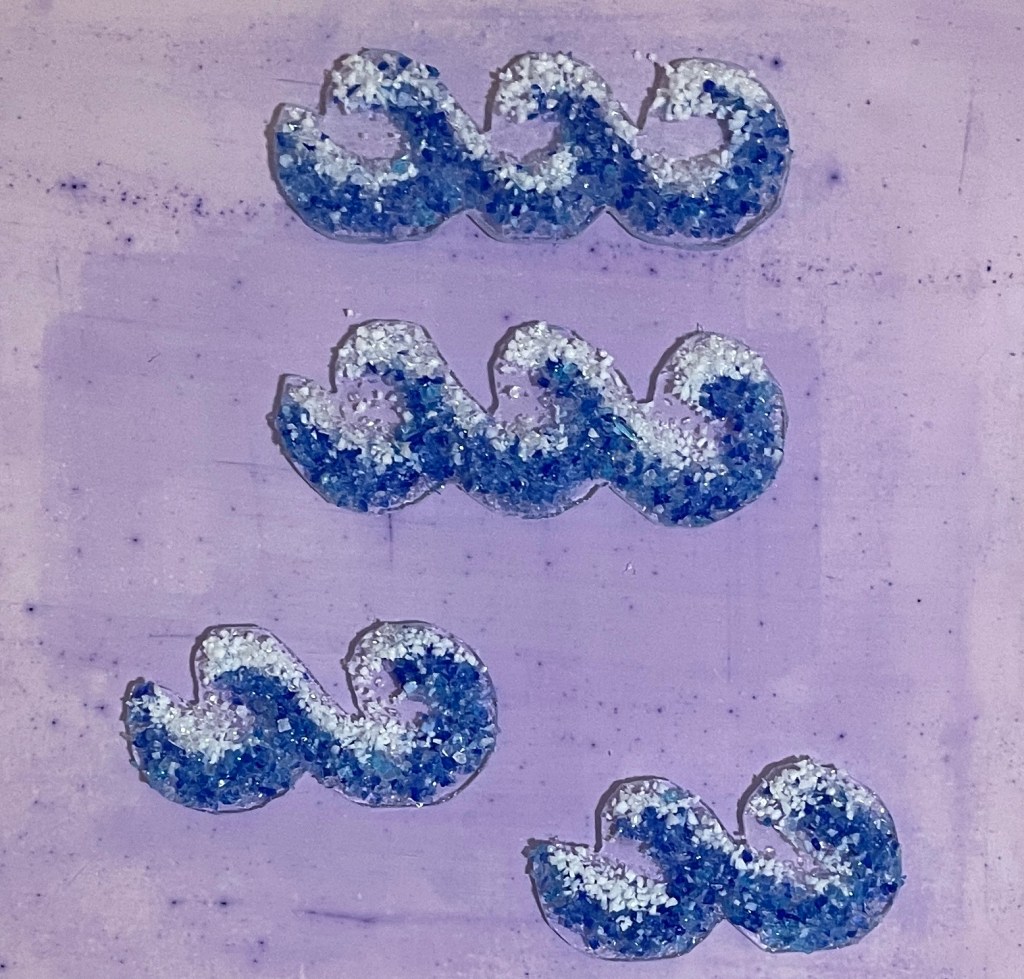
Glass “waves” have been a very popular by other glass artists, and something that I really wanted to try to make. After cutting an 8″ circle of clear glass, I used scraps of blue and turquoise glass along with coarse and medium frit. After placing the pieces of glass, the project was contour fused. The result was amazing and fit the intended area really well.

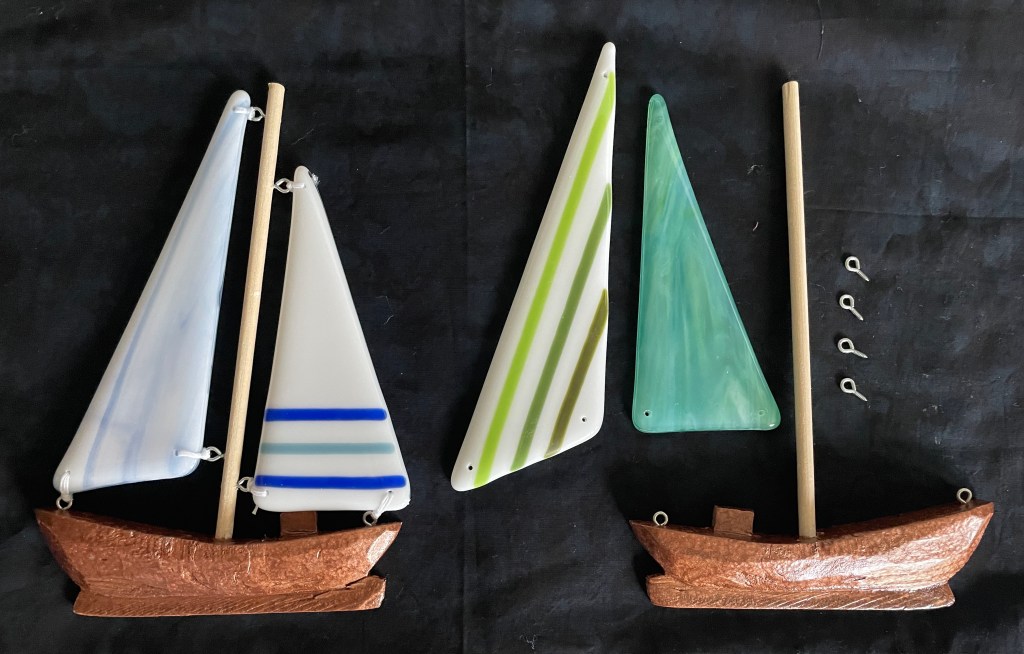
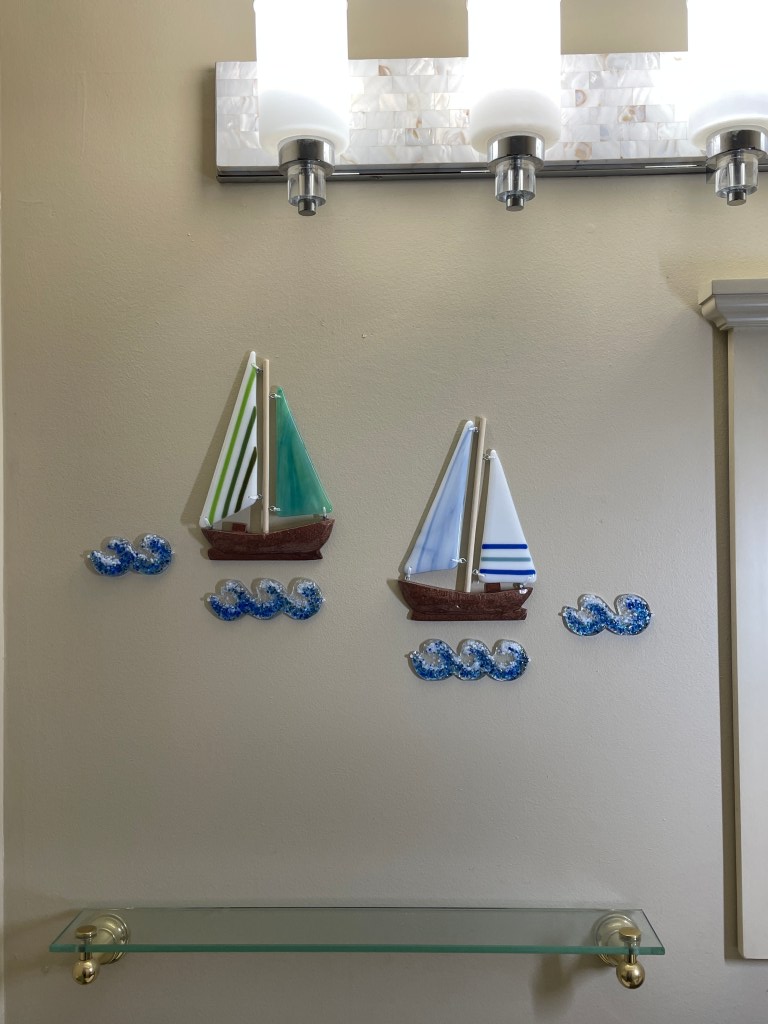
For one of the other walls in the bathroom, a couple of sailboats seemed like a good idea. And, after seeing several glass sailboats designs on-line, I really wanted to try to make one. I did, however, take a slightly different approach than those that I had previously seen. I purchased an inexpensive wooden boat ($9) from Amazon.

After removing the linen sails, I used a bench saw to cut the boat in half lengthwise, and added new masts to each boat.

The wood was painted with copper colored “Hammered Metal” spray paint. The glass sails were made with blue, green and white sheet glass and glass noodles, full fused. And, the sails were rigged with waxed sinew.

To enhance the look of the boats on the wall, I created a couple small “waves” (2″ in height) to match the larger wave that I had already made.

These pieces of glass art created another nice scene for the bathroom.
Lastly, I had one more wall to decorate in the bathroom. And, while thinking about this redecorating project, a small quilt that I had previously made matched the theme of the bathroom.
In 2018, I entered the Quilt On A Stick competition at the MN State Fair. The theme that year was “Up North” and I had made a sailboat with a mariners compass design. Unfortunately, the quilt did not receive a ribbon at the fair. And, since being made, I had been using it as a mug rug in my sewing room. But, now I had a much better use for this little quilt.
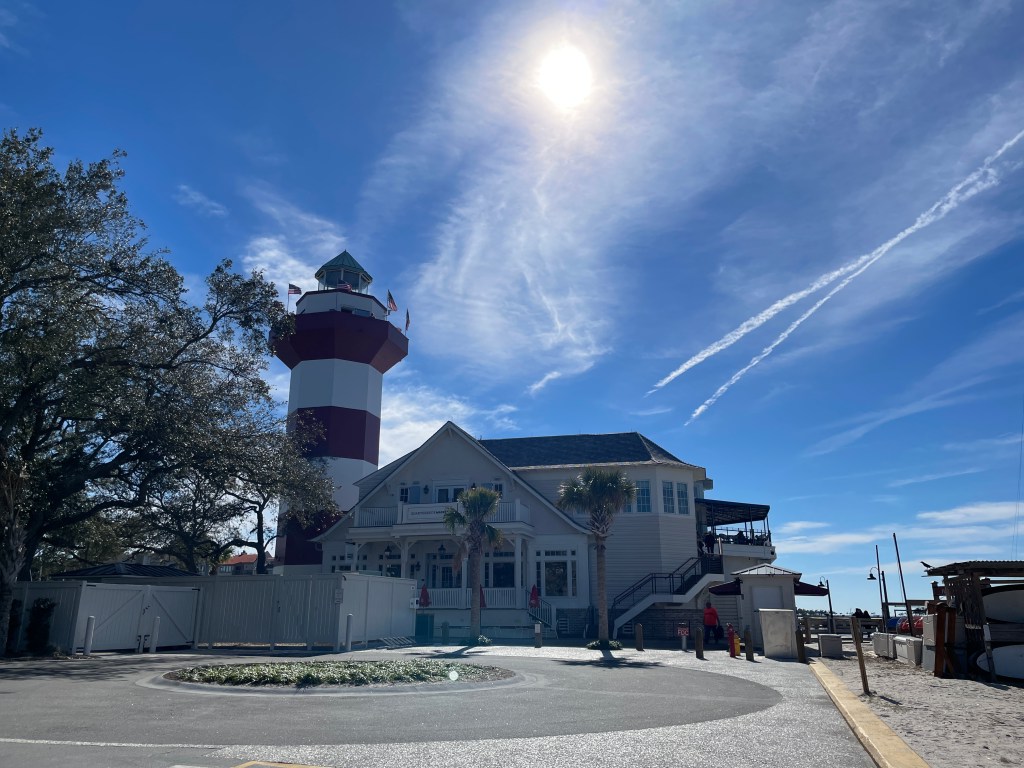
Because the quilt was small, I created a couple paper pieced lighthouse quilts from some photos. These quilts depict Split Rock Lighthouse in MN and the lighthouse at Harbour Town in Hilton Head Island.

These were all really fun projects to make, and a nice update to the décor of the rooms.

Gardening – Decorative and Functional Art

This is my favorite time of the year. The weather is lovely with highs in the upper 70s and lows in the upper 50s. The flowers are planted, my garden is growing and every day I enjoy being outside working on various projects.

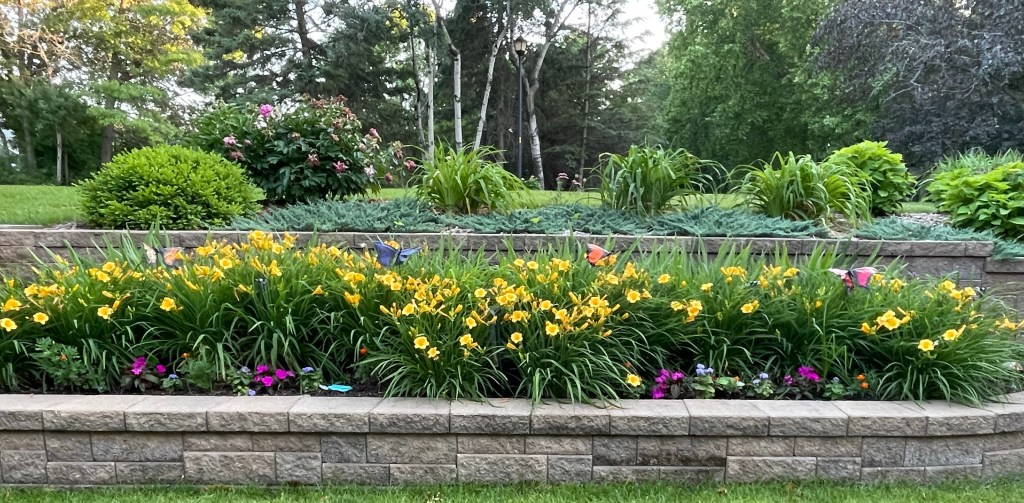
In a couple months, my window box and planters will be blooming and full of color. In the meantime, I have to wait for the flowers to grow and bloom. So, I decided to add some glass art to my window box. A glass butterfly, a couple of glass leaves and glass flowers add some nice color. Once the plants fill in, the window box should look even better.
For these art pieces, the glass was cut from pieces in my scrap buckets, contour fused and then slumped into a ceramic mold. On the back, a two inch piece of 1/4″ copper pipe was attached to each piece and a metal rod inserted to support the art in the window box.

In addition to planting flowers and vegetables, I have also been patching areas of the grass. Up until a few years ago, I had a rain barrel under the downspout in the back of our house to collect the rain water. Unfortunately, this rain barrel cracked after many years of use. Without the rain barrel, during a rain storm, the flow of water can be very strong and the surrounding ground is eroded and the grass does not grow well.

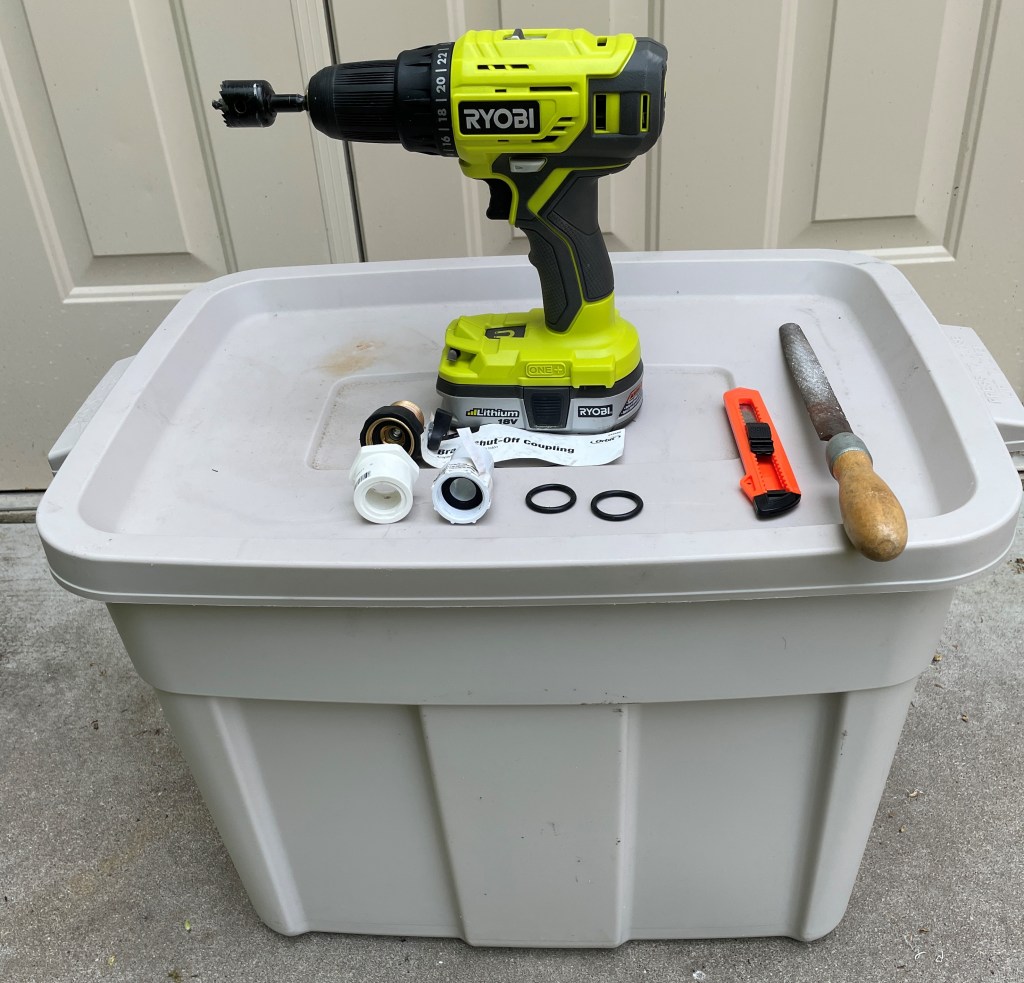
To try to improve this area of the lawn, I thought about purchasing another rain barrel. Unfortunately, they are rather expensive and larger than I would prefer. Instead, I decided to try to make my own. After drawing out some ideas I put together the necessary supplies, an old Rubbermaid tote, some PVC connectors, a shutoff coupling and two rubber washers.

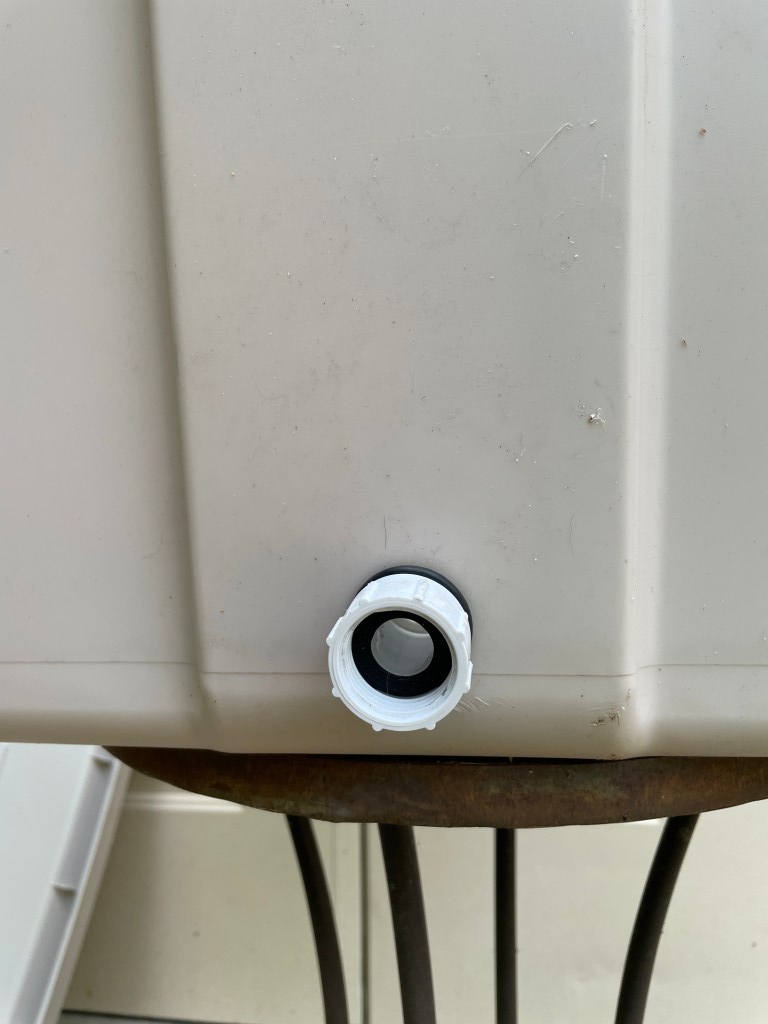
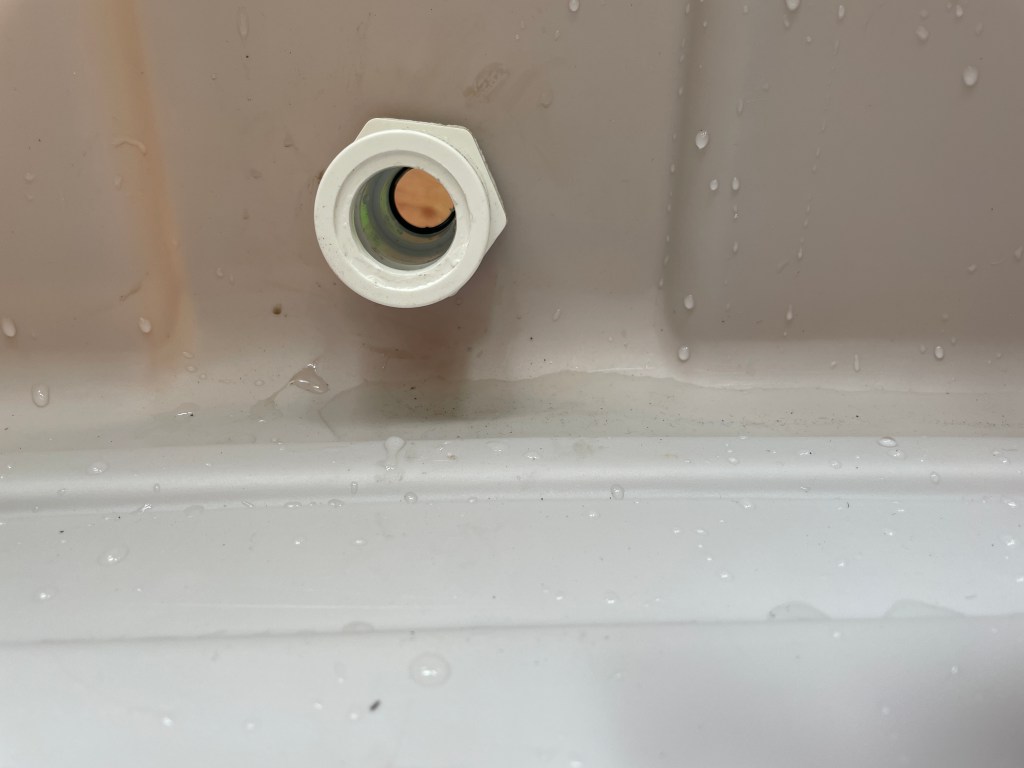
A one inch hole was drilled in the side of the tote and the edges of the cutout smoothed with a metal file. A 1″ washer was placed over the end of a 1/2″ Slip x 3/4″ FHT PVC hose fitting and pressed into the hole that had been drilled in the side of the tote. To hold the fitting in place, another 1″ washer was placed over the end on the inside of the tote another coupling was placed over the PVC fitting.

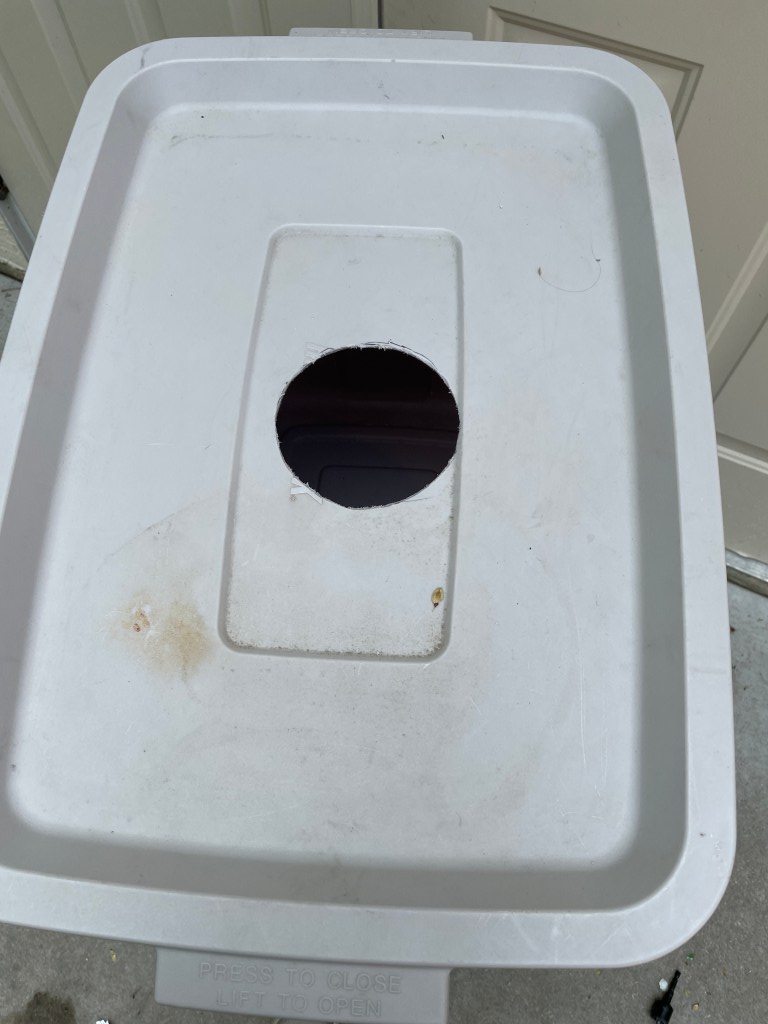
To collect the water from the downspout, a hole was cut in the lid of the tote.

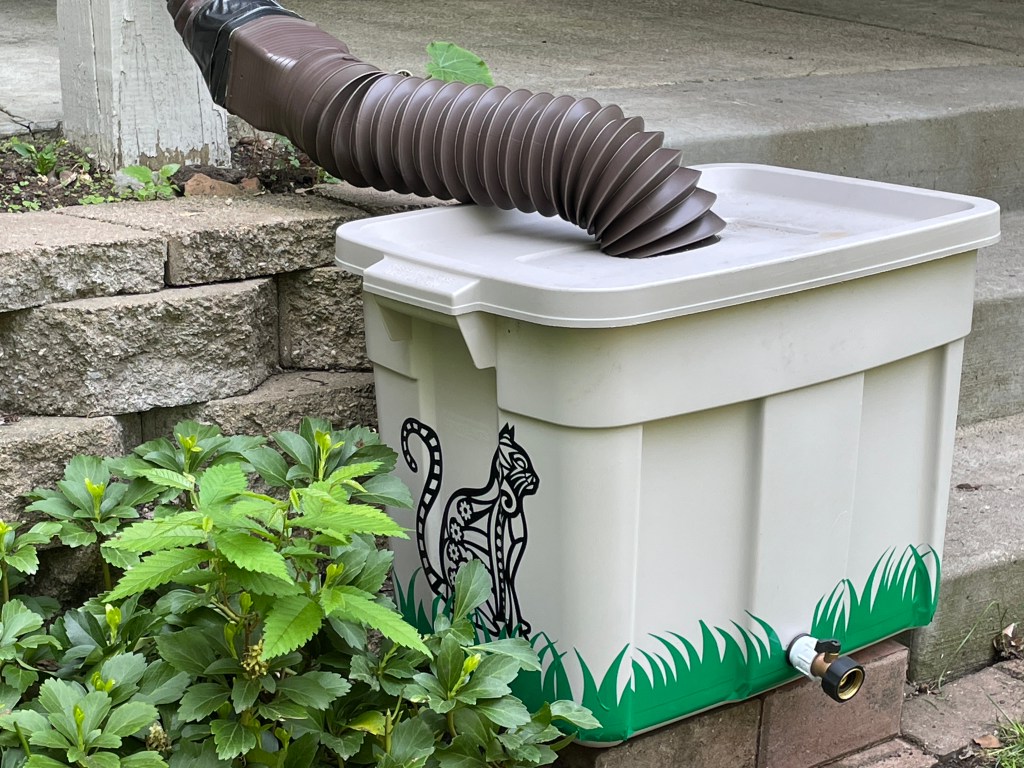
A diverter was attached to the downspout and the length adjusted to fit into the tote lid. A brass shut-off coupling was screwed into the outside of the fitting to be able to open and close the opening. The tote was placed on several brick pavers to raise the tote high enough to access the shutoff valve. The water collected will be used for watering the plants in my back yard.

Of course, I had to add some decorative art to this functional item. Using my Cameo cutter and some permanent vinyl, I added a couple cats (that match the metal cats on my raised bed gardens) and some grass. While I am unsure whether these vinyl decorations will last, they do add some whimsy to my project. And, hopefully the grass will grow better in this area of the yard.

Another gardening project was to update the watering system in my raised beds. Last year, I used soakers hoses to keep my garden watered. This year when I connected the soaker hoses, I discovered that the hoses (advertised as “leak proof”) had cracked in several location.

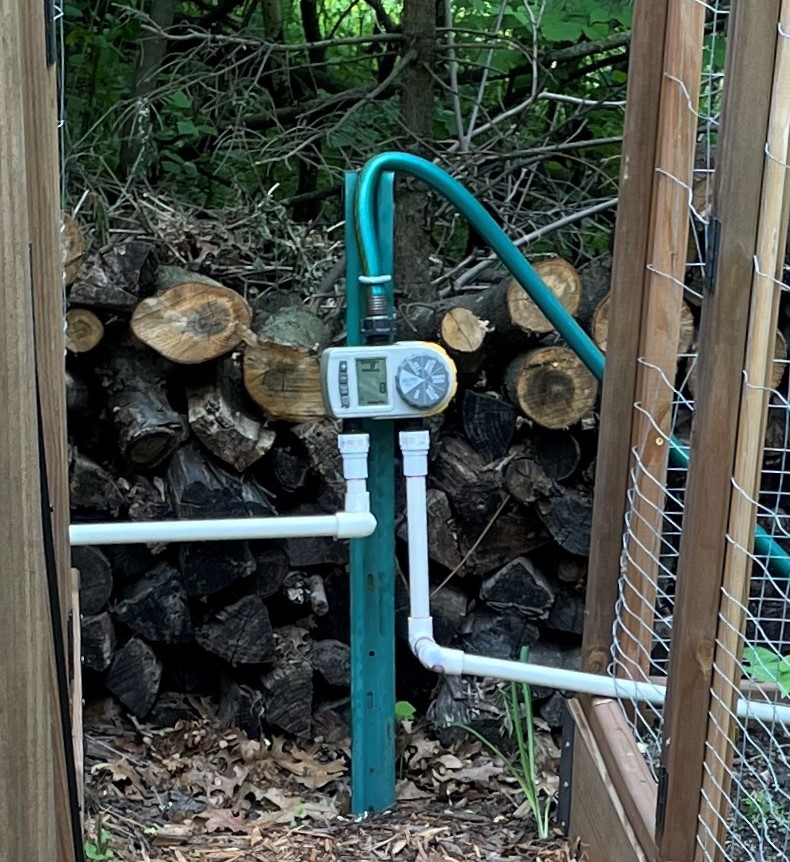
To replace them, I wanted something that may last longer. Using two 10 feet pieces of 1/2″ PVC, several couplers, a couple caps and a couple hose fittings, I made new waterlines. A PVC to hose fitting was attached to each water outflow on a timer. The PVC was cut and connected with couplers to create a waterline to each raised bed.

For each of the raised beds, 1/8″ holes were drilled every 2 inches along both sides of the length of a 90″ piece of pipe with a cap at the end of the tube.

This new watering system works great. It does come apart into sections that can be stored indoors in the winter and will hopefully last more than one year.

Happy Planting Everyone!

Scrap Quilts 2023

Most of my quilting friends know that I make quilts to give away to various charities. So, each year, I have friends that give me quilting fabric that they are not planning to use. Most of these are fabrics amount to less than a quarter yard, but occasionally there are larger pieces of fabric.

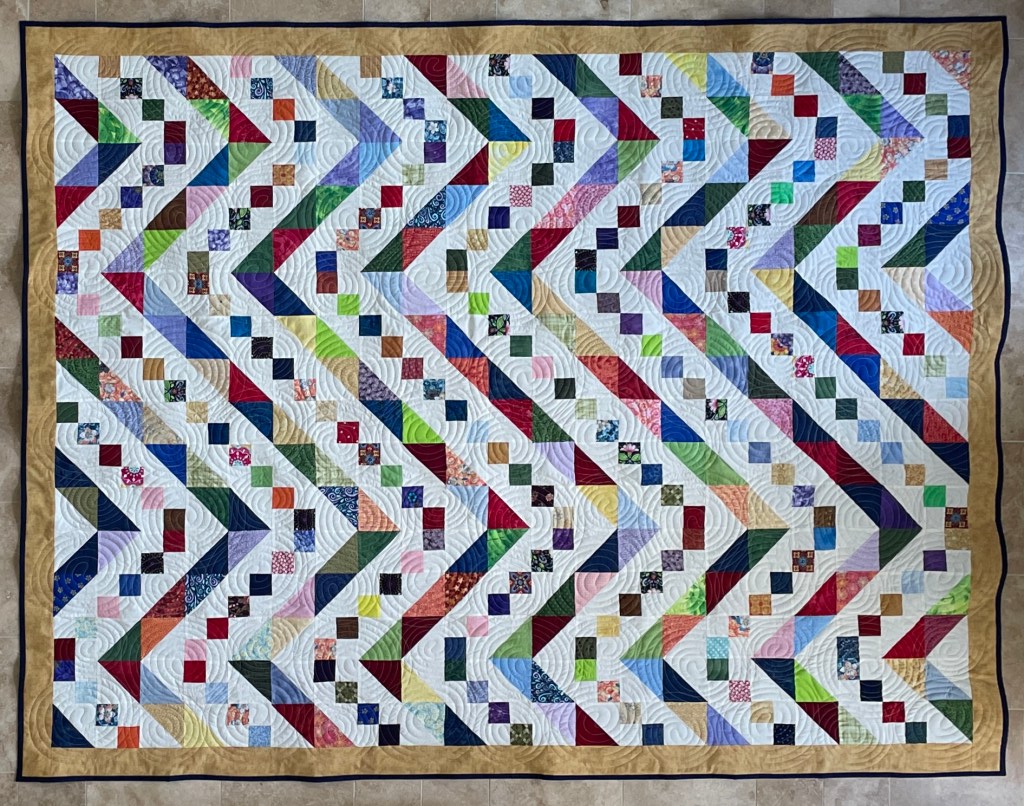
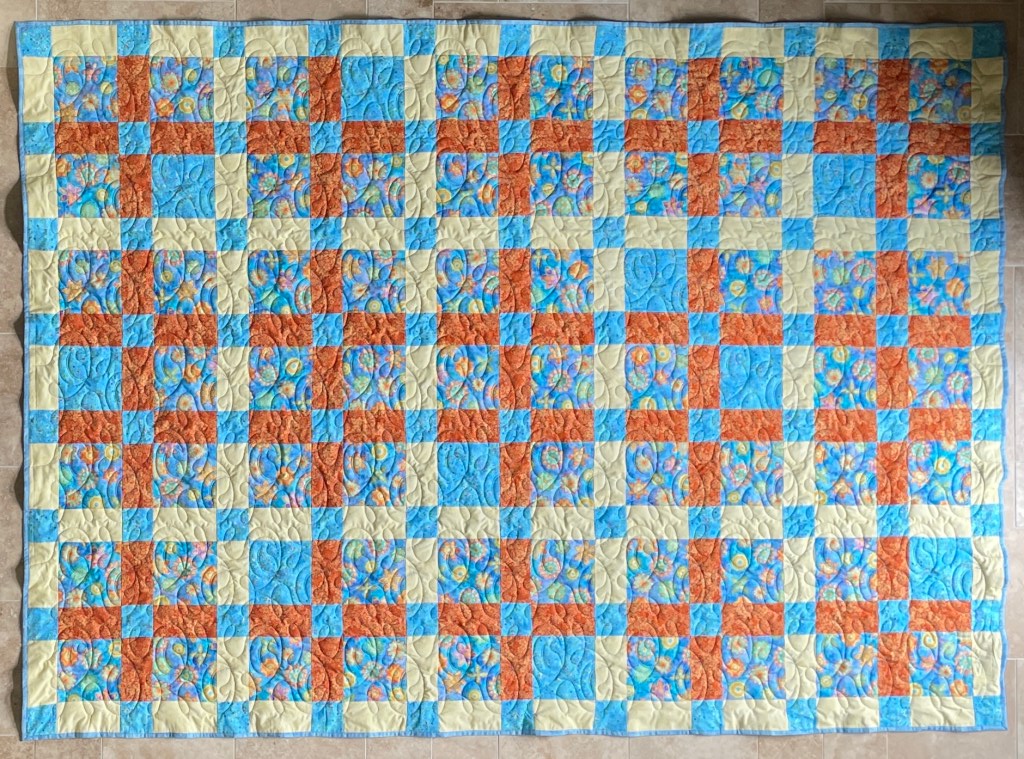
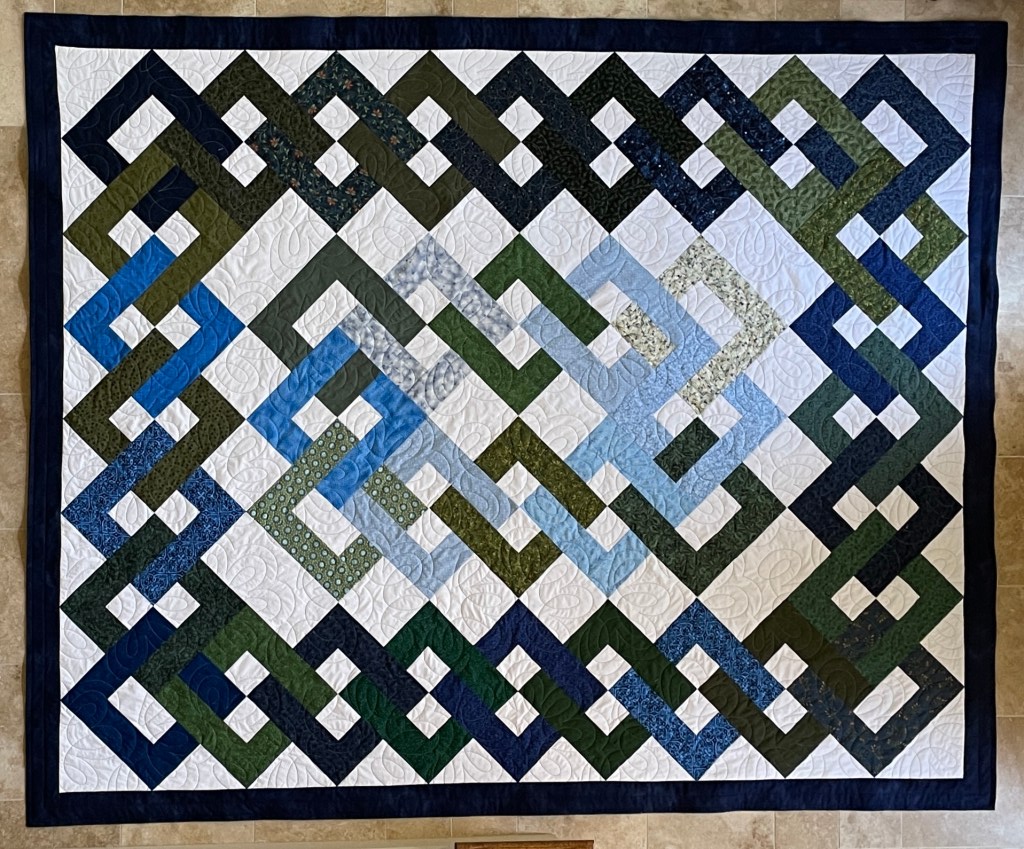
These fabrics are great for making scrap quilts. And, scrap quilts are a fun way to try new block ideas. So far this year, I have made nine scrap quilts. Each of these quilts will go to benefit young children, through an organization called Sleep in Heavenly Peace and to various people that I meet.

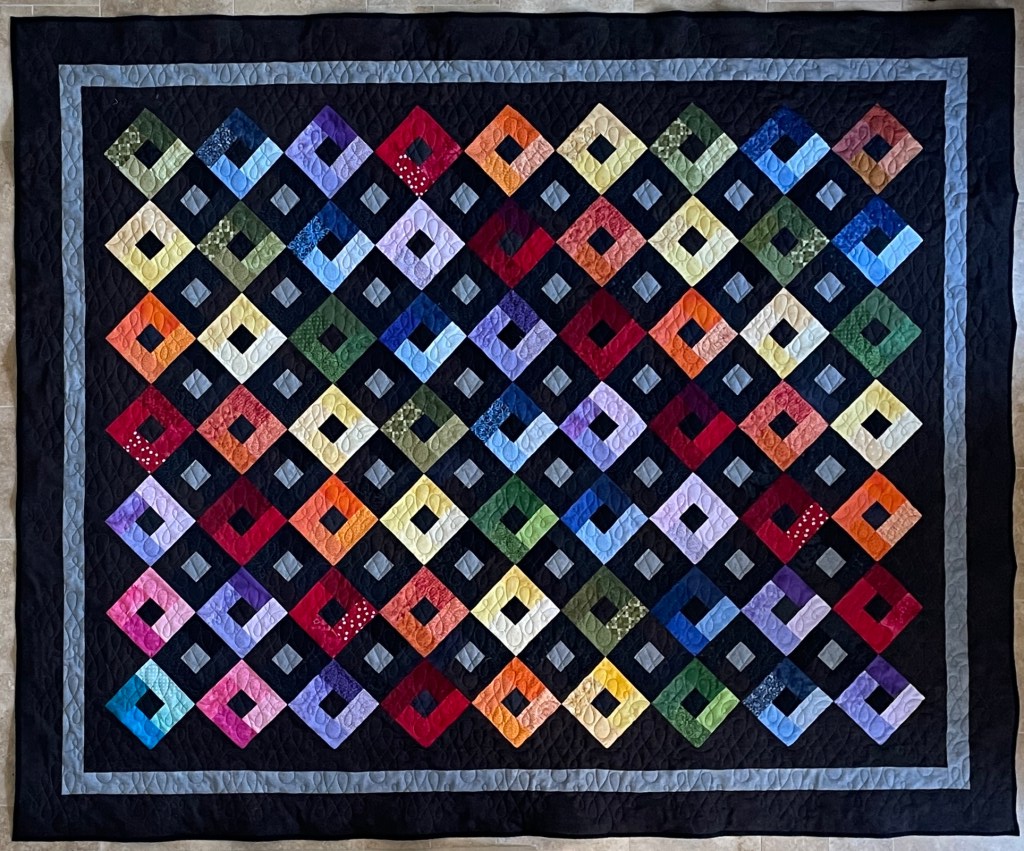
Weave – this quilt was made with thirty seven 3″ strips of fabric cut and sewn to appear like woven fabric on a black background.

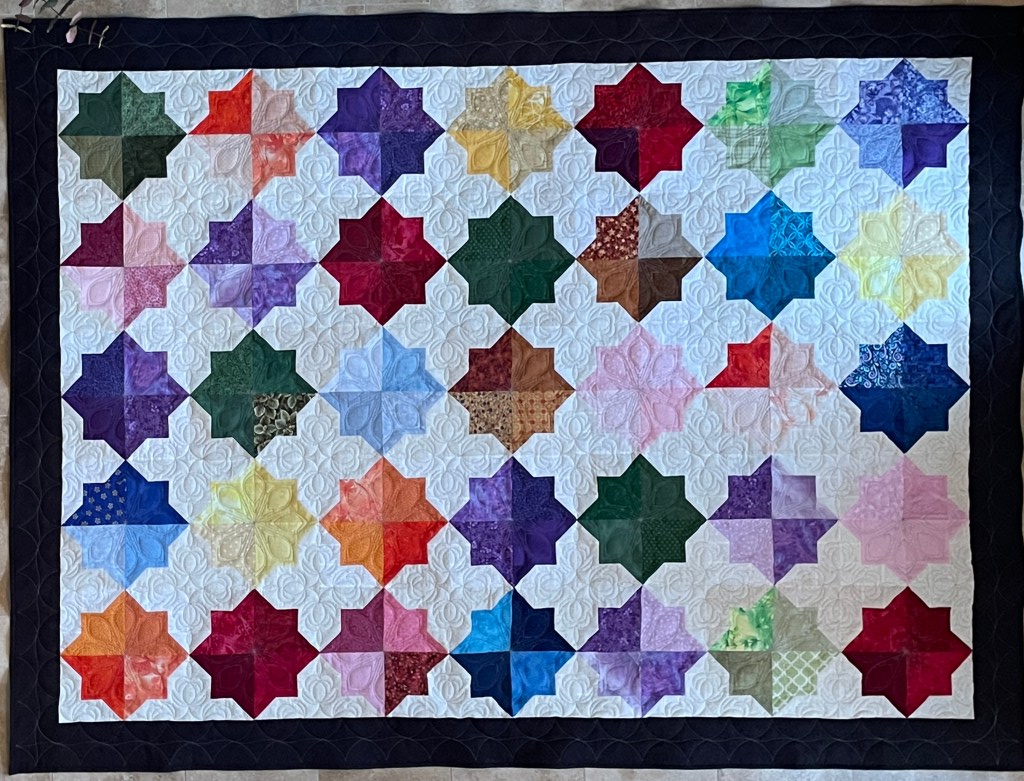
Modified Eight Point Star Block – there may be another name for this block, but I unsure.

Double Square Star – each block was made of four coordinated fabric colors sewn with a 4″ square and a 2″ half square triangle on a white background.

Spinning Friendship Star Block – I really like this quilt! Each block was make with a 4″ square and eight 2″ HSTs radiating around the center square.

Bright Hopes Block – each block was made with four 2″ x 4″ rectangles. Another great way to use a lot of small scraps.

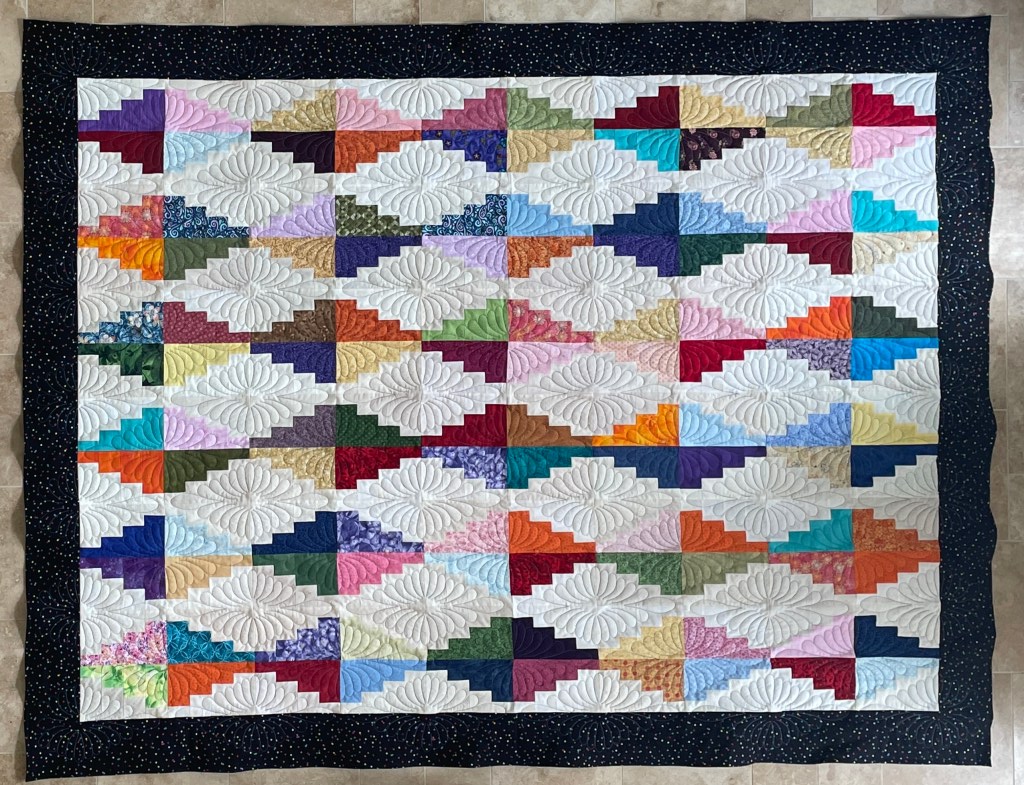
Chinese Lanterns – each quarter of the lanterns used 12″ x 2″ of fabric.

Zig Zag – this quilt was made with 2″ squares and 4″ half square triangles. It was a great way to use up small scraps!

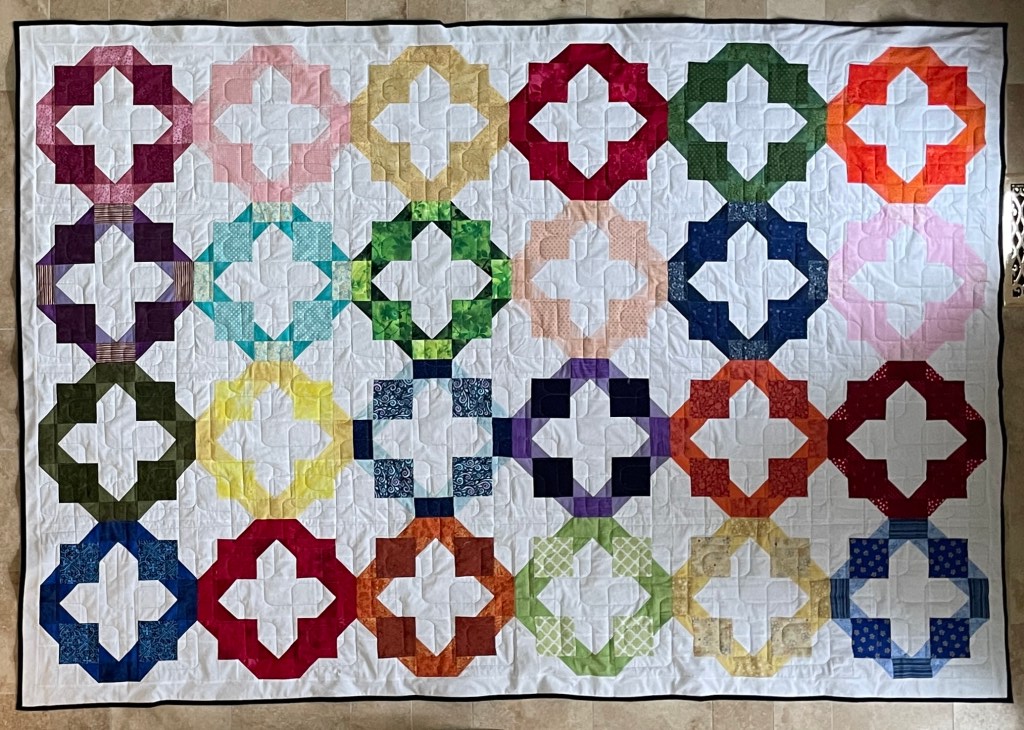
Crosses Block – for this quilt, I had larger pieces of fabric – two yards of print blue fabric, 2 yards of a matching yellow, and a yard and a half of orange fabric. To complete the quilt, I found a matching blue fabric.

Links – this quilt used forty 3″ strips of fabric cut and sewn in a pattern of interlocking links on a white background.

Lines and Notes – A couple Fused Glass Clocks

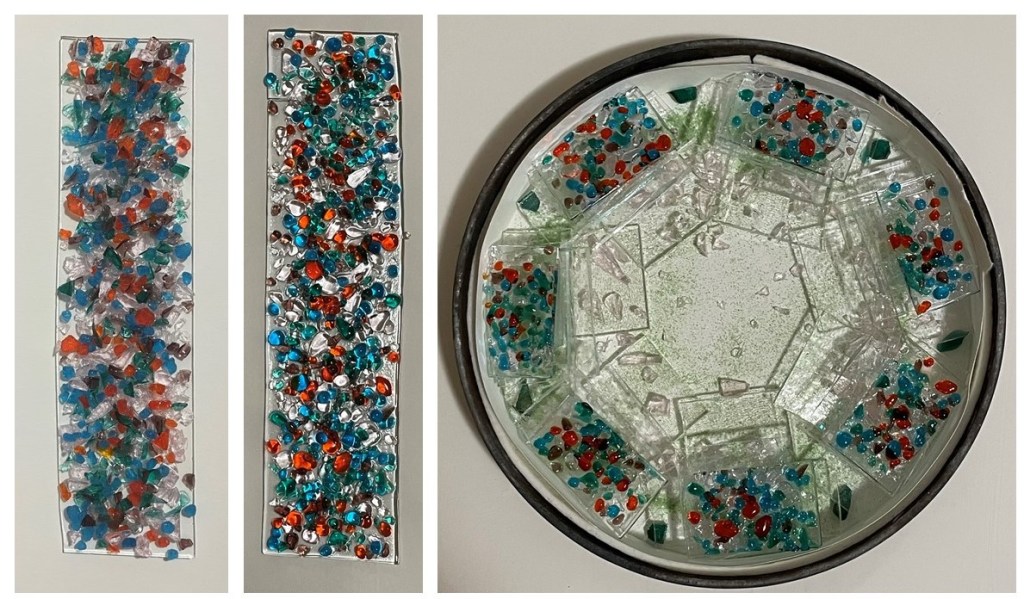
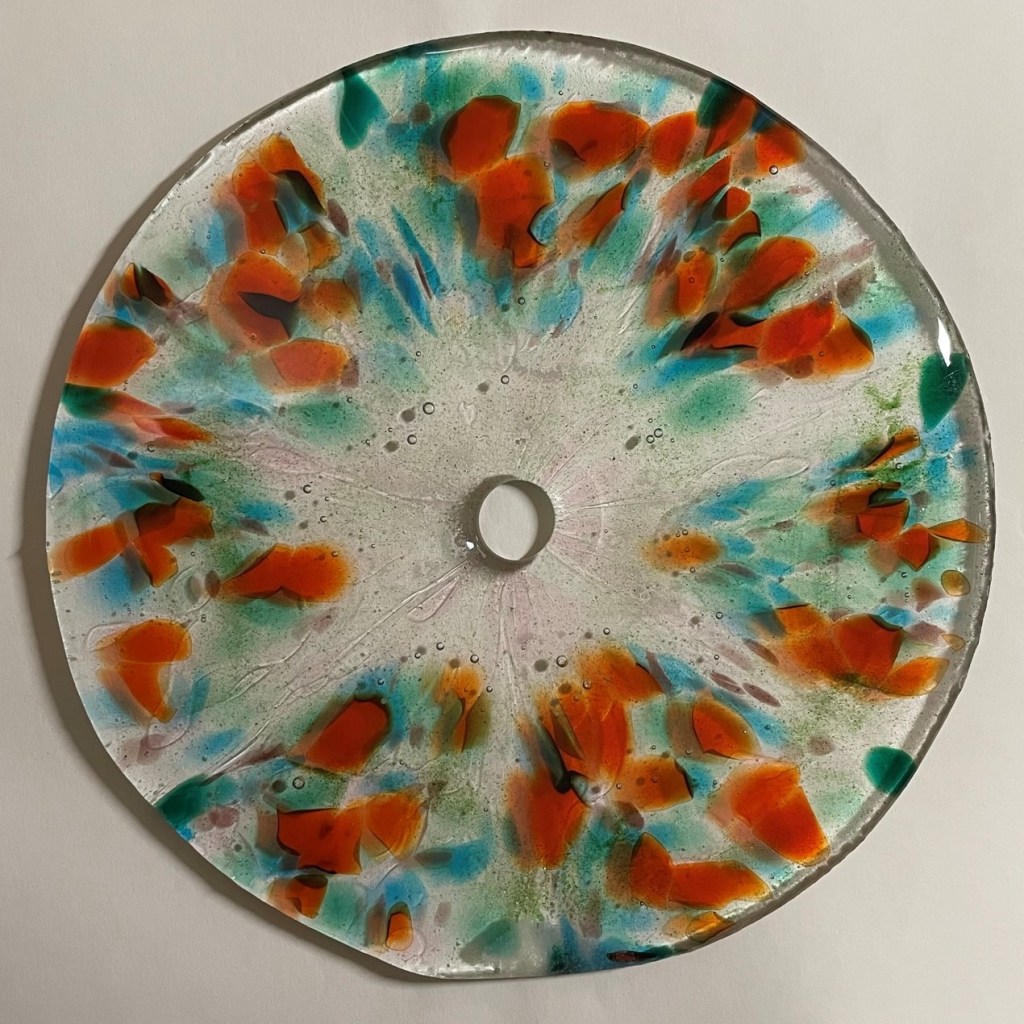
Over the winter, I tried out a new fused glass technique call Frit Stretch. This technique takes advantage of the way molten glass will flow to create a uniform thickness. By stacking the glass to the sides of a shape, the glass will flow inward. When frit is placed on top of the glass, these small pieces of broken glass will stretch as the glass flows.

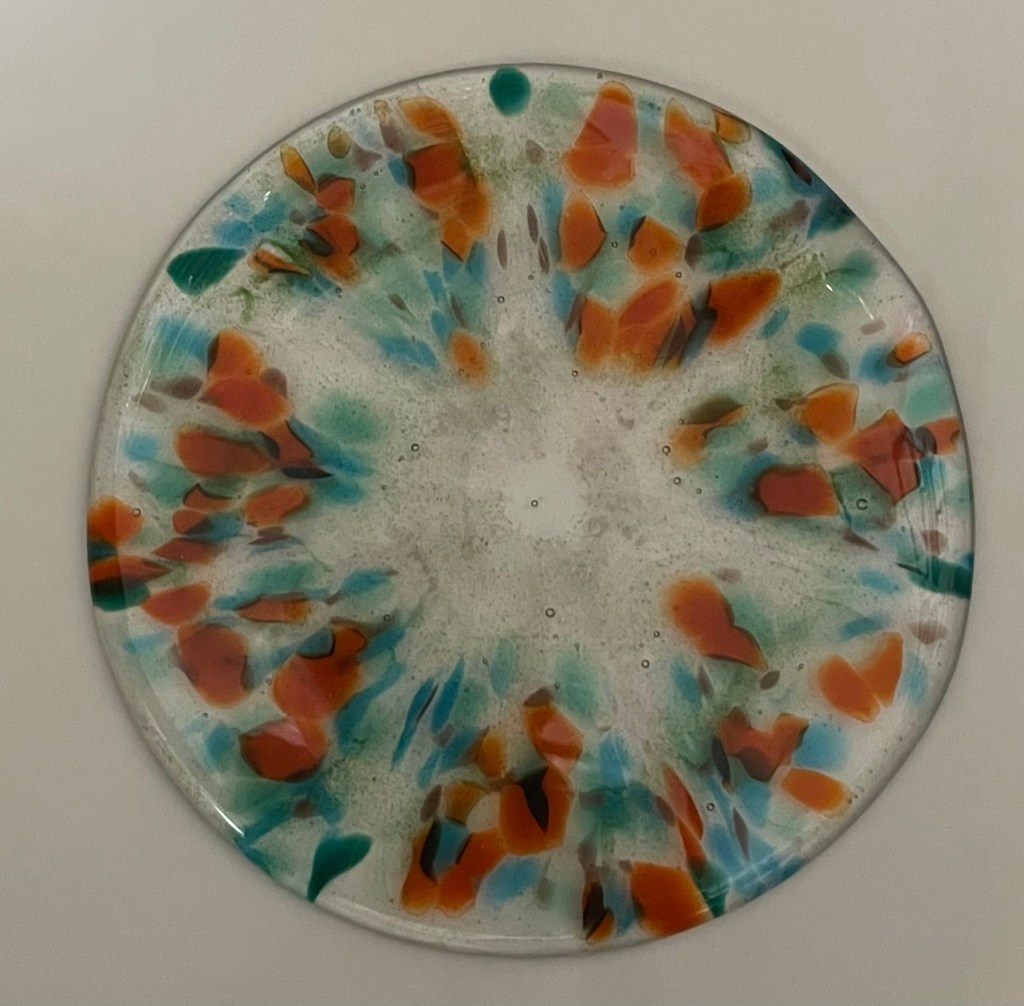
For my first attempt, I used several colors of coarse frit that I had in my supply. The teal, green and orange colors looked nice together. Unfortunately the pink frit was too light and did not show very well.

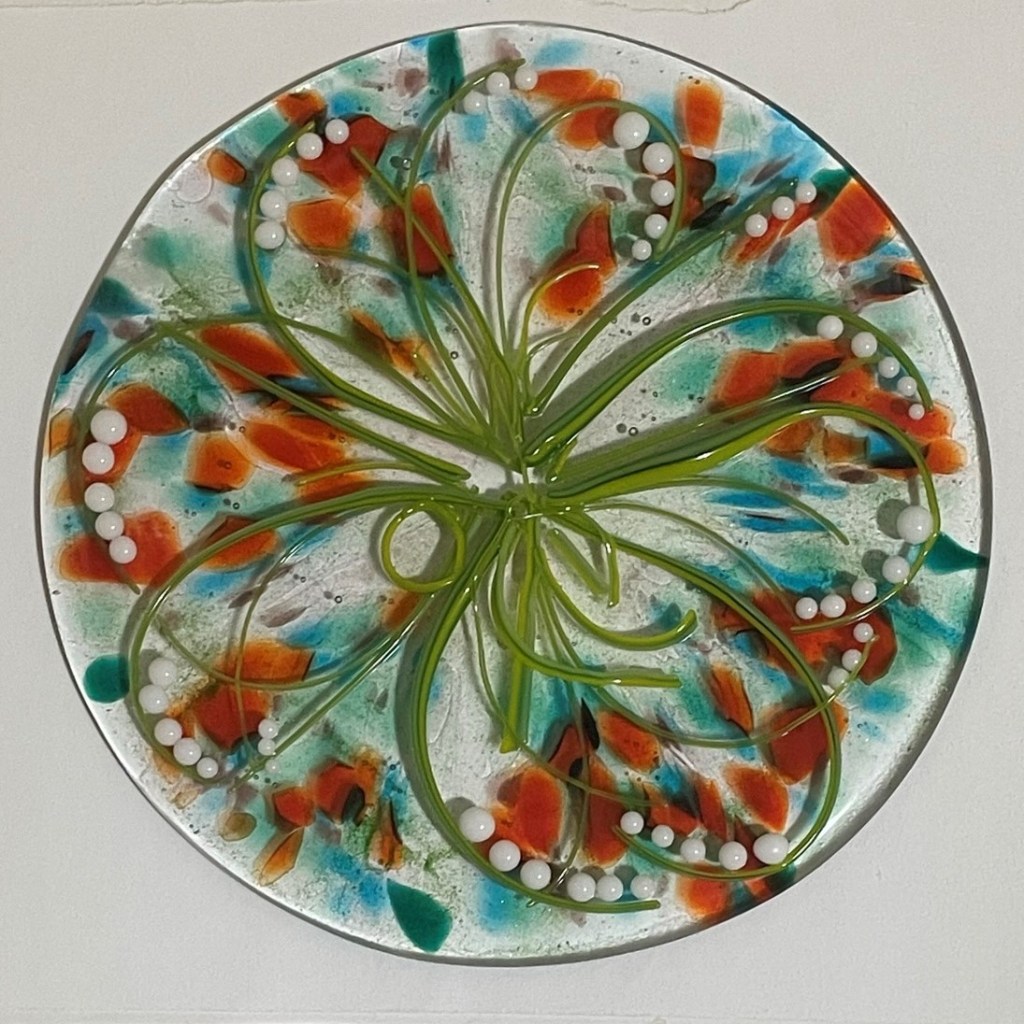
The hole in the center of the casting closed up after a second fusing to level out the glass. I added some green vitregraph and white pebbles to create a plate with a Lily of the Valley design.

After this initial project, I realized that coarse frit was too big for this technique. I have since tried other frit stretches with medium frit. The smaller pieces of glass look much nicer. I will post more about these other projects at a later date.

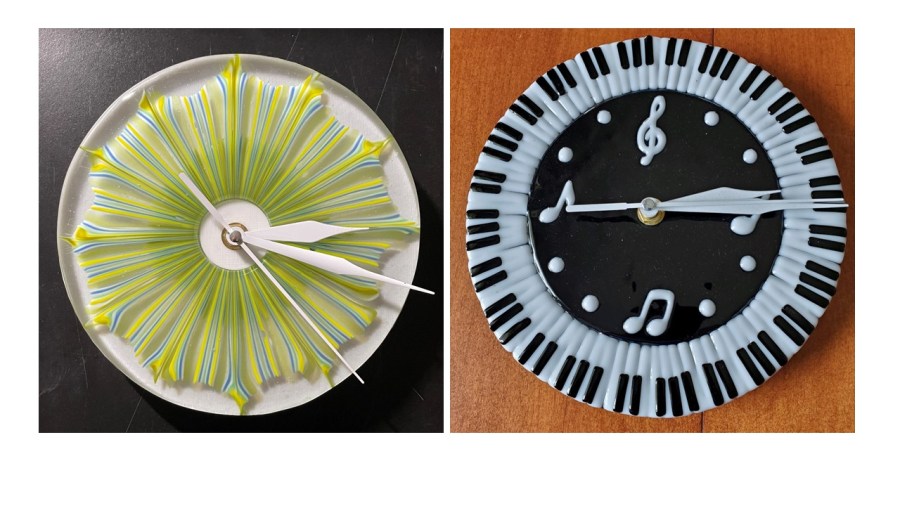
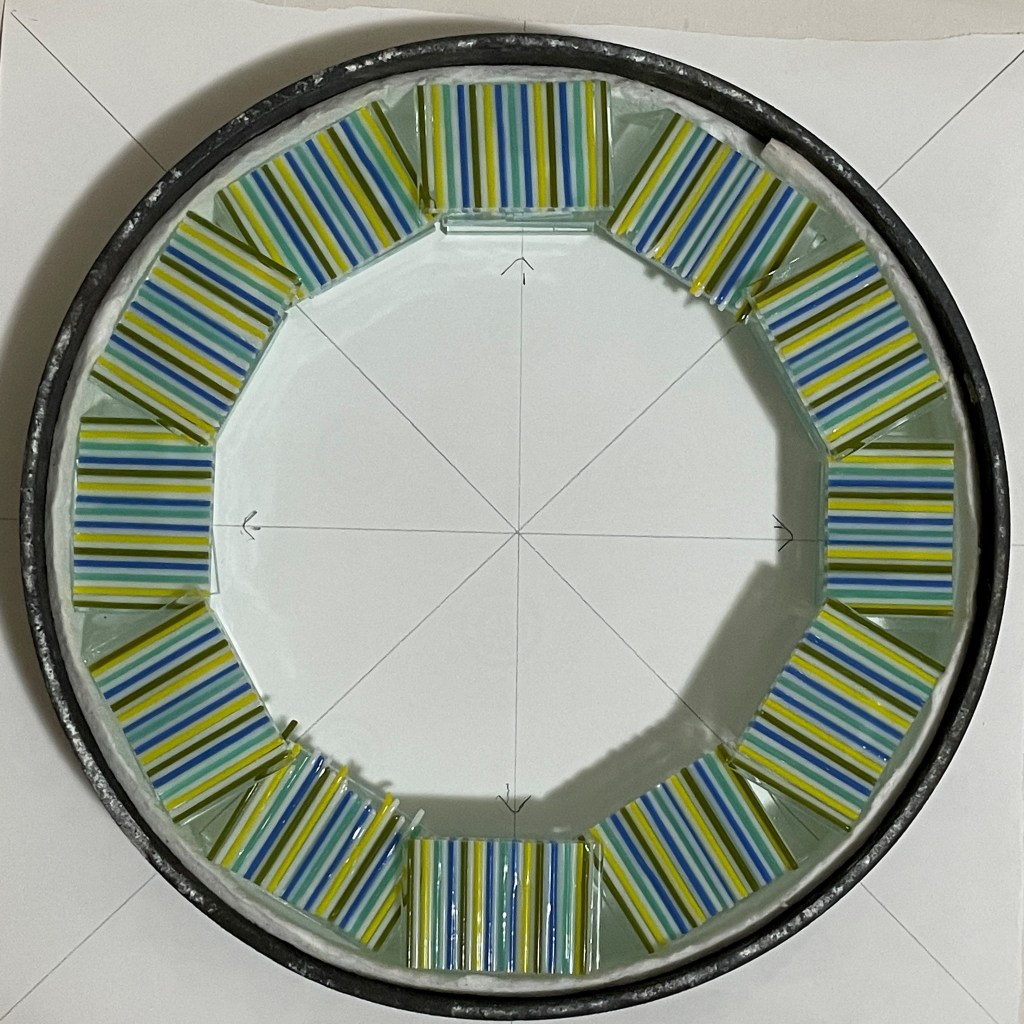
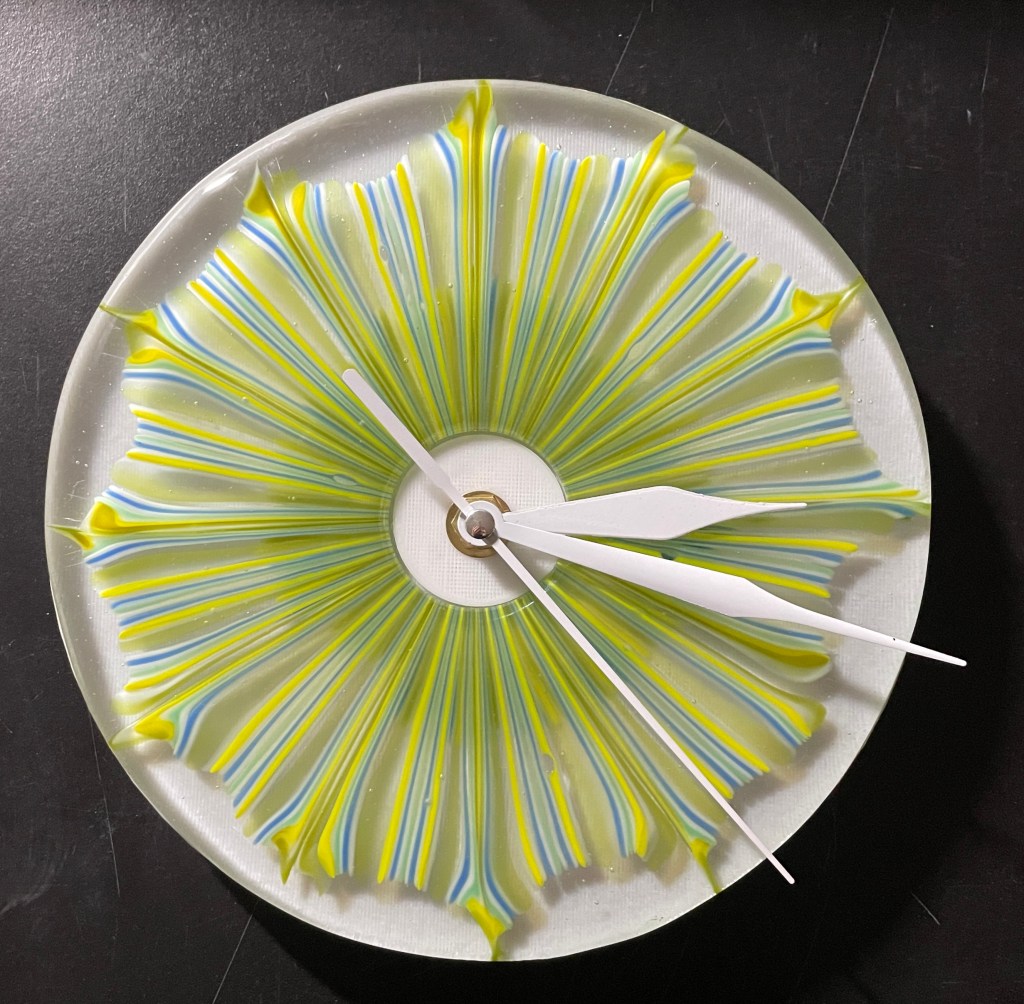
After seeing how my first attempts at frit stretching turned out, I recently tried stringer stretching. Stringers are thin, approximately 1mm, round strands of glass. I thought if I used twelve sections, it might create a nice background for a clock. For this project I used ridged clear glass with bits of stringer placed in the ridges in a pattern.

I really like how this stretch turned out. The hole was bigger than I expected and did not close when I did a second full fusing. To remedy this, I printed a backing of white PLA on my 3D printer. My attempt at making a clock turned out nice. Even without numbers, it is easy to tell what time it is.

After making this clock, I tried out another clock idea that I had seen on-line. This was a piano clock originally made out of printed plastic, but I wanted to try making it with glass.

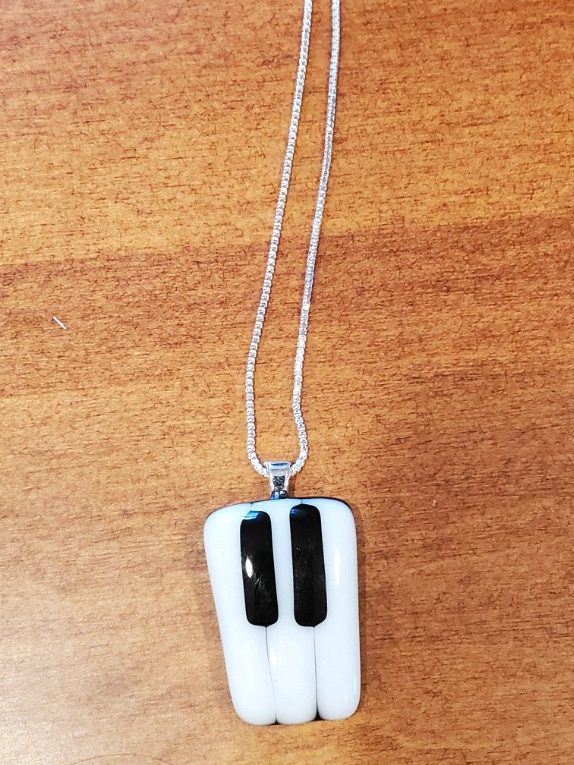
First, I made a test tile to if cut pieces of white glass and black glass noodles (thin glass strips measuring 1mm x approx 4 mm) would make the pattern that I needed for the piano keys. This test tile turned out really nice. Not wanting to waste the glass, I added a jewelry bail and made a pendant out of it.

For the keyboard clock, I cut 84 pieces of white glass and 60 pieces of black noodle. These were contour fused to an 8″ circular piece of black glass. Another 5″ circular piece of black glass was placed in the center of the larger circle and the cut glass was carefully positioned around the perimeter of the black backing glass. A couple white pebbles and some waterjet cut musical notes were added for details and to designate each of the hour markings. After the project was contour fused, a hole was drilled in the center using a diamond drill bit and clock workings were added. Voila, a wonderful music themed clock! I have more music themed glass ideas that I hope to make sometime soon.

How Can You Not See God

Wow what a glorious day!!

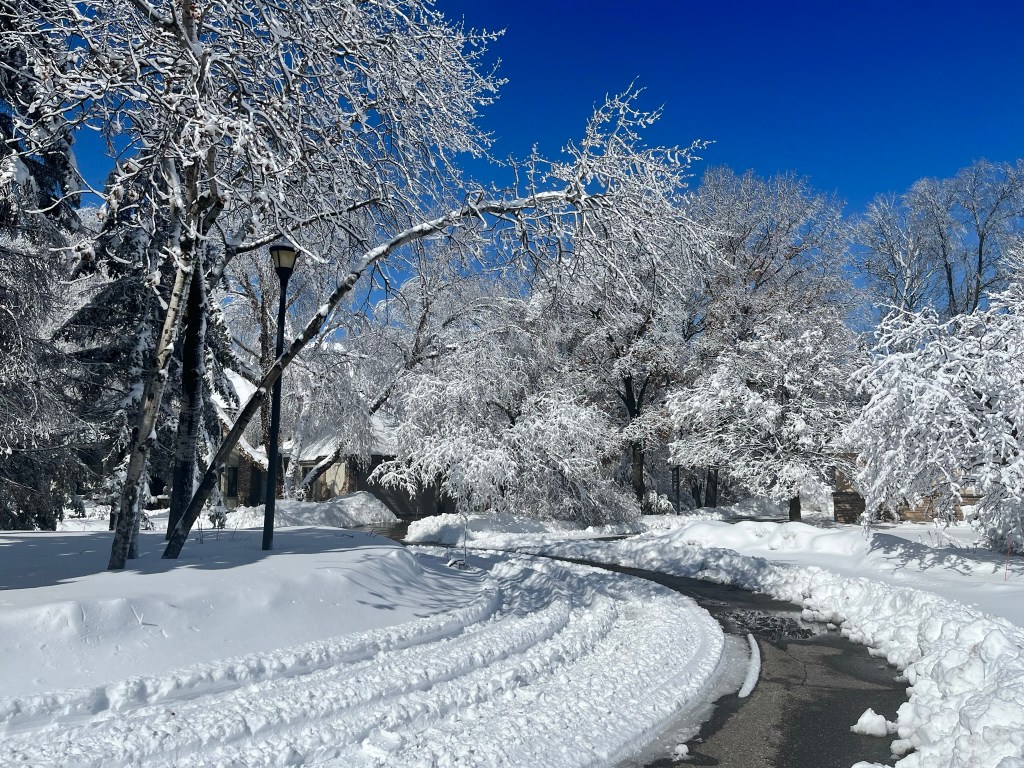
It was 88 degrees today (after 80 yesterday), and I spent most of the day working in my yard and cul de sac. Just twelve days ago, we had a blizzard in MN, but now spring seems to have arrived. While working in my yard, I was listening to some music. My current favorite song:

How Can You Not - Leanna Crawford

I see his goodness
When I fall down
And his grace that picks me up
Every day I can’t stop singing
Hallelujah
[Chorus]
How can you not see God
In every little thing
In every little moment
How can you not feel loved
How can you not
How can you not

I see the sun rise in the morning And a million stars at night I hear the birds, they can’t stop singing HallelujahCause He’s in the middle of Every little thing And every little moment How can you not see God How can you not How can you not[Verse 2] I see the sunset and I wonder If He paints it just for me Nobody else could make a world so beautiful How could I question his love when It’s everywhere I go Wherever I look I find another miracle[Chorus] How can you not see God In every little thing In every little moment How can you not feel loved How can you not How can you not

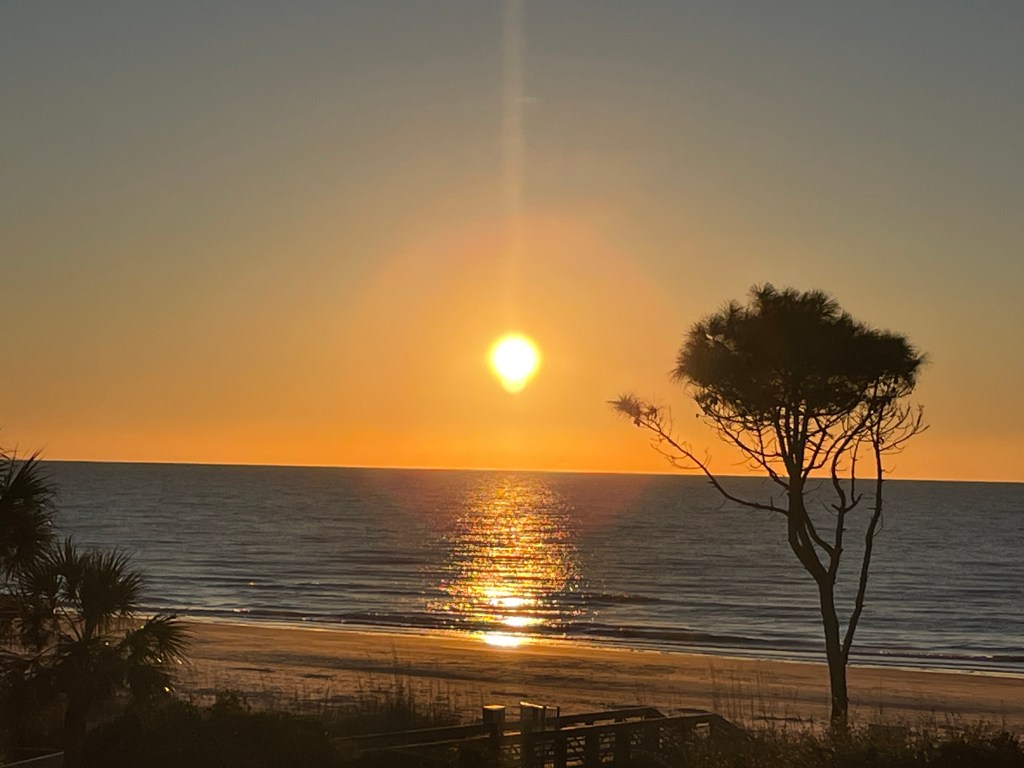
I first heard this song on a road trip to Arizona. Needing to move my mother (for the third time in seven months), I had two long days of driving down and two long days of driving back. While I normally listen to audiobooks when driving long distances, each day I did take a break from the books near the end of my driving and listen to songs on the radio. This song played at sunset on two of my days of driving, once on the way down and again on my return trip. The beauty of the sunset emphasized the awesomeness of God’s creation.

My mother is settled and happy in her new apartment. I am pleased that many of the deficits she suffered when she had a stroke last summer have been healed and she can live independently once again.

After returning to Minnesota, I had a day to do laundry and repack for a vacation on Singer Island in Florida. Sunshine and 80 degrees was really nice!

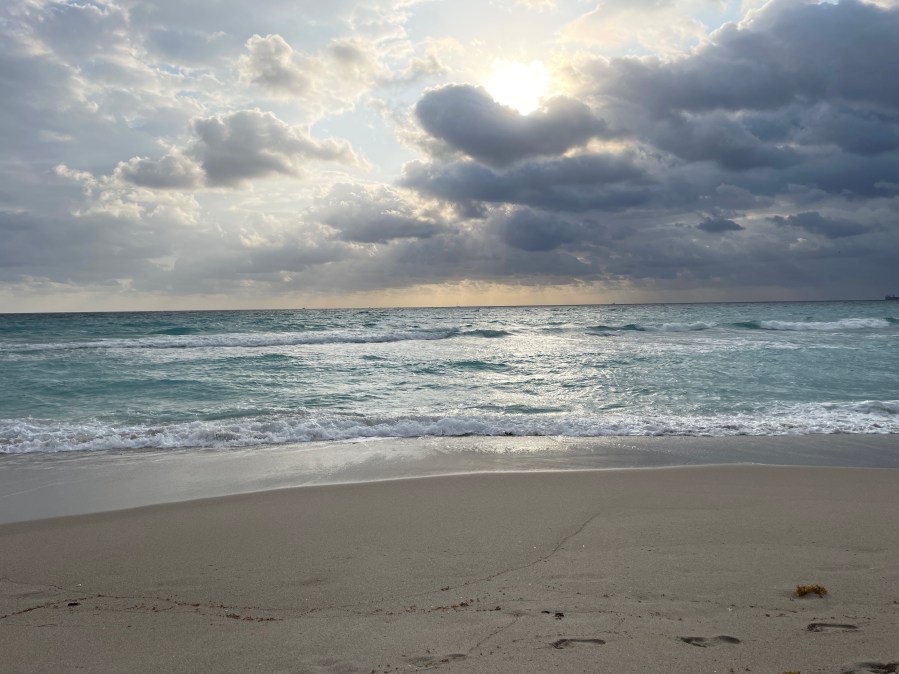
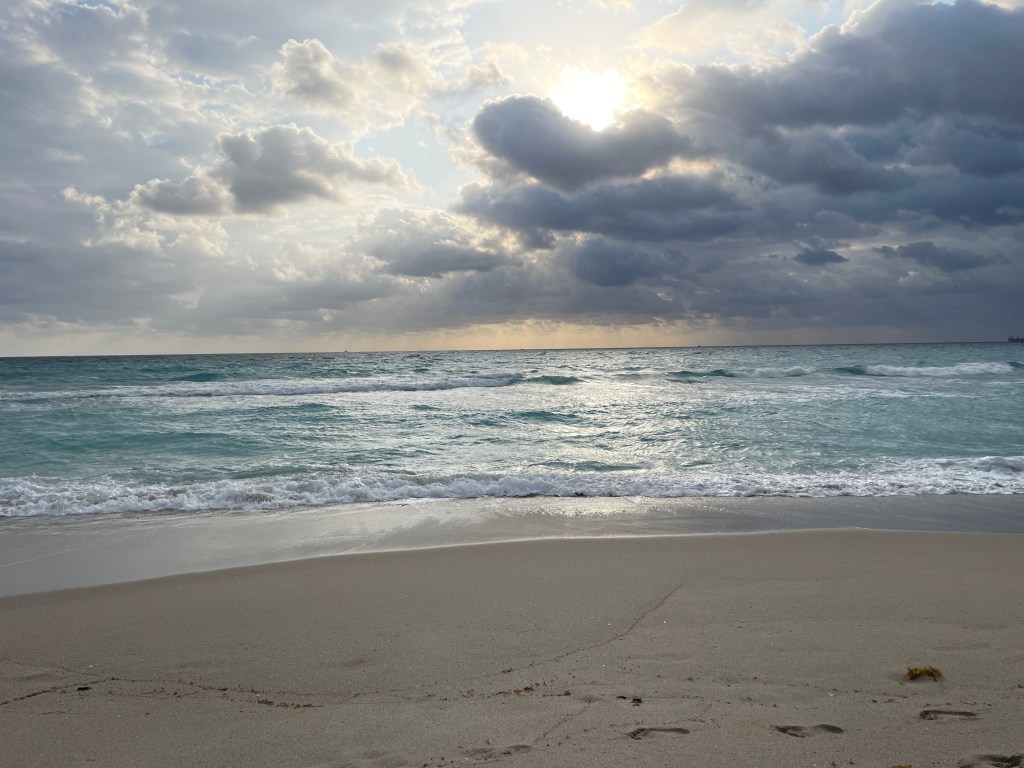
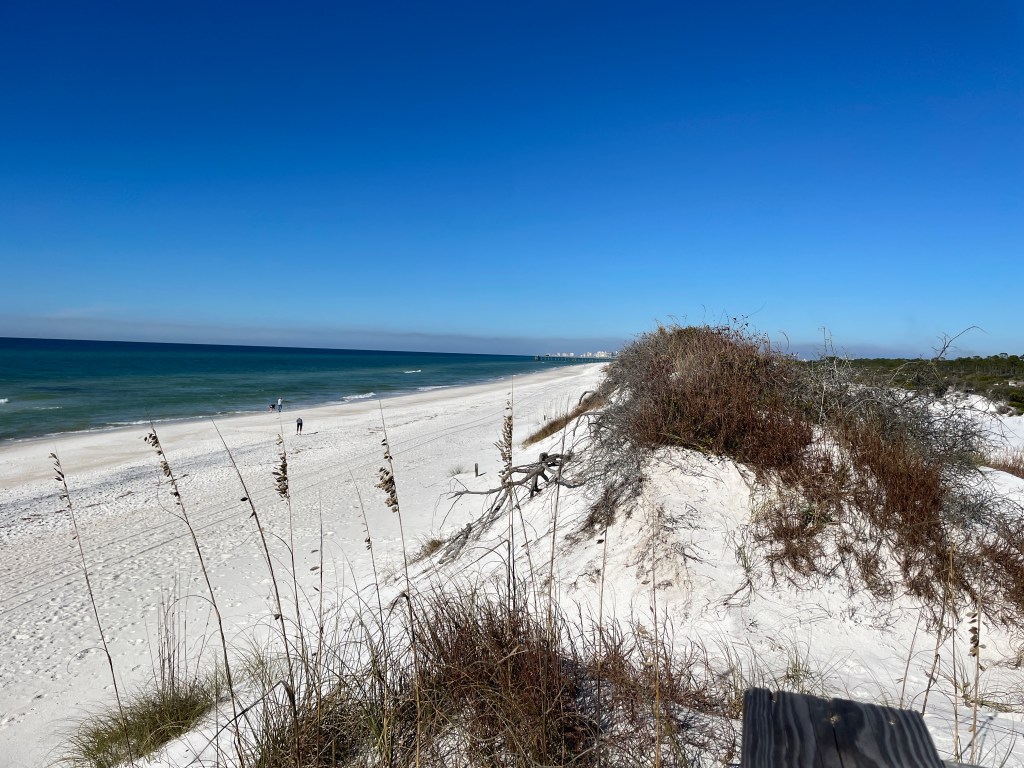
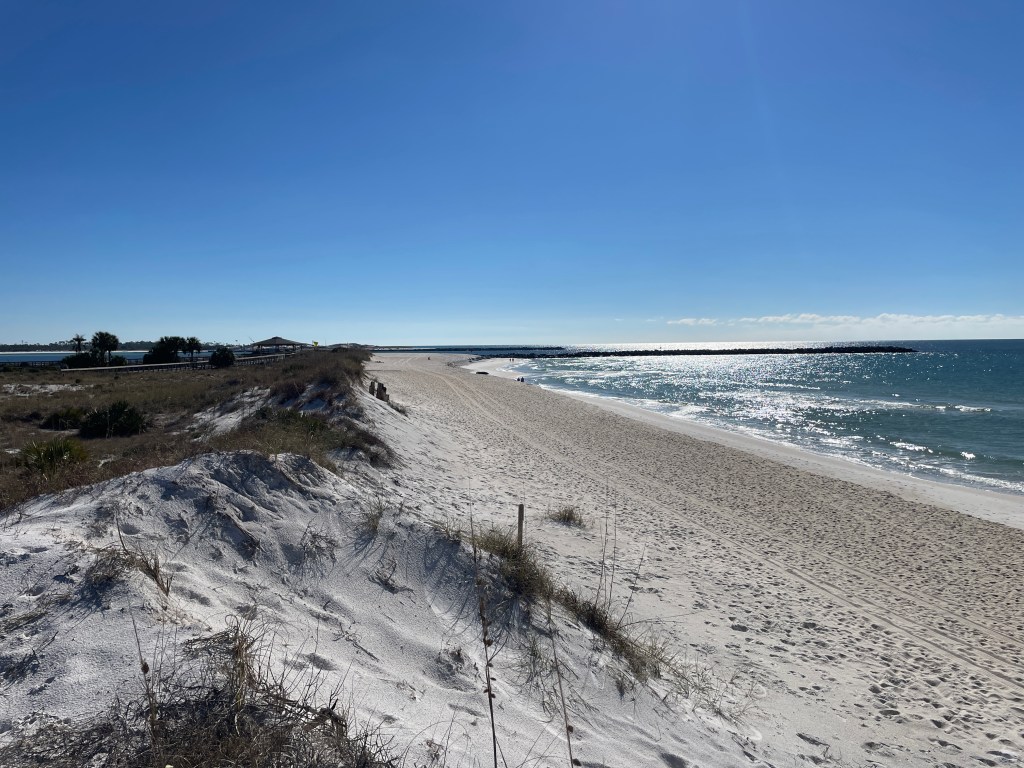
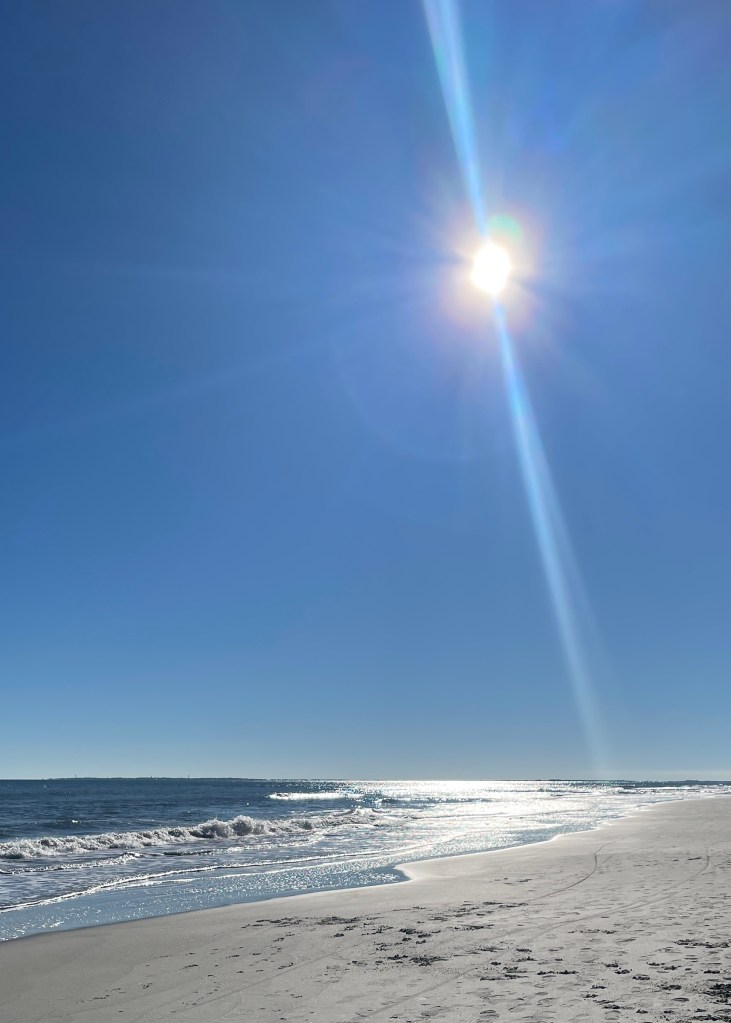
On April 1st, while my son was back in MN shoveling out from another snow storm, I went for a walk on the beach.

I again heard Leanna Crawford’s song on the radio. While enjoying the beauty of the waves and sunshine, I was again reminded of God’s marvelous creation.

Each day, I marvel at God’s creation. From the pair of owls that perched on our deck, to the flowers popping up in my front yard, to the sunrise when I wake up early in the morning – everything around us reminds us of God!!

Easter Celebration

At Easter, we have a lot to celebrate. When my boys were younger, they would search for Easter eggs and their baskets, usually in the house, but occasionally the weather was nice enough to be outside. This tradition was a lot of fun. But, even more special was attending Easter services at our church. While they may not have always sat quietly when they were young, I still had tremendous joy in being there together to celebrate.

You may think that it is strange for me to enjoy celebrating that a man died. To understand this joy, you first need to understand why Jesus had to die. He died for our sins and the sin of this world. In the world there is a lot of suffering, brokenness and pain caused by our sin. God sent Jesus to the world because he loves us and wants to save us from our sins.  This is God’s gift of grace to you this Easter. 

As we approach Easter Sunday, I hope that you too will celebrate Him with praise, love and thanksgiving for what he has done on the cross for us.

Gullah Heritage and a couple Pine Needle Baskets

While staying in South Carolina, I wanted to learn more about some of the local culture.  Unfortunately, I discovered that the Gullah Museum of Hilton Head Island was closed for the season. 

I was, however, able to attend an informational lecture on the history, food and crafts of the Gullah people at the Coastal Discovery Center.

The Gullah are an African American ethnic group who predominantly live in the low country region of Georgia and South Carolina, with smaller groups found in Florida and North Carolina.  Historically, they lived mainly on the coastal plains and the Sea Islands.  Because of this relative isolation, these people developed a creole culture that has preserved much of their African linguistic and cultural diversity. Gullah crafts, farming and fishing traditions, folk beliefs, music, rice-based cuisine and story-telling traditions all exhibit strong influences from Central and West African cultures.

I found the lecture very interesting. But, I was mostly interested in the Gullah recipes and crafts.

Being allergic to seafood, I was limited in the traditional recipes that I could try.  But, here are a couple that I enjoyed:

Gullah Red Rice

Ingredients 

  • 2 tablespoons olive oil
  • 1/2 pound sausage cut into bite sized pieces
  • 2 onions, diced
  • 6 tomatoes, diced
  • 1 tablespoon chili powder 
  • 1 cup long grain rice
  • 1 teaspoon salt
  • 1 cup water

Directions 

  1. Heat the olive oil in a large pot over medium heat. 
  2. Add the sausage and cook until browned, then remove from the pot and set aside.
  3. Add the onions and tomatoes to the pot and saute until the onions are translucent. 
  4. Stir in the water, rice, salt and chili powder. Add the meat, stirring at medium high heat until mixture comes to a boil.
  5. Reduce to simmer, cover and cook for 20 minutes. 

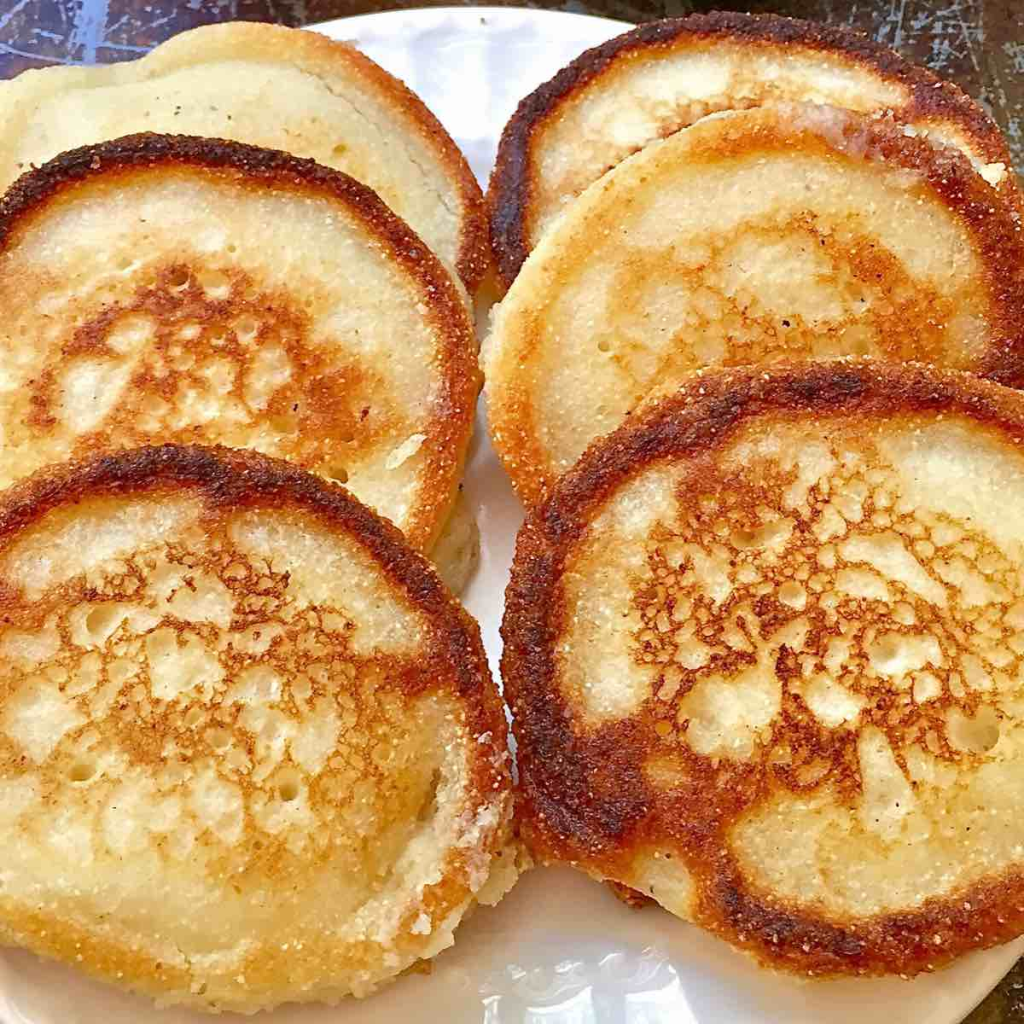
Fried Corn Cakes

Ingredients 

  • 1 tablespoon butter
  • ½ cup chopped onion
  • ¼ cup diced bell pepper
  • 1 tablespoon chopped celery, with some leaves
  • ½ cup self rising flour
  • ½ cup self-rising buttermilk cornmeal
  • 2/3 cup buttermilk
  • 1 beaten egg
  • 1 cup fresh or frozen corn, cooked and drained
  • 3 tablespoons sugar
  • 1 teaspoon garlic salt
  • 1 teaspoon black pepper
  • 1 teaspoon ground red pepper
  • Oil

Directions 

  1. In a small skillet, melt butter and sauté onion, bell pepper, and celery until just tender. Set aside.
  2. In a large bowl, mix together flour and cornmeal. Slowly stir in buttermilk. Add egg and corn.
  3. Stir in sugar, garlic salt, black pepper, and red pepper. Add the vegetables and melted butter and mix.
  4. Ladle the batter in pancake-size rounds into a nonstick pan.  Cook over medium heat until brown on both sides.

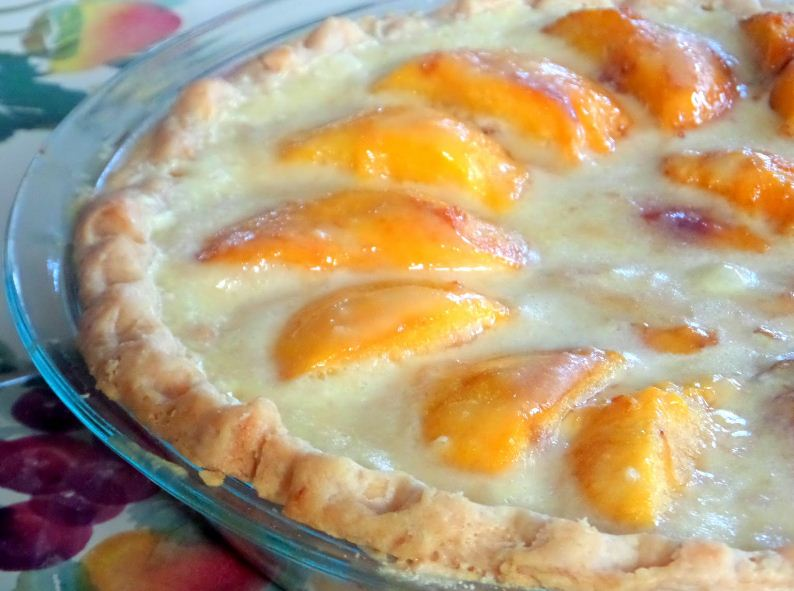
Low Country Peaches and Cream Pie

Ingredients 

  • 2 pounds fresh peaches
  • 1 standard pie shell
  • ½ cup flour
  • ½ cup light brown sugar
  • ¼ teaspoon salt
  • 1 stick butter
  • ½ cup sugar
  • ½ teaspoon cinnamon
  • 1 egg
  • 2 tablespoons heavy cream
  • 1 teaspoon vanilla

Directions 

  1. Wash and peel peaches and slice thinly. Set aside.
  2. Make sure pie shell is completely thawed.
  3. Mix together flour, brown sugar, and salt. Use a pastry cutter or fork to blend in butter. Mixture should resemble coarse crumbs.
  4. Measure half of the flour mixture and sprinkle evenly over pie crust bottom.
  5. Place the peaches over the flour mixture. Sprinkle sugar and cinnamon over peaches.
  6. Whisk together egg, cream, and vanilla and pour over sliced peaches.
  7. Top with remaining flour mixture.
  8. Bake at 400 degrees for about 45 minutes.

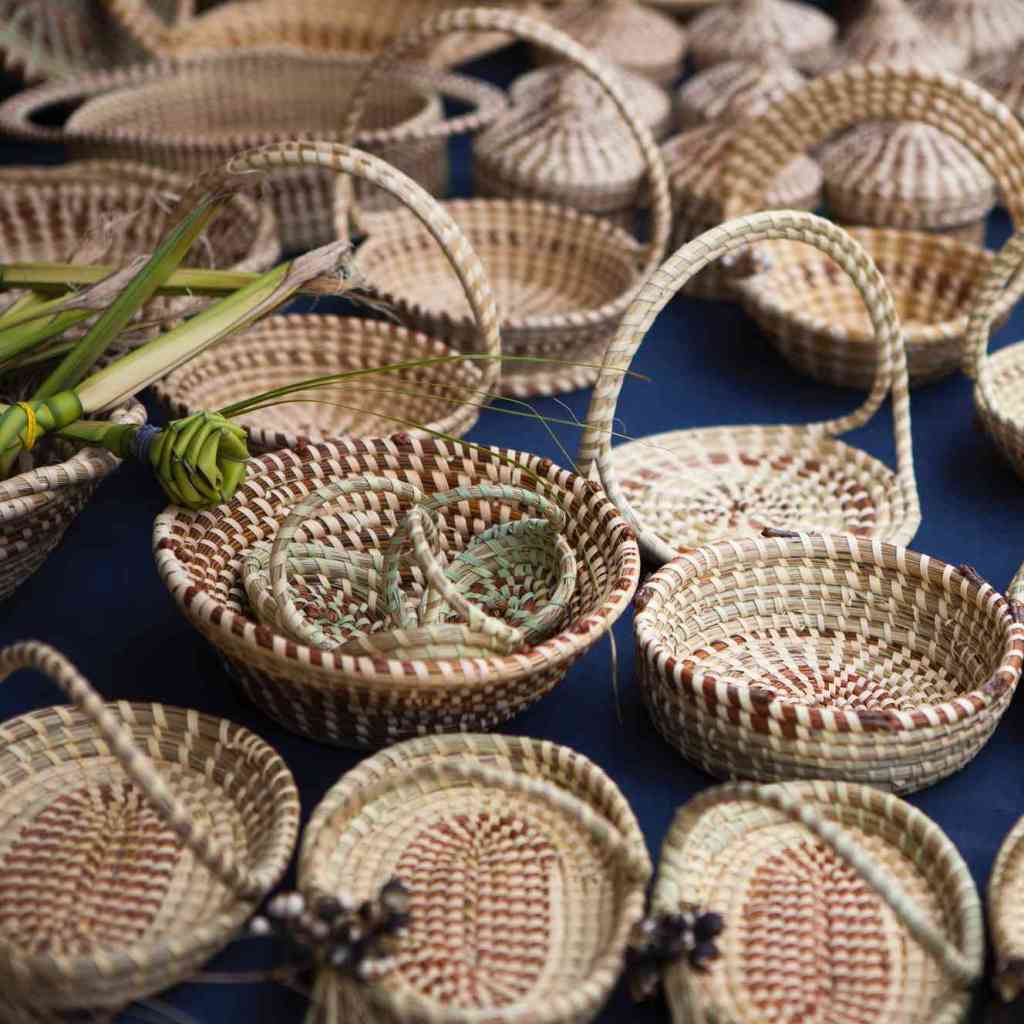
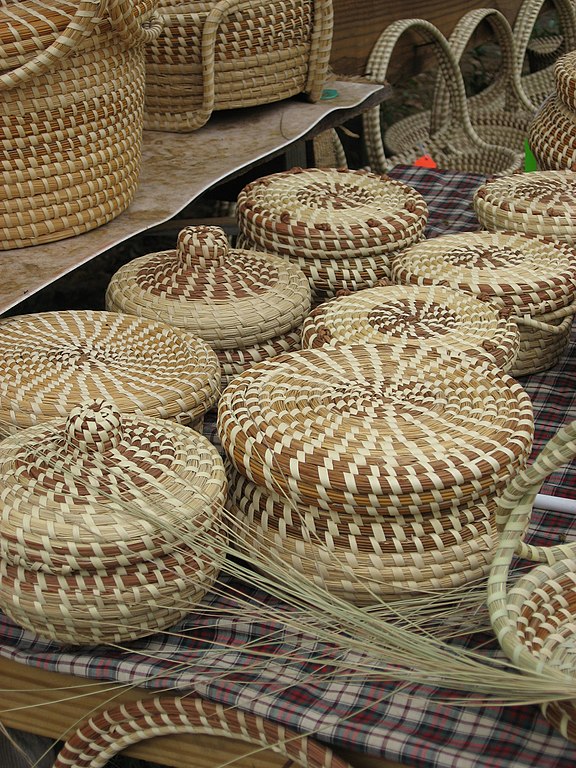
The predominant craft amongst the Gullah is sweetgrass basket weaving.  This art form, arrived in South Carolina in the 17th century with the arrival of West African slaves who were brought to America to work on Southern plantations. The craft has been passed down through generations. The baskets were originally used to process rice, a common crop in both West Africa and South Carolina. The baskets are created by bundling dried sweetgrass, which tends to grow in the sandy soils found near the ocean, and coiling it into unique circular designs, a weaving technique unique to West Africa. Palmetto fronds secure the coils, and pine needles and bulrush are used to both fortify and decorate the baskets.

Again this year, I thought to take a class, but I really don’t need another hobby! I did however, make a few more pine needle baskets while I was on Hilton Head Island.

Basket #1

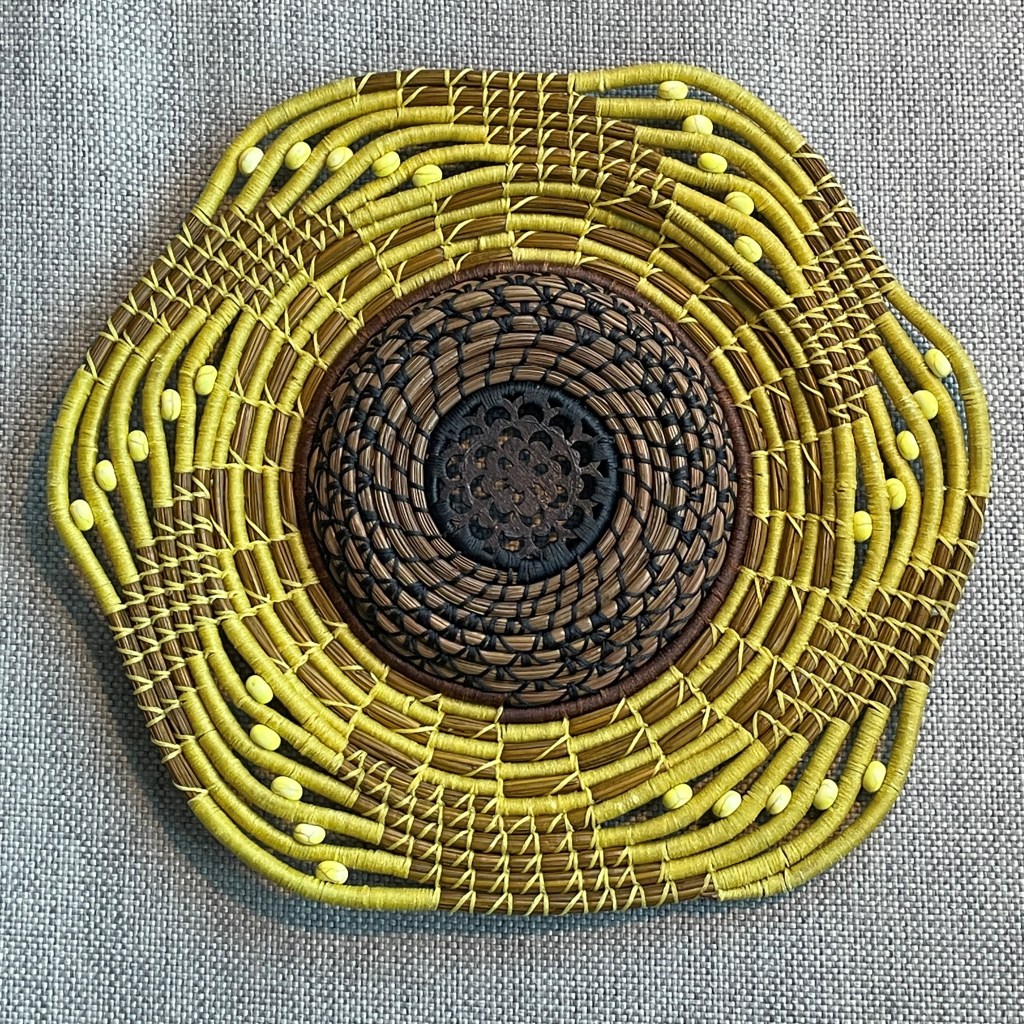
My design for this basket was to make something that looked like a sunflower to mount on my sewing room wall.  The center of the basket was a wooden medallion that I purchased from Hobby Lobby.  I removed the hanging loop and stained the wood black.  The center of the flower was made with unstained pine needles and black sinew.  There are three rows of Simple Stitch and four rows of Spiral Fern Stitch.  Around this, I did one wrapped row with brown sinew, during which I switched over to yellow dyed needles.  Unfortunately, the yellow color of the needles does not show very well.  But, it still looks nice and made the transition to the petal part of the sunflower noticeable. For the petal part of the flower, I used yellow sinew and completed five rows of Indian Wrap Stitches.  This was followed with five rows of alternating V Stitch and Wrapped sections with a yellow bead incorporated to create some shaping of the flower.  I varied the position of the rows to create some dimension to the flower. 

This basket looks really nice mounted on my wall.

Basket #2

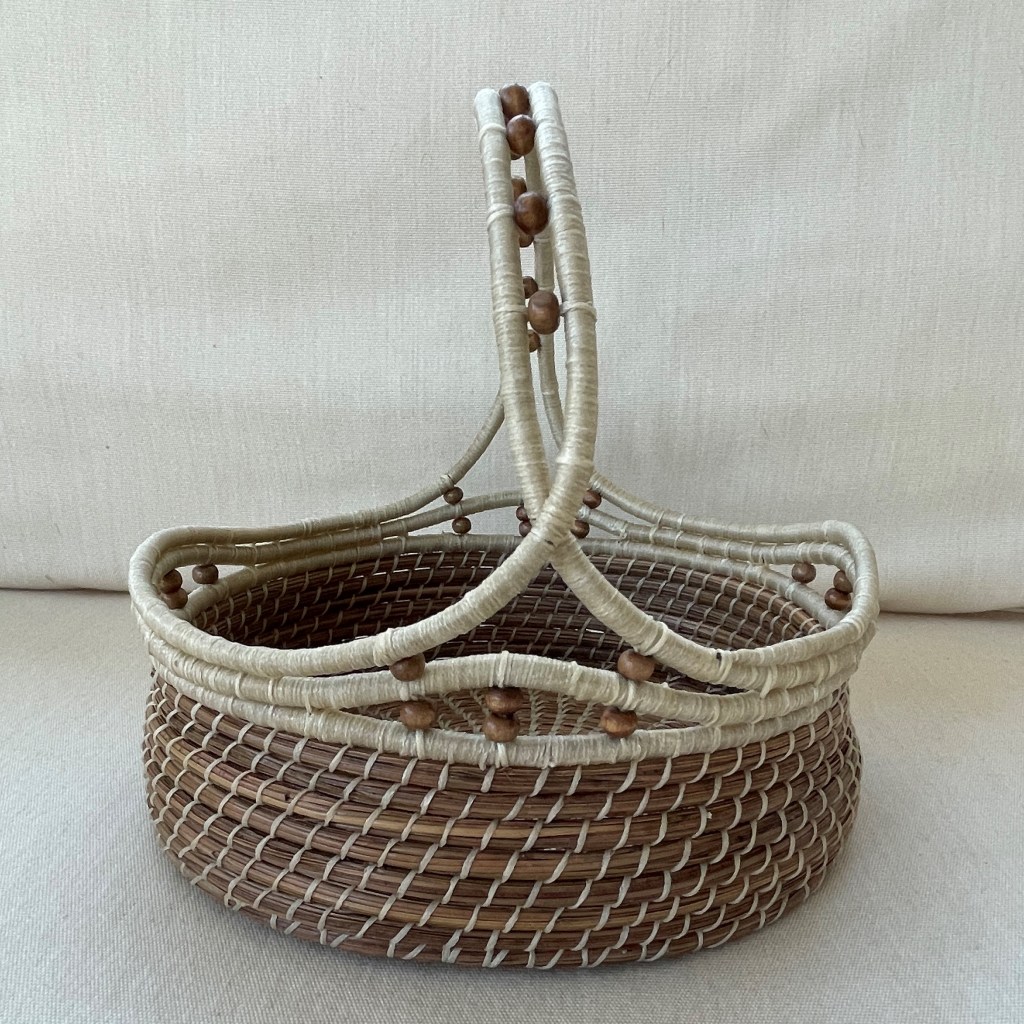
When recently visiting my mother, she commented that she would like one of my baskets.  So, my second basket is a birthday gift for her.  The basket is made with undyed needles.  The bottom of this basket is three wrapped rows followed by twelve rows of Wheat Stitch.  I was able to keep the bottom really flat (something I have had trouble with in the past).  Switching to Simple Stitch, I created the walls of the basket with seven rows.  The last row of the walls was a wrapped row.  To create the handle, I completed two more wrapped rows with the needle bundles looping upwards and beads incorporated into the weaving. 

This basket is being shipped to my mother.  I sure hope she likes it. 

Southern Exposure

Having enjoyed my winter getaway last year, I fled the cold weather again this year. My trip started with a short stop in Madison for lunch with one of my sons and his girlfriend. I then spent a couple days in Milwaukee with my mother -in-law. Both of these visits were very enjoyable.

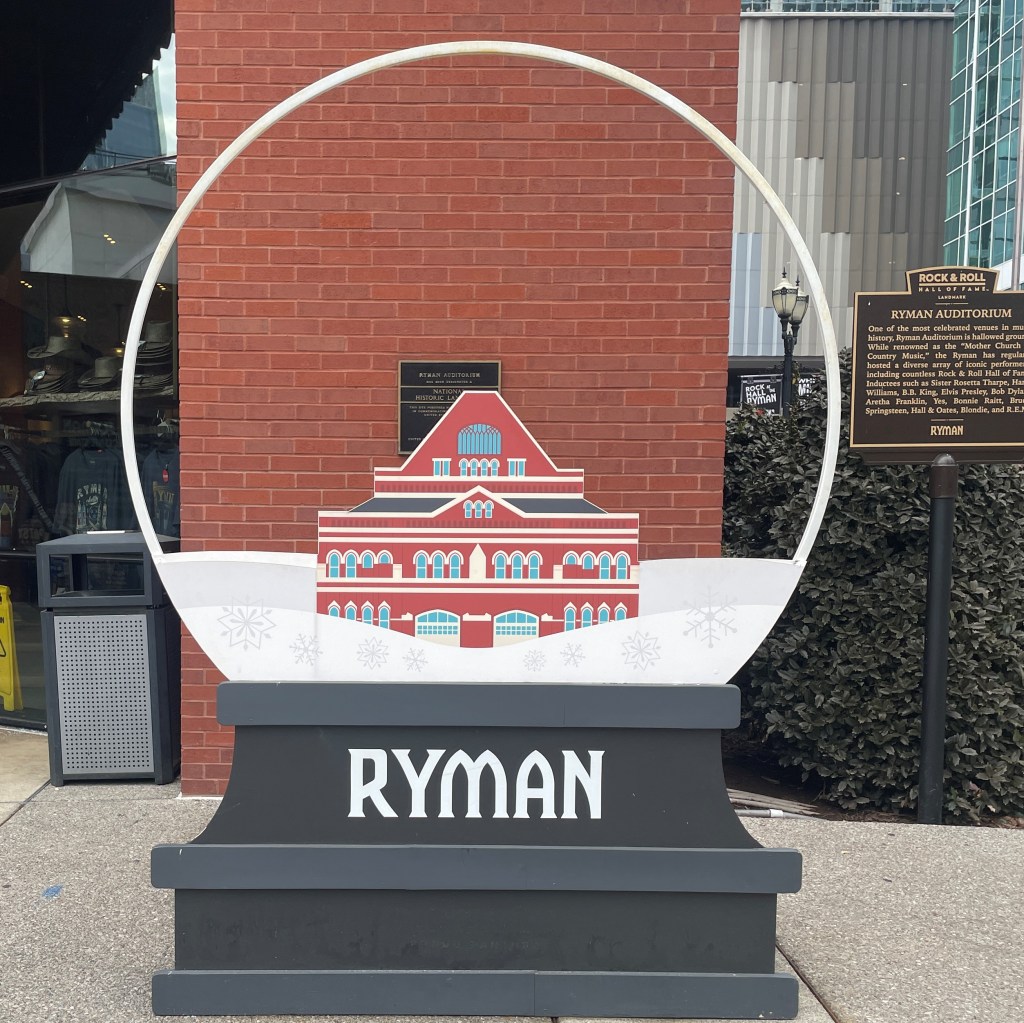
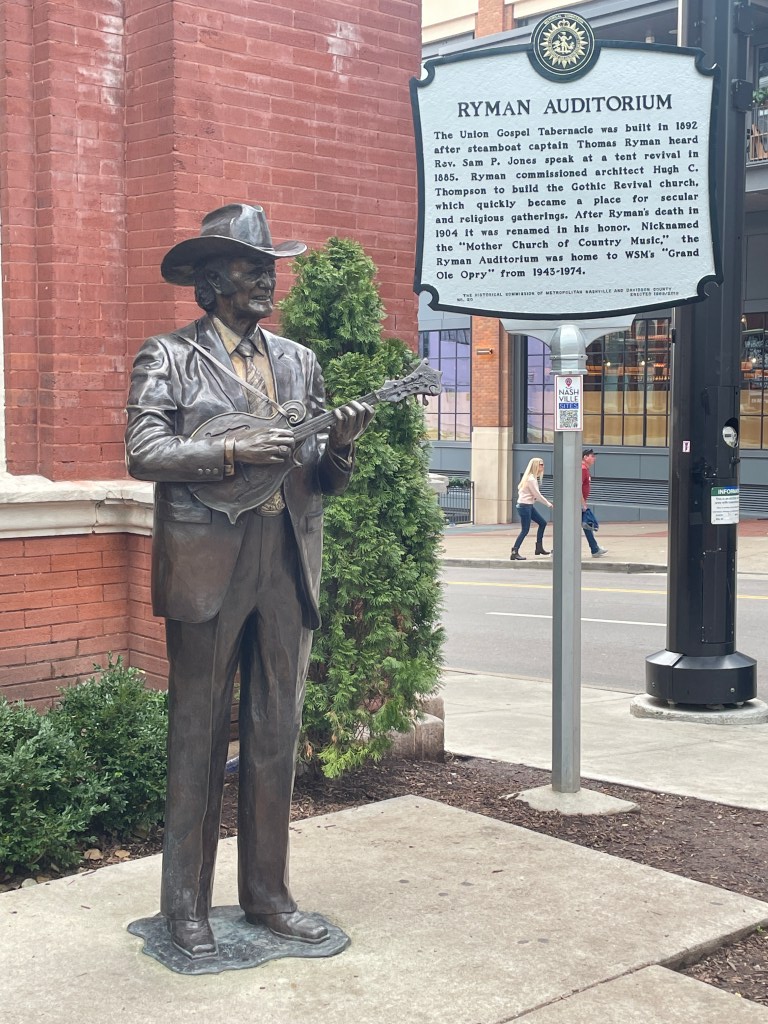
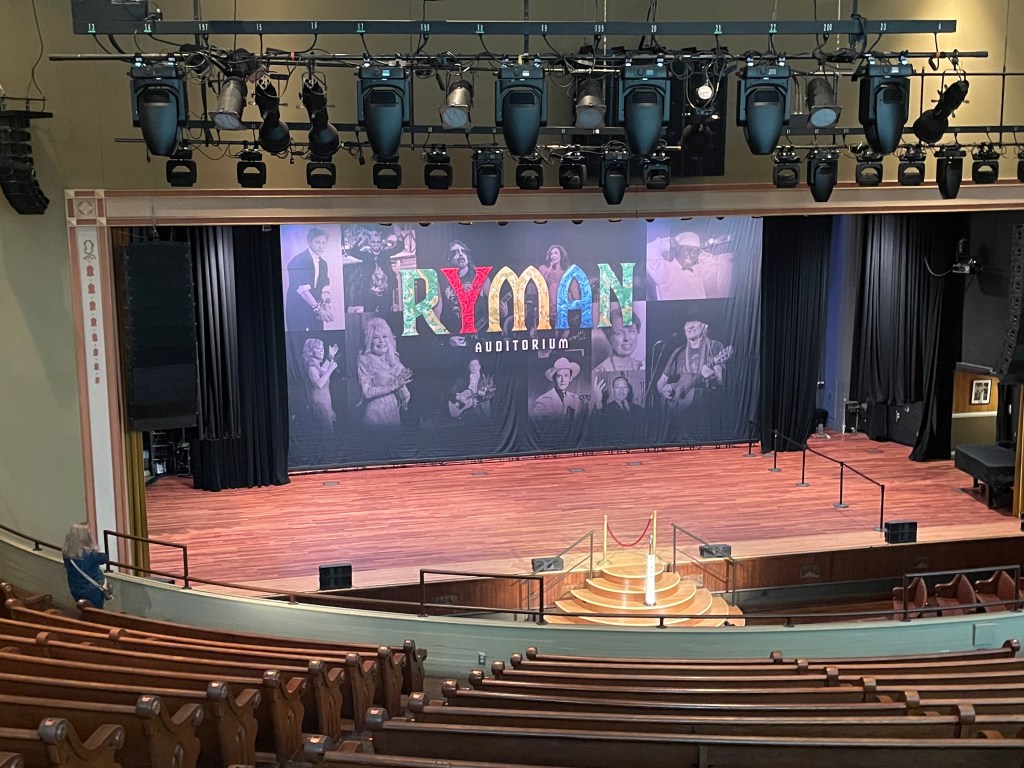
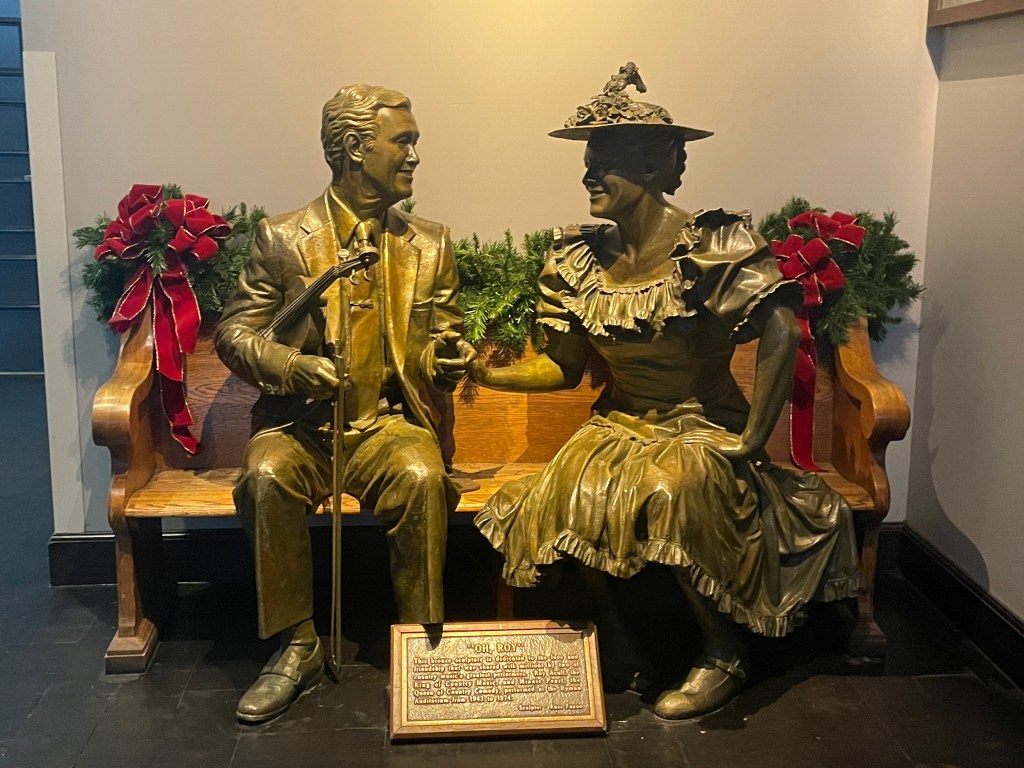
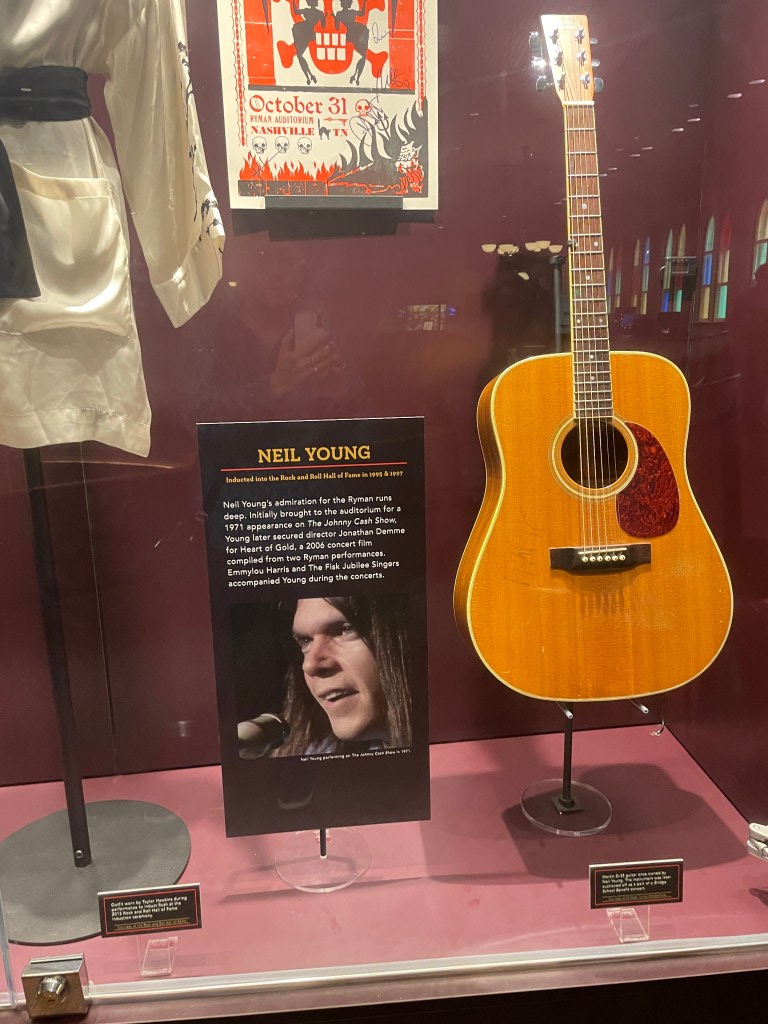
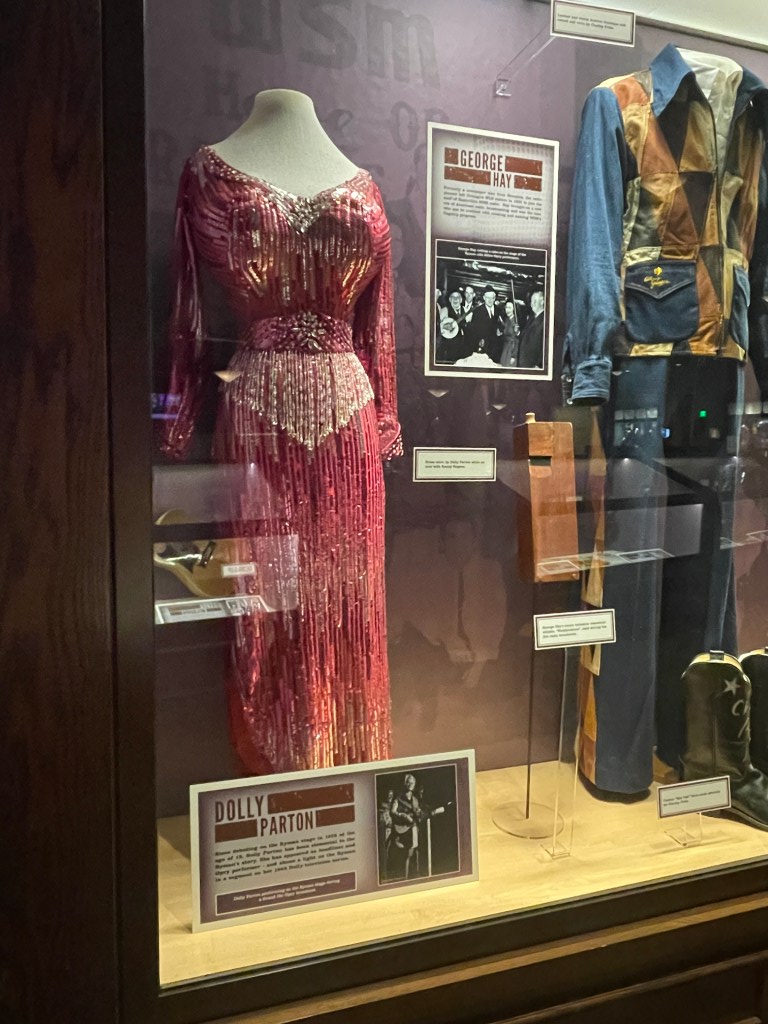
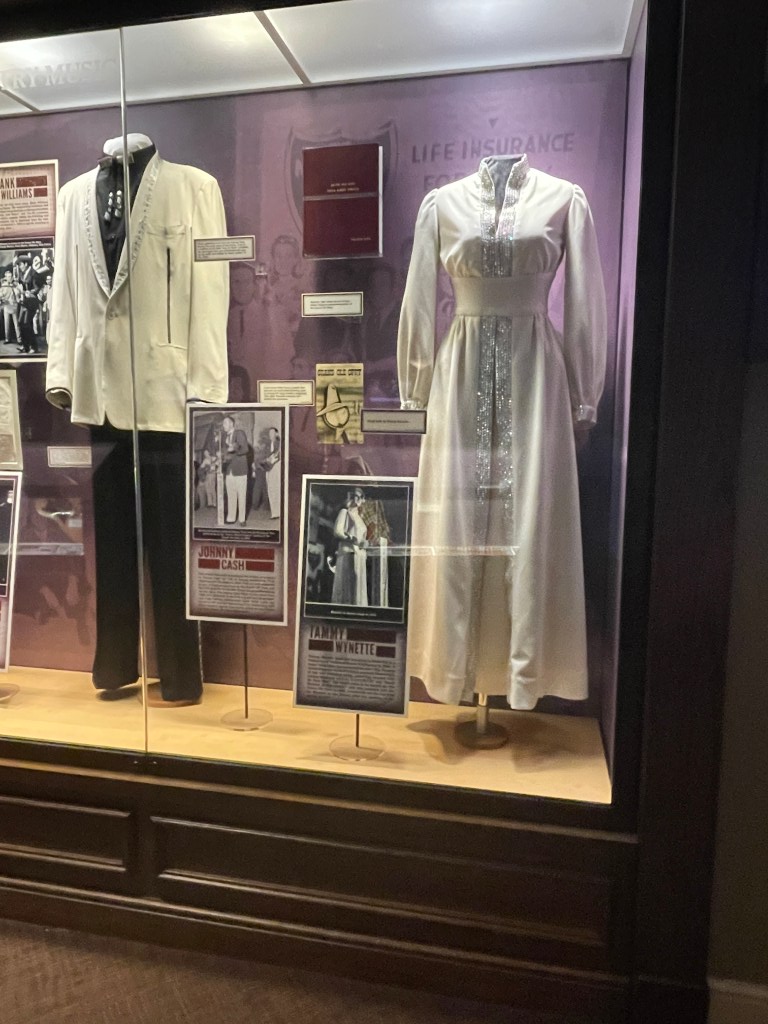
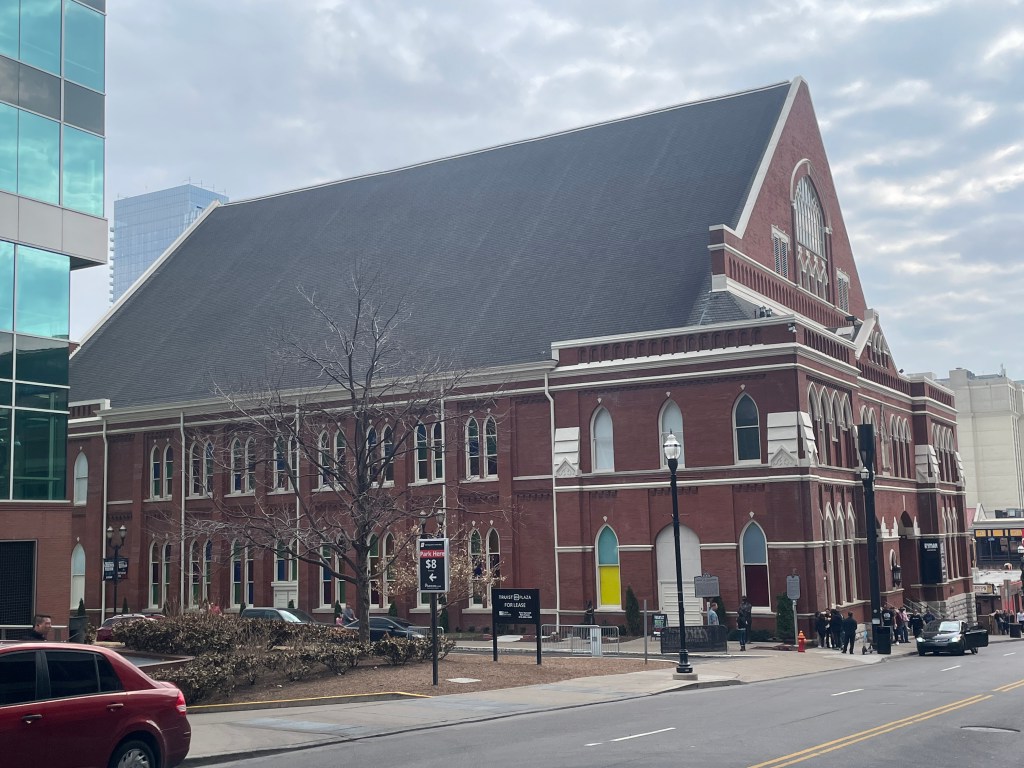
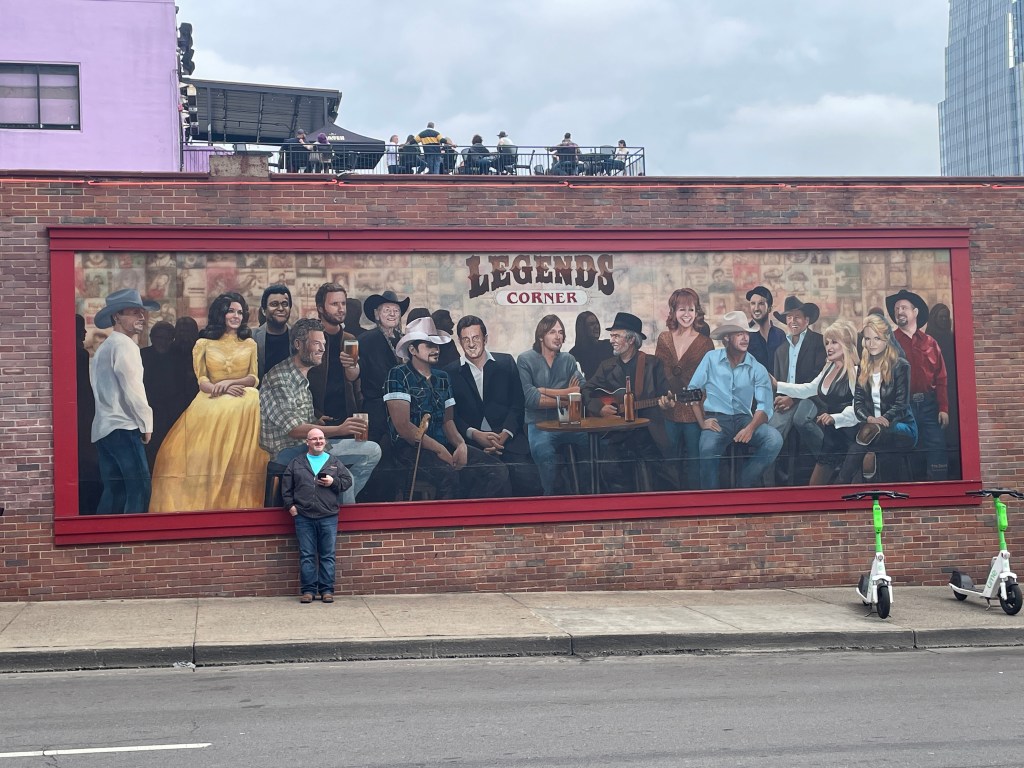
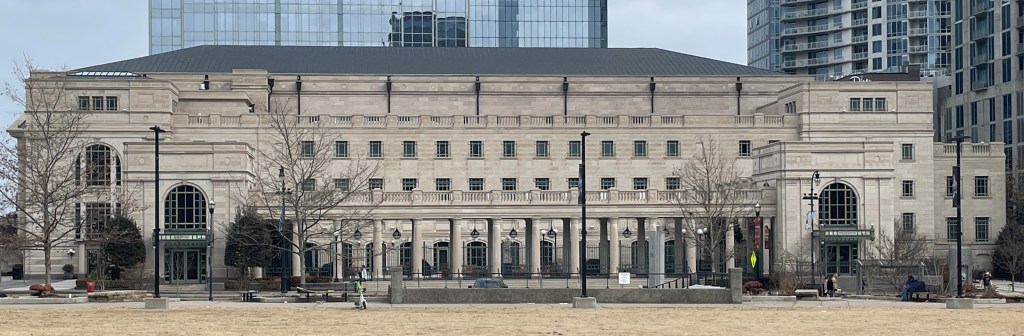
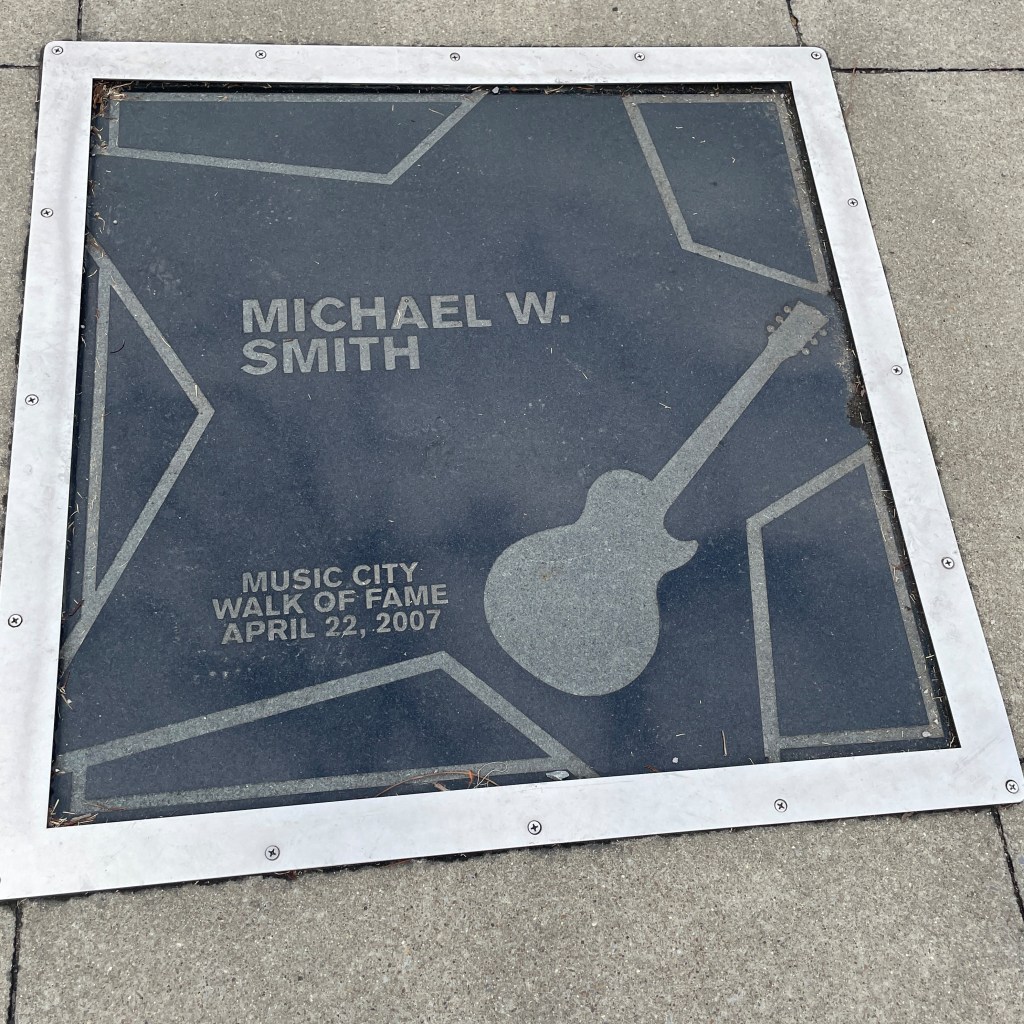
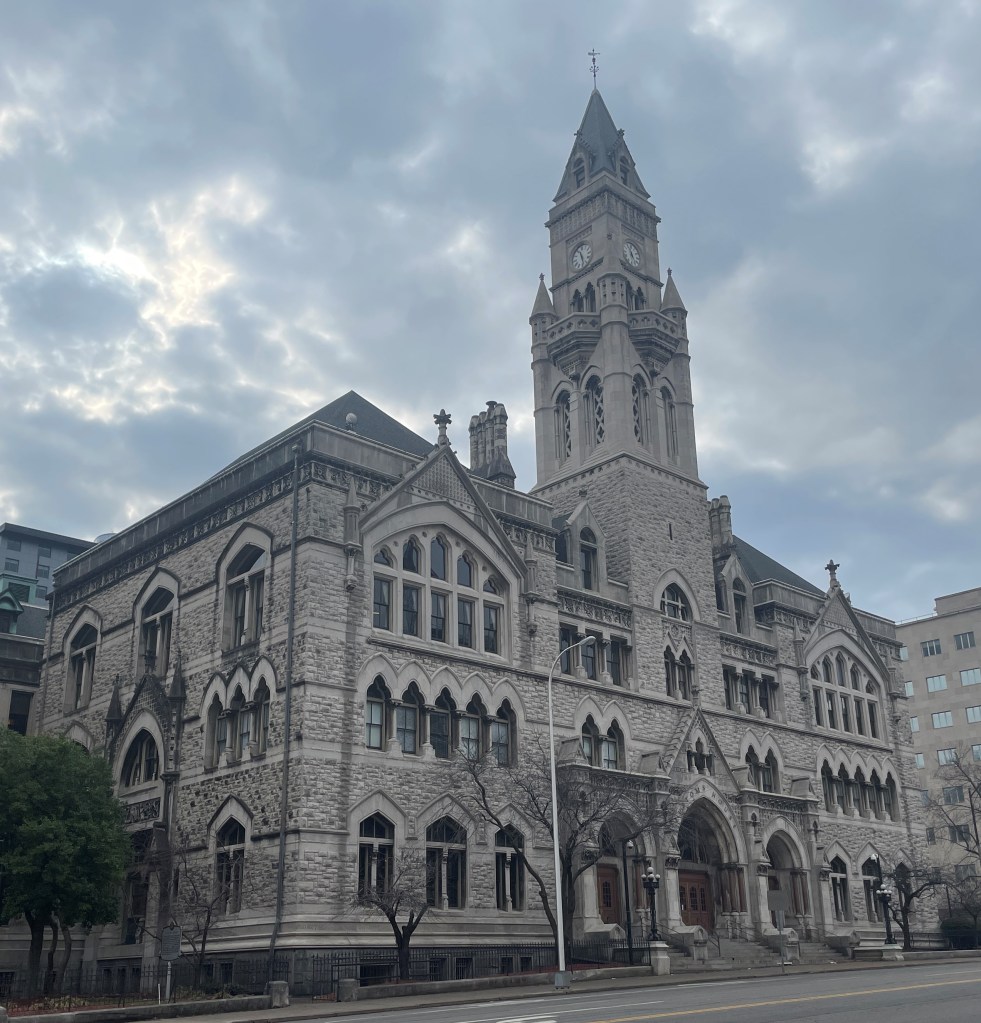
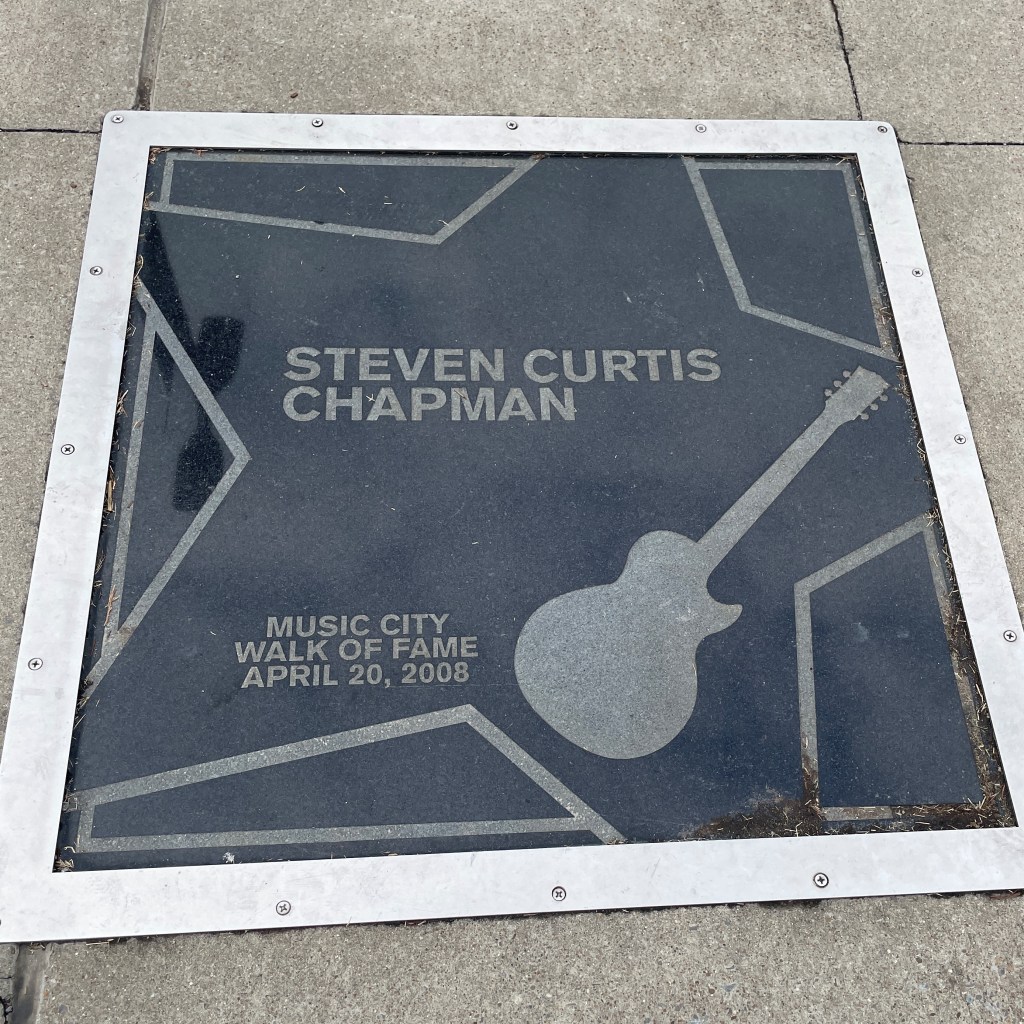
The first leg of my road trip started with a stop in Nashville, TN. Here I enjoyed 78 degree weather (on January 2nd!), a tour of the Ryman Auditorium, a visit to the Country Music Hall of Fame and Museum and enjoying the Music City Walk of Fame.

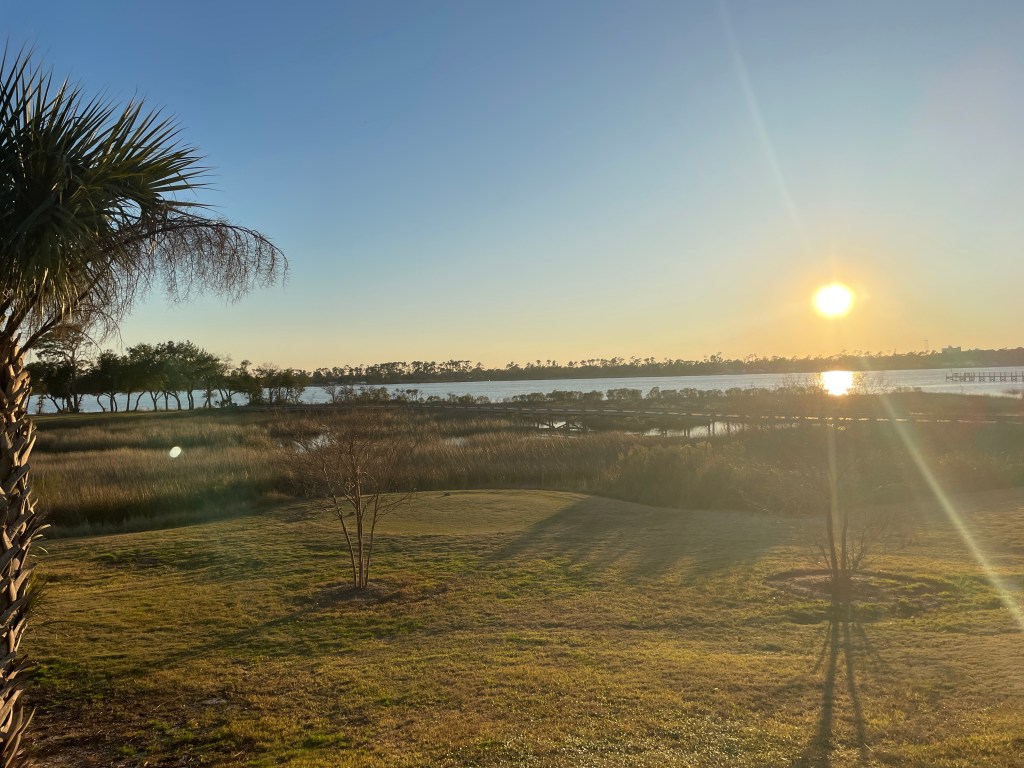
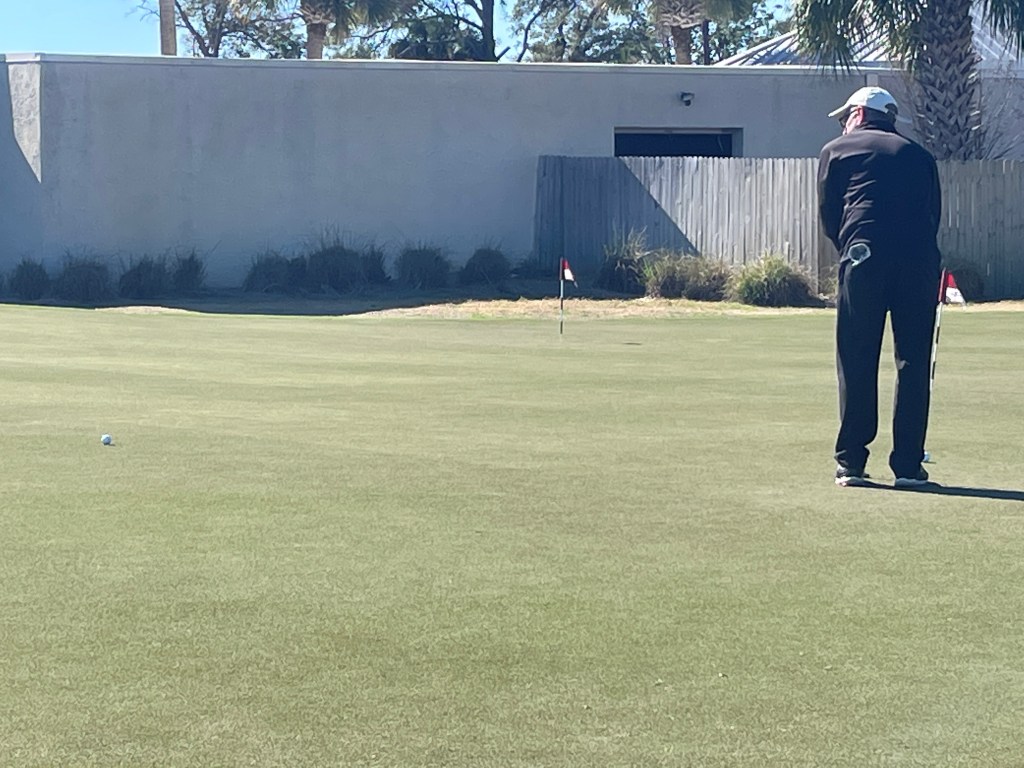
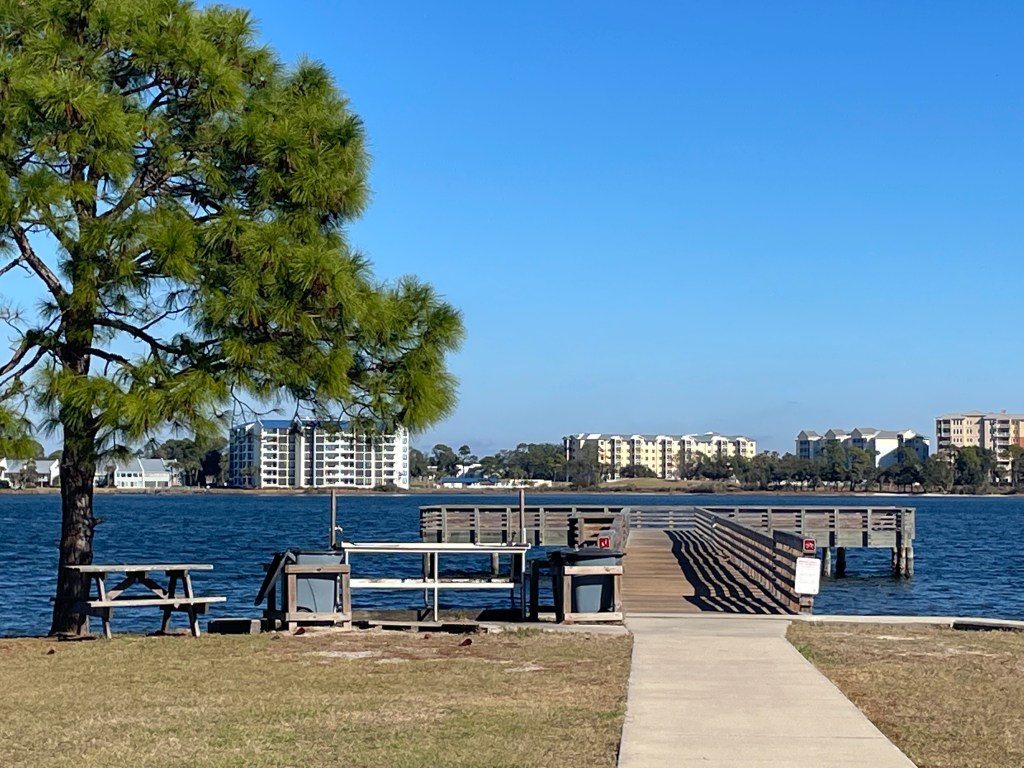
I then drove south to spend ten days in Panama City, FL. Being in a villa along an intercoastal waterway, I enjoyed taking longs walks in the nice weather, riding my bike to the grocery store, riding along with Keith as he golfed the local course, and hiking at St. Andrews State Park and Conservation Park.

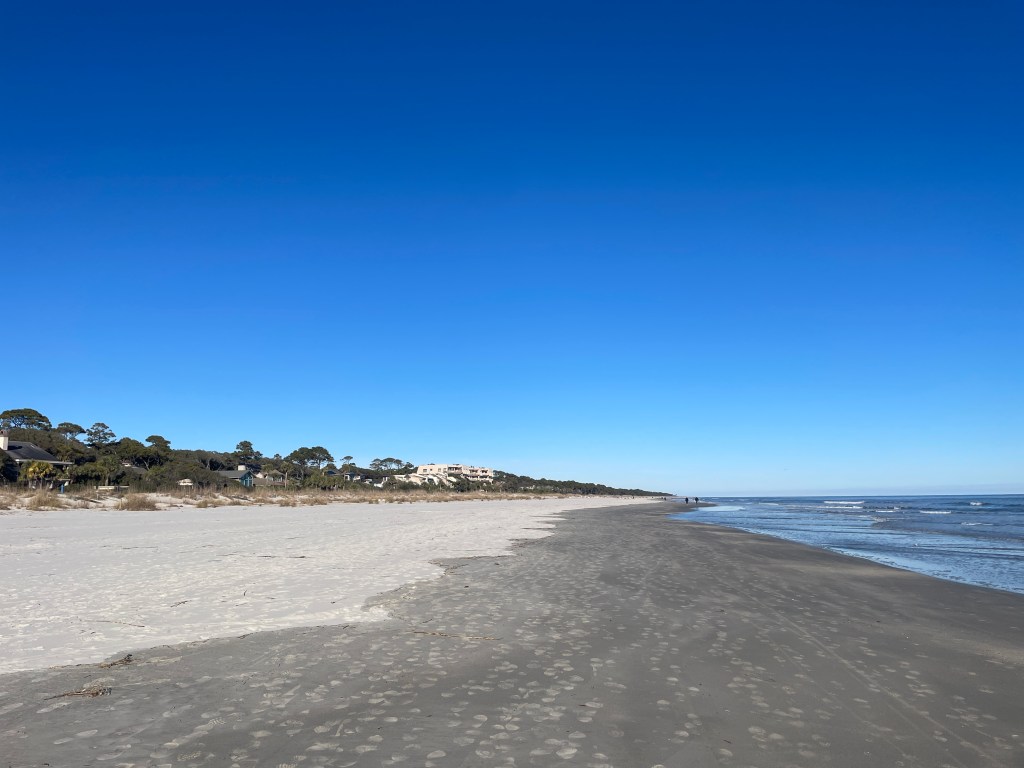
Keith needed to return to work the next week. So, I dropped him off at the airport before driving to Hilton Head Island. There I enjoyed lots of sunshine, walks on the beach (every day!), biking every where, shopping at the farmer’s market, and sunshine (did I already say that). I really enjoyed that opportunity to leave the Minnesota snow behind for a couple weeks.

Like last year, I had taken my sewing machine and lots of craft supplies with me. During my month away, I pieced together six quilt tops, crocheted four hats and made two pine needle baskets. So, while I was alone in South Carolina, I had plenty to activities to fill my days.

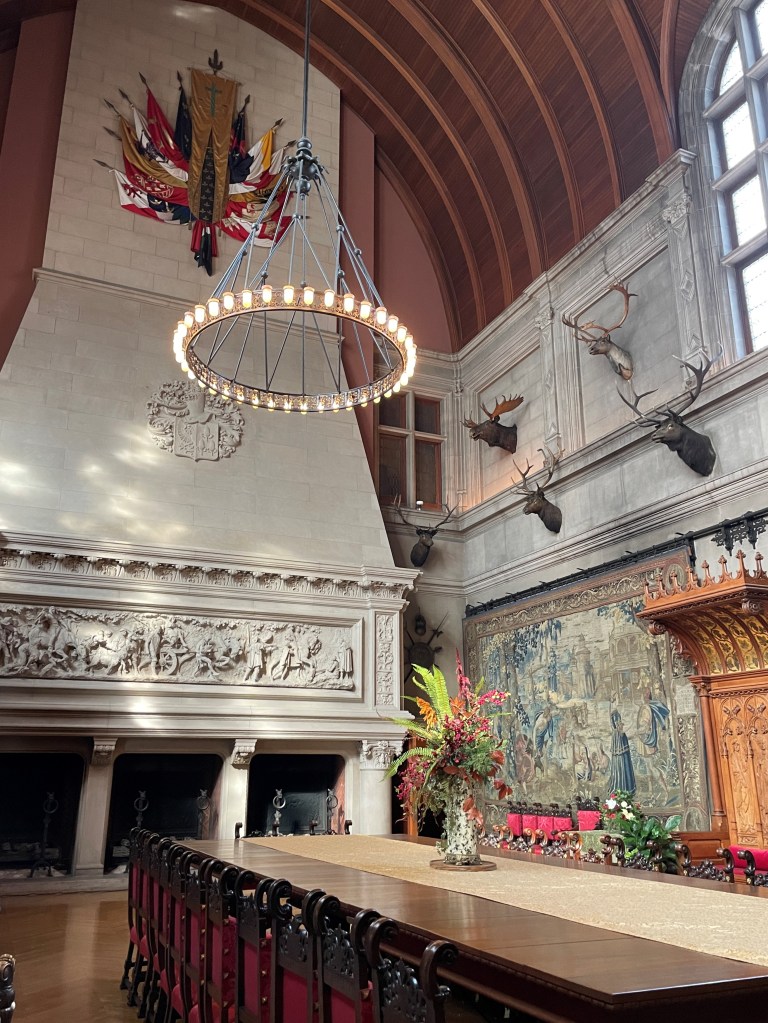
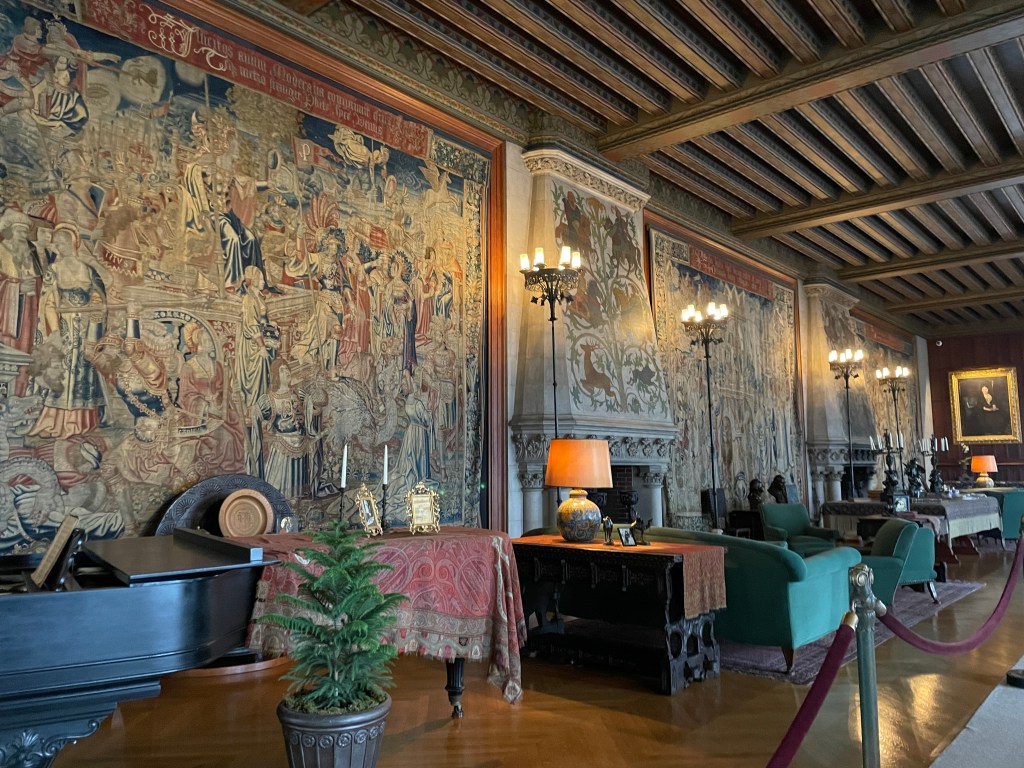
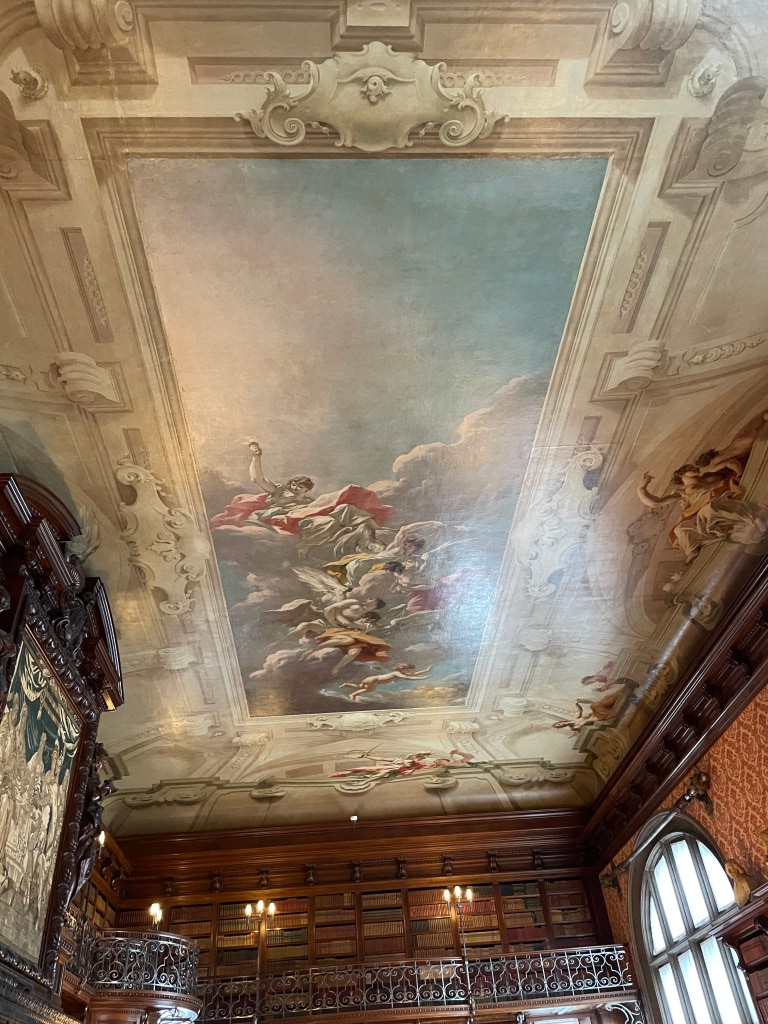
After leaving SC, and after a delay due to a glitch with the computer in my Highlander, I drove to Ashville, NC. The next day, I toured Biltmore Estate. I enjoyed the grandeur of the estate. But, I couldn’t help thinking that the money spent to build such a large house could have been put to better use.

From there, I enjoyed the drive through the Blue Ridge Mountains.

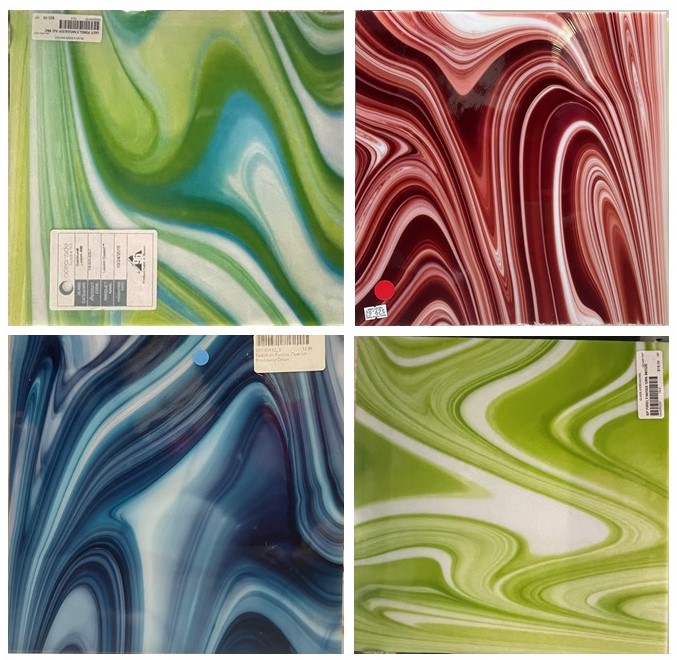
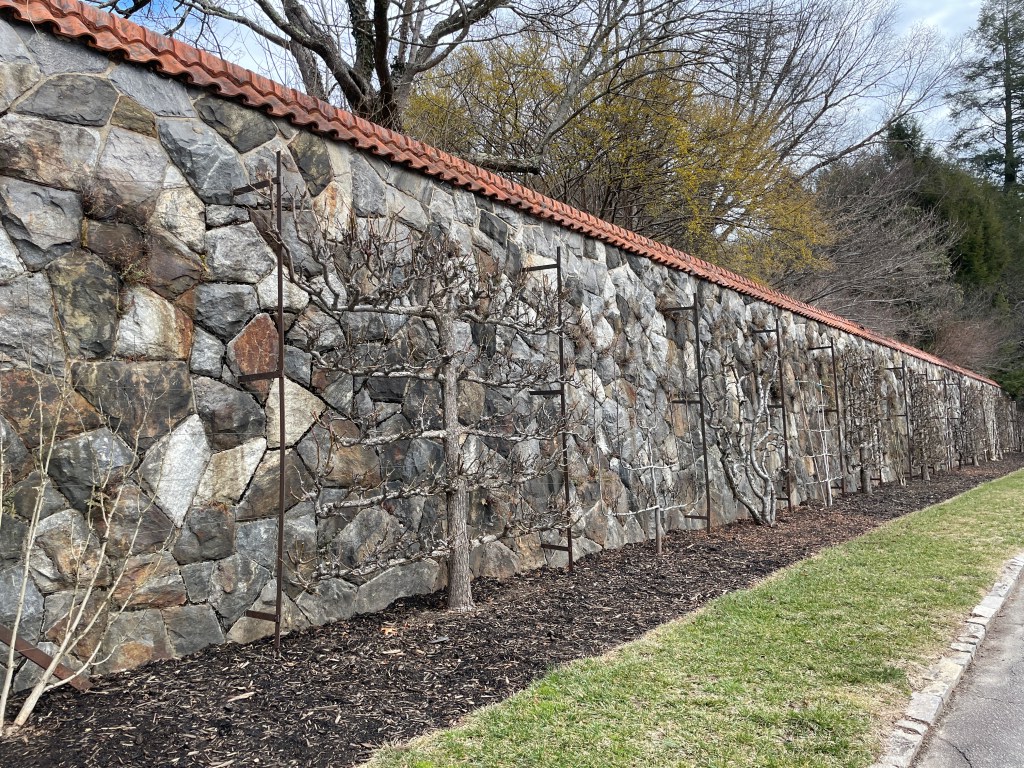
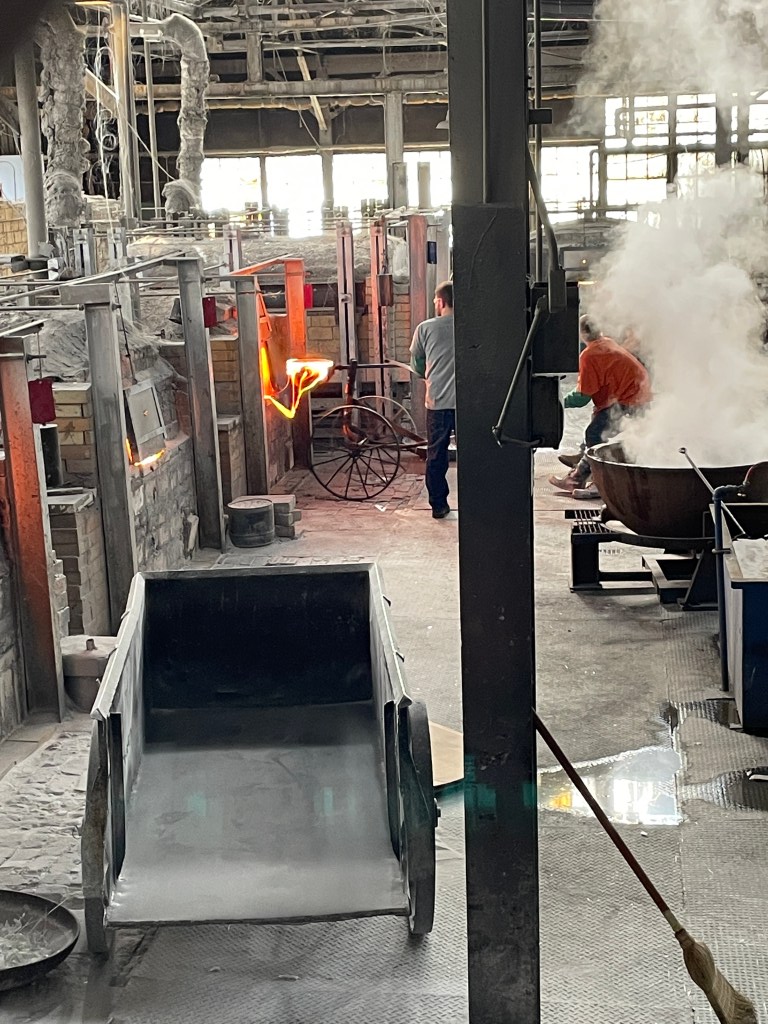
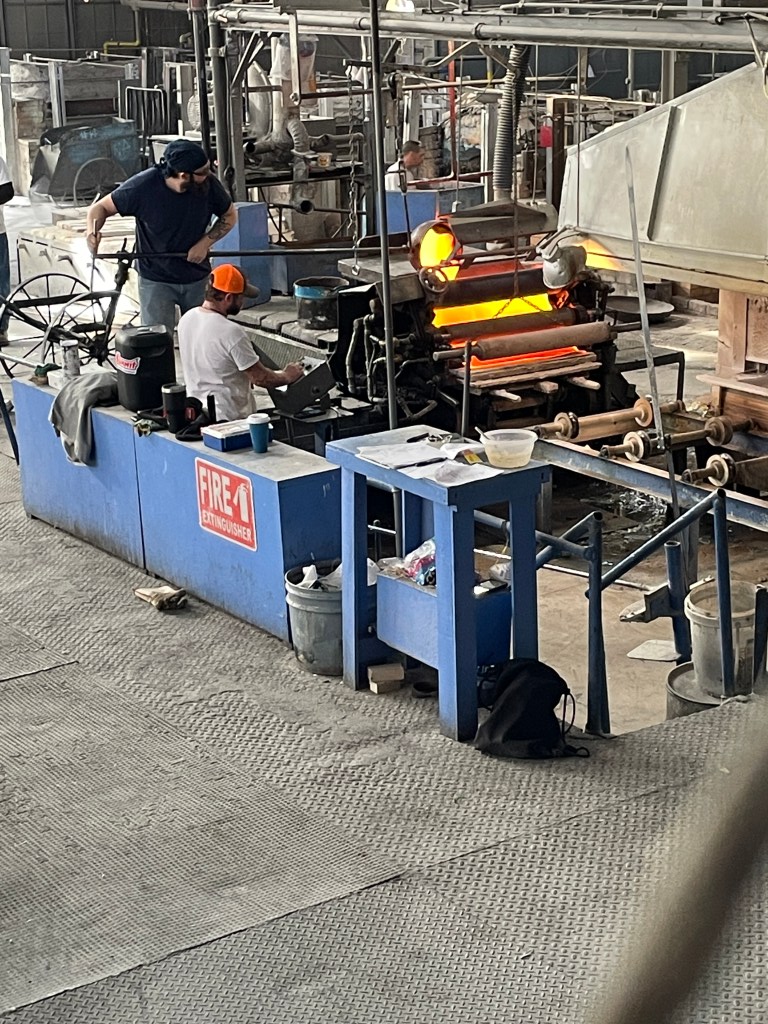
I met up with a fellow glass artist and visited a couple glass manufacturers, Wissmach Glass, Youghiogheny Opalescent Glass and Franklin Glass. I was able to purchase a large selection of glass sheets for future projects.

On the last leg of my travels, I stopped in Cleveland to visit my sister-in-law, niece and grand/great niece.

This was a great time spent away. Lots of crafts, relaxation, sightseeing and visiting family and friends!

Fused Glass Wind Chimes

A few years ago, when helping my mother organize her craft supplies, I found a rock tumbler that had been my grandfather’s. My mother was not planning to use it, so I took it home thinking that I would put it to some use. When I returned from that trip, I stored the tumbler in my glass studio. Unfortunately, I then forgot all about it.

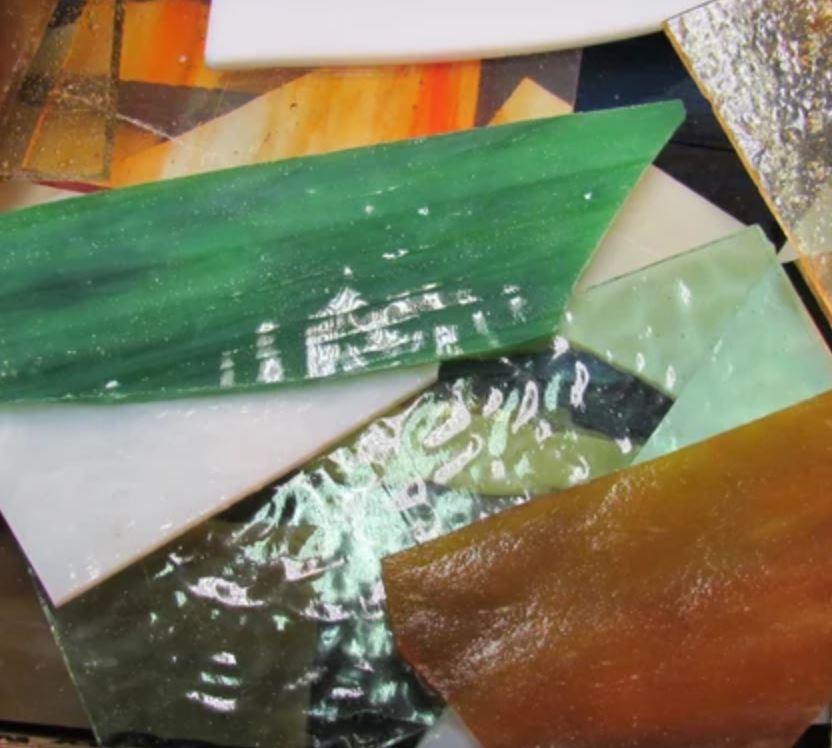
After I retired, when organizing my glass studio, I ran across the storage box. Instead of leaving the tumbler in the box, I took it out and put it to use. In another storage container, I had some stained glass scrap glass that I was given several years ago. I decided it would be nice to try to make some Sea glass out of these scraps.

Fall of 2021, I was able to make several pieces of sea glass. Each batch took about a month to sequentially go through the abrasive grits. Unfortunately, the motor in the tumbler burned out during the third batch of glass that I was tumbling. I’m sure that my grandfather’s tumbler had been sitting and not used for a really long time. So, I was not too surprised that it didn’t last very long. I am glad that I had it to try out. Knowing that it was a useful craft tool, I purchased a replacement.

Last January, while on a walk on the beach in South Carolina, I had an idea for a way to shorten the time needed to create the sea glass. Sea glass is made naturally when broken bottles tumble in sea water which has sand in it. So, I collected a container of white beach sand and packed the container in my car. When I returned to Minnesota, I did a test by tumbling glass with the sand. I was extremely pleased with the results. After only three days, the effect was similar to a month of tumbling with commercial grits.

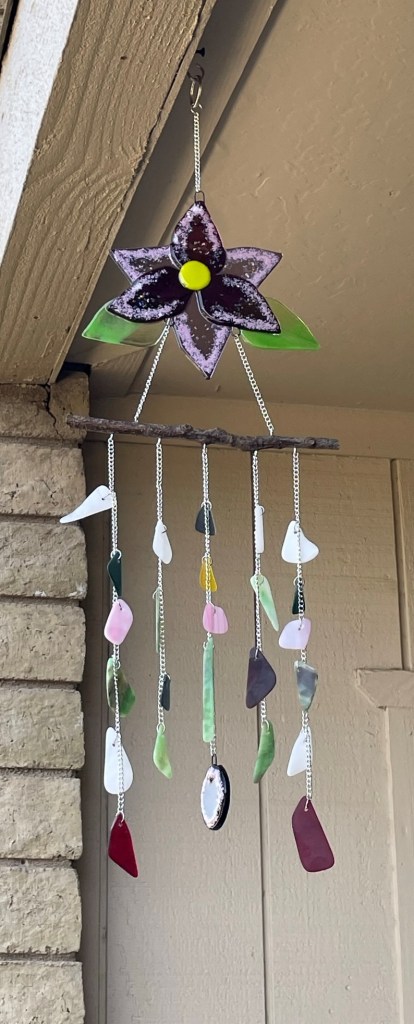
After making the sea glass, I used some of the glass to make a wind chime for my mother’s birthday. For the top of the windchime, I made a fused glass flower. I drilled holes in the sea glass and then connected each piece onto sections of chain attached to a piece of a wood branch.

After making this windchime, I designed a couple more to give as Christmas gifts. For the first one, I cut leaf shapes from the scrap glass, tumbled the glass for three days and then strung the chime to look like a tree. I really like how this one turned out and may actually make one for myself.

The rest of the sea glass that I have made are small pieces and not useful for windchimes.

To make a windchime for my other sibling, did not include any of the sea glass. Instead, I designed and fused pieces of glass to make a cat themed windchime.

Hug This Baby Blankets

A couple years ago, one of my son’s friends gave me a DMC Hug This Kitten Kit. The kit included a fluffy plush grey cat toy hugging a skein of size 2 fine weight yarn in variegated blue, pink and white. The size of the skein was just right for making a baby blanket which when finished could be rolled up and tucked into the arms of the kitten.

Most of the patterns associated with the kit were knitting patterns. Preferring crochet, I checked the website for other patterns associated with the kit. There was one crochet pattern that was based upon the Cross Stitch crochet stitch.

There were five other kits in the Hug This group. In addition to the kitten, these kits included a monkey, a dog, a rabbit, a lamb and a teddy bear.

About a year ago, I received an email about the kits being discontinued and each kit was available for $5 each, with free shipping for orders over $25. Since I thought they were so cute, and the price was right, I decided to purchase the five animals that I did not have and have since made additional baby blankets.

Monkey- Open Waffle Stitch

Dog – Half Double V Stitch

Kitten – Cross Stitch

Bunny – Alpine Stitch

Lamb – Double Crochet Shell

Teddy Bear – Treble Crochet Shell

These baby blankets were really fun to make.